
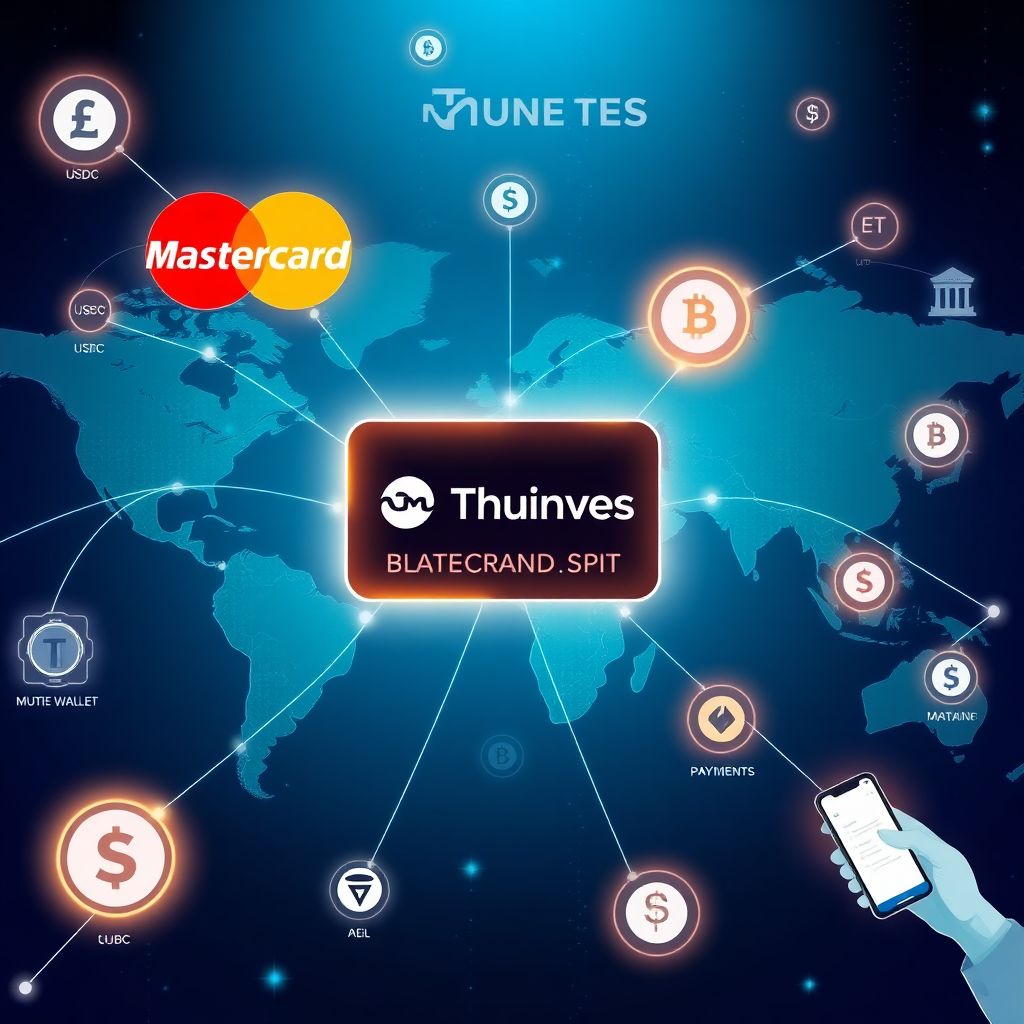
Mastercard has taken a significant step toward integrating traditional finance with digital assets by partnering with Thunes, a global payments platform. This strategic collaboration aims to enable near-instant payments to stablecoin wallets in over 200 global markets, revolutionizing how funds are transferred across borders and between financial systems.
Unveiled during the Singapore Fintech Festival, the initiative leverages Mastercard Move—Mastercard’s dedicated money movement division—to enhance the speed and flexibility of cross-border payouts. By introducing stablecoin wallets as a new payout option, Mastercard enables real-time settlement on various blockchain networks, bypassing the limitations of conventional banking hours and systems.
Pratik Khowala, Global Head of Transfer Solutions at Mastercard, emphasized the importance of expanding choices for end-users. “Our infrastructure already supports transfers in 150 currencies to more than 10 billion endpoints—ranging from bank accounts to cards and even cash,” he explained. “By adding stablecoin wallets, we’re extending that reach, empowering financial institutions and payment service providers to offer more flexible, digital currency-based solutions.”
This integration is particularly beneficial to corporate and institutional users who often face delays and high costs when managing international transactions. With 24/7 availability, businesses can streamline processes such as global payroll, vendor payments, and remittances, especially in regions where traditional banking is inefficient or expensive.
Beyond operational efficiency, the collaboration holds promise for advancing financial inclusion. Mastercard’s network touches over 95% of the world’s banked population, and by incorporating stablecoin wallets, it opens new pathways for those in underbanked regions. While practical challenges remain—such as access to digital infrastructure and the ability to manage crypto wallets—the model introduces a viable alternative to legacy financial systems.
Thunes plays a critical role in this ecosystem. Headquartered in Singapore, Thunes has distinguished itself as a rare payment network that connects mobile wallets, banks, and alternative financial platforms in real time. Operating in more than 130 countries, the company facilitates seamless transactions between diverse financial environments, from mobile-based money services in emerging markets to well-established fintech networks in developed economies.
This alliance also supports the broader trend of blockchain adoption in traditional finance. By integrating regulated stablecoins into global payment flows, Mastercard and Thunes are paving the way for more secure, transparent, and efficient financial interactions. Blockchain’s inherent advantages—such as immutability, traceability, and decentralization—can significantly reduce reconciliation issues and fraud risks in cross-border transactions.
From a compliance standpoint, using regulated stablecoins ensures that transactions remain within legal and financial regulatory frameworks. This is especially important for institutions concerned about the volatility and legal ambiguity surrounding some digital assets. Stablecoins like USDC or USDT, which are pegged to fiat currencies and subject to oversight, offer a balance between innovation and security.
Moreover, this move aligns with Mastercard’s broader digital asset strategy. Over the past few years, the company has steadily increased its involvement in the crypto space—supporting digital asset onramps, launching crypto-linked cards, and investing in blockchain infrastructure. The Thunes collaboration represents a logical next step in this progression, helping Mastercard solidify its role as a bridge between fiat and digital economies.
The partnership also has implications for the evolving nature of remittances. Millions of migrant workers send money home every month, often facing fees as high as 10% per transaction. Integrating stablecoin payments could dramatically reduce these costs while ensuring funds are delivered quickly and securely. For families relying on these remittances, even small improvements in speed and cost can have a meaningful impact.
As the digital economy matures, the demand for real-time, borderless financial services continues to grow. Consumers and businesses alike are seeking faster, cheaper, and more transparent payment options. Mastercard’s initiative with Thunes positions both companies to meet this demand head-on, leveraging the strengths of their respective networks.
Looking ahead, the success of this integration will depend on several factors: user adoption, regulatory support, and the continued development of stablecoin infrastructure. Education and user experience will be critical in helping end-users navigate the shift from traditional to digital finance.
In conclusion, the Mastercard-Thunes partnership represents a pivotal moment in the convergence of fiat and crypto payment systems. By enabling near-instant stablecoin payouts across a vast global network, the initiative not only enhances efficiency but also lays the groundwork for more inclusive and future-ready financial ecosystems.