
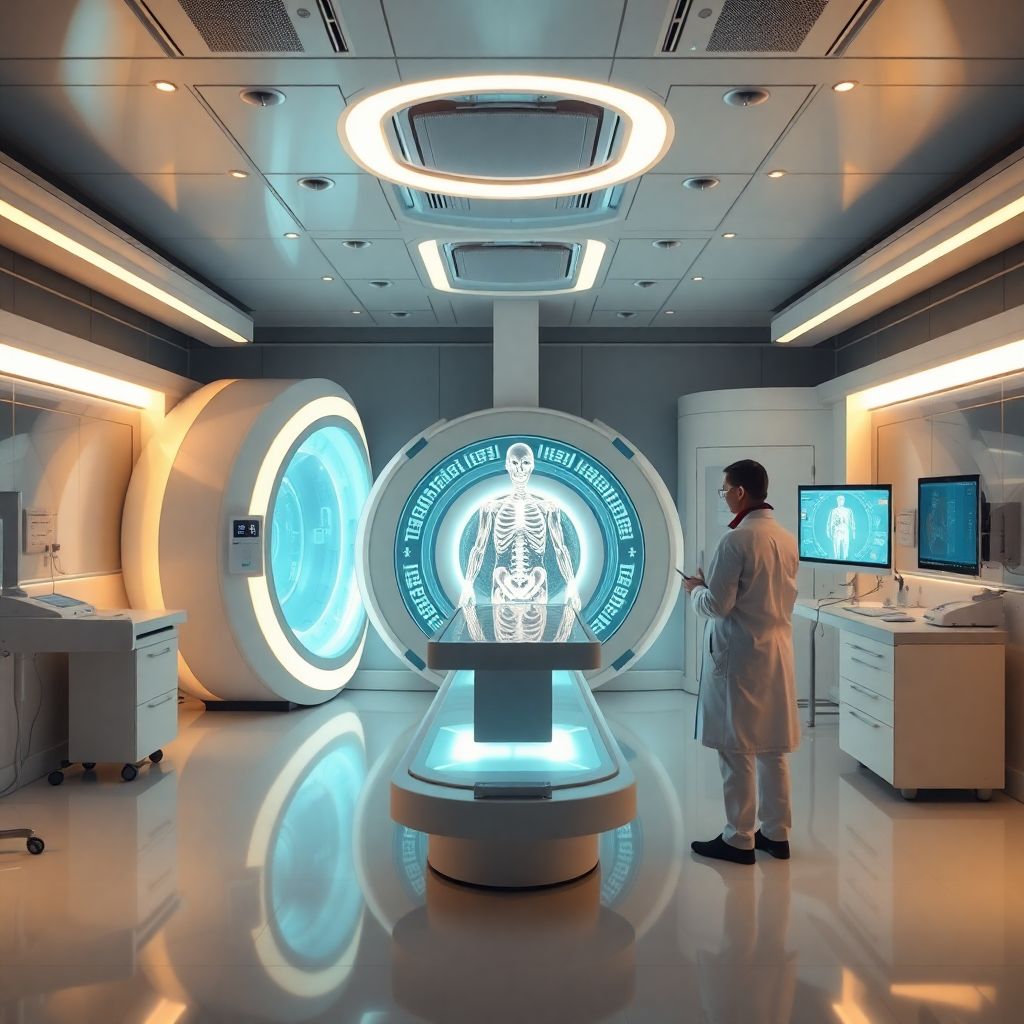
Midjourney, the artificial intelligence company widely recognized for its viral image-generation tool, is making a dramatic turn toward healthcare-and not just on the software side. The firm has announced a new division, Midjourney Medical, dedicated to building a next‑generation medical imaging system it believes could rival or even surpass MRI in some use cases.
At the heart of this push is a technology Midjourney calls “Ultrasonic CT.” Instead of relying on massive magnets, ionizing radiation, or traditional CT scanners, the system combines advanced ultrasound hardware with powerful AI algorithms that reconstruct highly detailed, three‑dimensional images of the human body. According to the company, this approach could deliver a full‑body scan in about 60 seconds.
Midjourney positions Ultrasonic CT as a potential alternative to existing imaging modalities-faster than MRI, safer than X‑rays or conventional CT (because ultrasound doesn’t use ionizing radiation), and potentially cheaper and more portable than the large, immobile machines seen in hospitals today. If the technology works as described, it could radically change how often and how easily people are screened for disease.
The company’s ambitions are clearly not modest. In an official statement, Midjourney Medical outlined a plan to deploy around 50,000 of these scanners worldwide over the next six years. The goal goes far beyond equipping a few flagship hospitals: Midjourney wants to create a global network of devices capable of performing roughly a billion full‑body scans every month. That scale suggests a vision of routine, almost ubiquitous health imaging-more like checking your blood pressure than scheduling a rare, high‑cost MRI.
Midjourney originally launched in 2022 as a text‑to‑image generation platform, quickly becoming one of the most recognizable names in generative AI. Its tools allowed users to turn natural language prompts into striking visuals, artworks, and concept designs. Now, the company is effectively repurposing its core strengths-large‑scale neural networks, image reconstruction, and pattern recognition-for the far more regulated and high‑stakes domain of medical diagnostics.
From a technical standpoint, Ultrasonic CT sits at the intersection of two powerful trends: the miniaturization and improvement of ultrasound hardware, and the explosion of deep learning techniques for image enhancement and reconstruction. Traditional ultrasound produces relatively grainy, operator‑dependent images that require significant expertise to interpret. Midjourney’s approach appears to lean on AI to infer richer 3D structures from raw ultrasound signals, potentially yielding images closer in clarity to what clinicians expect from CT or MRI.
If successful, such a system could unlock several major advantages:
– Speed: A full‑body scan in around one minute would be dramatically faster than most MRI protocols, which can take 30-60 minutes or more.
– Safety: Ultrasound is considered safe for repeated use, unlike X‑ray or CT imaging that exposes patients to radiation.
– Accessibility: Smaller, cheaper devices could be placed not only in major hospitals but also in clinics, rural health centers, and even non‑traditional settings like workplaces or pharmacies.
– Scale of data: A billion scans a month would create an enormous medical dataset, which-if handled ethically-could feed continuous improvements in diagnostic AI.
However, turning this vision into reality will require Midjourney to navigate a very different landscape from the relatively unregulated world of creative AI tools. Medical imaging devices must pass rigorous safety and efficacy testing and obtain regulatory approval in every market they enter. Clinical trials will need to demonstrate that Ultrasonic CT can either match or improve upon established imaging techniques in detecting specific conditions-cancers, cardiovascular disease, organ damage, and more.
Another challenge lies in integration with existing healthcare systems. Hospitals and clinics are deeply invested in current imaging infrastructure and workflows. Radiologists, technicians, and physicians will need training not only to operate the new devices but also to interpret their output and understand where Ultrasonic CT is appropriate and where a conventional MRI or CT scan remains necessary. Midjourney will likely need to partner with clinical institutions and medical hardware manufacturers to gain trust and adoption.
Data privacy and security will also be central concerns. A fleet of tens of thousands of always‑on imaging devices generating billions of scans implies a massive stream of highly sensitive health data. Midjourney will have to implement strict encryption, on‑device processing where possible, anonymization protocols, and compliance with health data regulations in different jurisdictions. Any misstep in this area could severely undermine both user trust and regulatory approval.
Economically, the company’s model raises important questions. If Ultrasonic CT systems are designed to be less expensive and more portable than MRI machines, they might open imaging access to regions and populations currently underserved by advanced diagnostics. But the cost of the hardware, maintenance, AI processing, and cloud infrastructure still needs to be justified. Will these scanners be sold to hospitals, leased on a subscription basis, or used in partnership models where Midjourney retains ownership and charges per scan? The chosen approach will affect how quickly the technology can spread.
The prospect of billions of scans per month also implies a shift in how we think about preventive medicine. Instead of imaging being reserved for when something is already suspected to be wrong, full‑body scans could become a routine screening tool-catching tumors, vascular abnormalities, or organ issues far earlier than current practice allows. Yet this vision is not without controversy: medical professionals have long debated the value and risks of whole‑body imaging, including false positives, overdiagnosis, and unnecessary follow‑up procedures that can cause anxiety and cost without improving outcomes.
From an AI development perspective, Midjourney’s healthcare move is part of a broader pattern: companies that first made their name in creative generative tasks are increasingly exploring high‑impact scientific and medical applications. The underlying technologies-large models, diffusion techniques, and sophisticated pattern recognition-are adaptable, but the stakes in medicine are in a different league. Here, aesthetic quality is far less important than diagnostic accuracy, repeatability, and clinical validation.
If Ultrasonic CT performs as promised, it could also reshape competition across the imaging sector. Established manufacturers of MRI and CT machines might be forced to respond with their own AI‑enhanced, lower‑cost, or more portable solutions. Smaller startups working on handheld ultrasound and AI diagnostics could find themselves either overshadowed or courted for partnerships. In that sense, Midjourney’s entrance into this space may accelerate innovation across the entire industry.
The company’s experience with scaling cloud‑based AI services could be another strategic advantage. Reconstructing detailed 3D scans from raw ultrasound data in near real time demands substantial compute power and optimized software pipelines. Midjourney’s background in serving millions of image requests from users worldwide means it is already familiar with building and managing large‑scale AI infrastructure-an expertise that could translate well into managing a global fleet of medical devices.
On the human side, the shift signals an evolution in how AI companies see their own mission. Moving from generating art and visuals for entertainment and design into a domain where decisions can directly affect life and death represents a notable broadening of ambition. It also invites closer scrutiny: regulators, clinicians, ethicists, and patient advocates will all have strong opinions about how such a system should be designed, tested, and deployed.
In the coming years, key milestones to watch will include early clinical trial results, pilot deployments in hospitals or clinics, and independent evaluations by radiologists and imaging experts. Evidence that Ultrasonic CT can match or exceed current standards for specific diagnostic tasks-such as identifying liver lesions, early‑stage tumors, or musculoskeletal injuries-will be critical for its credibility.
Ultimately, Midjourney’s pivot from AI art to medical imaging reflects a larger narrative unfolding across the tech world: generative and reconstructive AI tools are leaving the realm of novelty and entertainment to tackle core infrastructure in healthcare, science, and industry. Whether Ultrasonic CT will truly become a “better MRI alternative” remains to be proven, but its very pursuit signals that the next wave of AI disruption may arrive not in our social feeds, but in the machines that look inside our bodies.