
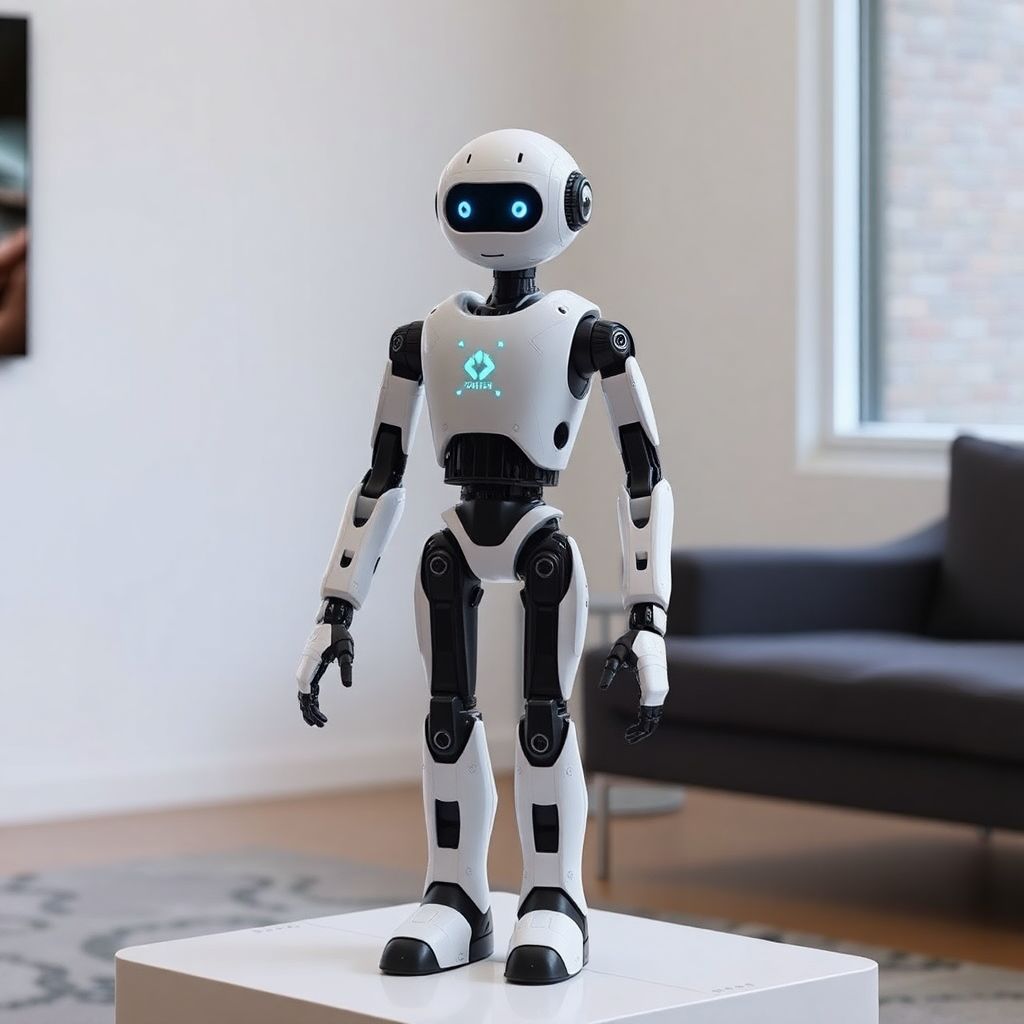
The competition in the humanoid robotics sector is intensifying as companies race to bring intelligent, human-shaped machines into everyday life. A new contender, NEO, developed by Palo Alto-based robotics company 1X, has now entered the scene. Designed as a home assistant, NEO is engineered to handle household tasks, provide customized support, and interact naturally with people through its advanced conversational AI.
Unlike earlier prototypes confined to research labs, NEO represents a shift toward practical, consumer-ready humanoid robots. The unveiling of NEO signals a broader industry move toward deploying embodied artificial intelligence in real-world settings. With its lifelike design and AI-driven behavior, NEO aims to bridge the gap between humans and machines in domestic environments.
According to industry forecasts, the humanoid and service robot markets are on track to exceed $300 billion—and possibly approach $400 billion—within the next ten years. This rapid growth is fueled by technological advancements in AI, machine learning, and robotics hardware, as well as the increasing global demand for automation amid persistent labor shortages.
While companies like Tesla, Figure AI, and Agility Robotics focus on industrial applications—developing bipedal machines capable of walking factory floors or making autonomous deliveries—1X is targeting the home. The domestic space presents unique challenges, including the need for secure interactions, emotional intelligence, and a strong emphasis on user trust. NEO has been specifically designed to address these concerns.
The development of NEO has been a long-term endeavor. “This all started a decade ago,” said a spokesperson from 1X. “We’ve been relentlessly working on the technology stack, hardware integration, and AI capabilities to bring NEO to life.” The result is a robot that not only responds to voice commands but can also adapt to users’ habits and preferences over time.
NEO’s functionality goes beyond simple voice recognition. It incorporates natural language processing and contextual awareness, enabling it to understand nuanced requests, hold conversations, and even learn from daily interactions. Whether it’s managing reminders, suggesting recipes, or assisting elderly individuals with mobility or medication schedules, NEO is designed to be an intuitive part of the household.
The robot’s design prioritizes safety and human-centric interaction. It features soft, human-like movements, a friendly appearance, and advanced sensors to navigate spaces without causing harm. These features are critical to securing consumer trust, especially in homes where children or elderly individuals may be present.
Another key element of NEO’s innovation is its adaptive learning system. Through continuous feedback and onboard AI modeling, the robot can fine-tune its behavior to match the household’s unique routines. Over time, it evolves from a basic assistant into a deeply integrated member of the home environment.
The launch of NEO also highlights a broader shift in the robotics ecosystem. As robots become more capable and socially aware, their role in society is transitioning from novelty to necessity. In aging populations and high-cost labor markets, robots like NEO could fill vital gaps in caregiving, companionship, and domestic support.
However, NEO’s success will depend not only on technological prowess but also on affordability and accessibility. While no exact pricing details have been released, 1X has emphasized its goal to make humanoid home robots available to a wide range of users, not just high-end consumers or institutions.
Data privacy and security are also central to the product’s design. With its always-on sensors and audio processing capabilities, NEO stores data locally and offers customizable privacy settings, ensuring users retain full control over their personal information.
Looking ahead, 1X plans to integrate NEO with smart home ecosystems, allowing it to interact with IoT devices like thermostats, lights, and security systems. This would further enhance its utility, turning it into a central hub for managing home environments.
NEO’s debut arrives at a pivotal moment for the robotics industry. Instead of focusing solely on mechanical efficiency, developers are increasingly emphasizing emotional intelligence, adaptability, and social presence. These qualities are essential if humanoid robots are to coexist harmoniously with humans.
As the humanoid race heats up, the companies that succeed will be those that balance cutting-edge technology with ethical responsibility and user-centric design. With the introduction of NEO, 1X has made a compelling case that the future of robotics may be more personal—and more human—than ever before.