
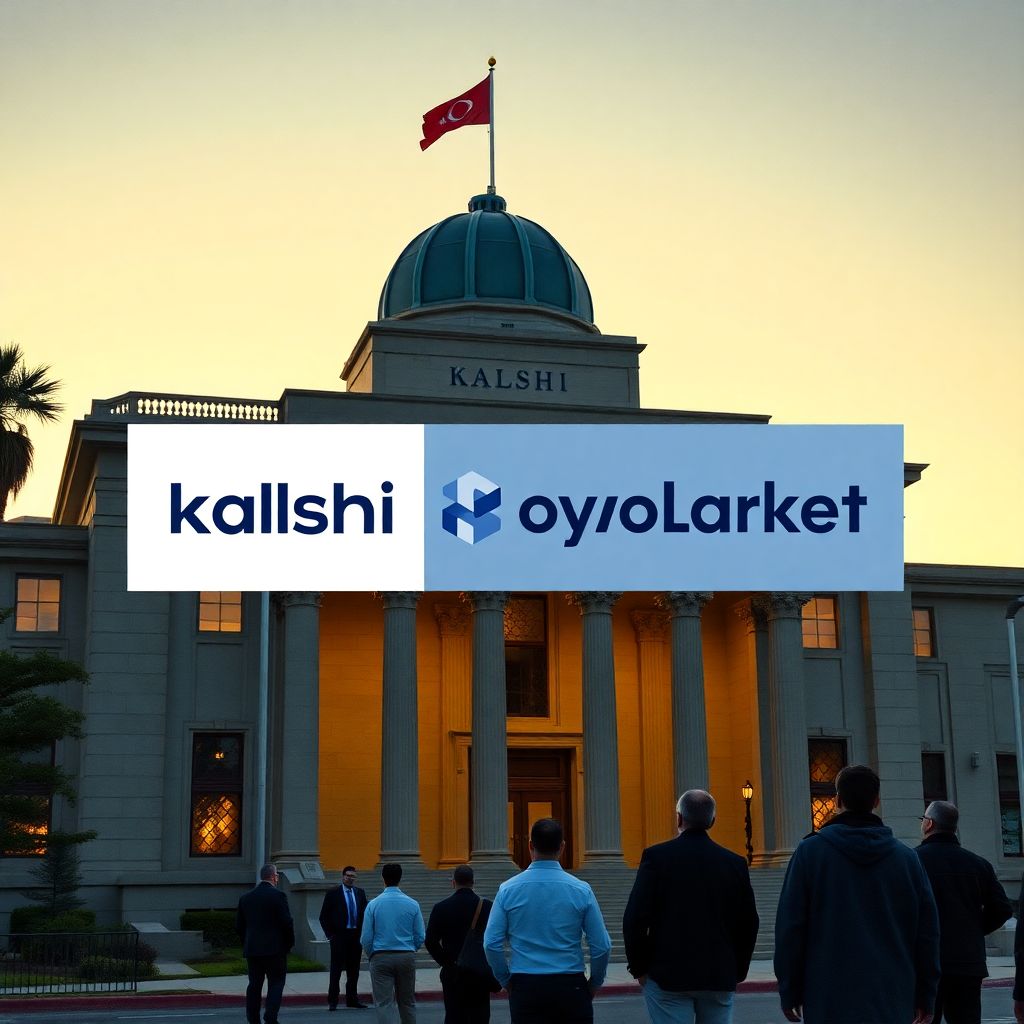
Court Ruling Heightens Odds Nevada Could Freeze Trading on Kalshi and Polymarket
Prediction market operator Kalshi is once again facing the possibility of being sidelined in Nevada after a federal judge ruled that the state’s case against the platform must be heard in state court, not federal. The decision also affects rival prediction market Polymarket and significantly increases the chance that Nevada regulators will seek – and potentially obtain – a temporary halt to their operations in the state.
The ruling, issued Monday, sends Nevada’s enforcement actions back to state court and clears the way for the Nevada Gaming Control Board (NGCB) and other state officials to request preliminary injunctions against the firms. That type of injunction could temporarily block Kalshi and Polymarket from offering trading to Nevada residents while the broader legal fight plays out.
According to the court order, the judge concluded that the NGCB’s claims are rooted in state law rather than federal law. The decision explicitly states that the Commodity Exchange Act (CEA), the statute that governs U.S. derivatives markets, does not “completely preempt” Nevada’s legal theories. Because of that, the federal court determined it lacked subject matter jurisdiction and was required to send the matter back to state court.
For Kalshi, which operates as a CFTC‑designated contract market (DCM), the ruling is a setback to its strategy of keeping the dispute in federal court, where it could argue more forcefully that federal law controls. The exchange has long maintained that the Commodity Futures Trading Commission (CFTC) has exclusive authority over trading on regulated derivatives venues, including event‑based contracts tied to economic, political, and other real‑world outcomes.
Prediction markets like Kalshi and Polymarket have framed their services as legally compliant derivatives platforms overseen by federal regulators. Their core argument is that once a platform is properly registered – as a DCM in Kalshi’s case – the CFTC’s jurisdiction over its listed markets should override conflicting state gambling or gaming statutes. Nevada regulators, however, have taken the opposite view: that betting on real‑world events offered to Nevada residents can fall under the state’s gaming laws regardless of federal status.
By rejecting the idea that the CEA fully displaces Nevada’s regulatory claims, the judge has opened the door for the state to press forward under its own statutes. In practical terms, that means Nevada courts are now positioned to decide whether contracts on political races, macroeconomic indicators, or other event outcomes amount to unlicensed gambling when offered to residents of the state.
If Nevada prevails at the injunction stage, Kalshi and Polymarket could be ordered to immediately block Nevada users, suspend certain markets, or even cease operating in the state entirely while the underlying lawsuits continue. For users in Nevada, that would likely mean sudden restrictions on opening new positions or withdrawing from specific event markets. For the platforms, it could set a powerful precedent that other states may try to emulate.
This clash is more than a local jurisdictional skirmish. It exposes a growing fault line between federal financial regulation and state‑level gambling oversight. Prediction markets occupy an ambiguous space: supporters view them as sophisticated tools for information discovery and risk management, while critics compare them to online sportsbooks dressed up in financial‑market language. The outcome in Nevada could influence how other states frame their own views on whether event contracts are investments, bets, or something in between.
The legal concept at the center of the ruling – “complete preemption” – is crucial. When a federal statute completely preempts state law in a given area, disputes must generally be heard in federal court and state causes of action are effectively displaced. By stating that the CEA does not have that sweeping effect over Nevada’s claims, the judge signaled that state gaming laws can still operate in parallel with federal derivatives regulation, at least in this context. That interpretation gives states far more leverage to challenge prediction markets, even when those markets fall under CFTC oversight.
For Kalshi and Polymarket, this raises strategic and operational questions. They may need to segment their markets by state, introduce additional geofencing to exclude residents of jurisdictions that take a hard line, or redesign products that most clearly resemble traditional wagering. It could also push them to seek more explicit federal guidance or rulemaking that clarifies when a state’s gambling laws must yield to CFTC authority.
Investors and traders using these platforms now face a layer of regulatory risk on top of market risk. In Nevada and potentially other states, a court‑ordered trading halt could lock in positions longer than intended, prevent new hedges from being established, or complicate strategies around time‑sensitive events such as elections, economic data releases, or policy announcements. Users should be aware that, even on regulated platforms, state enforcement actions can directly affect access and liquidity.
The decision also lands in a broader environment of increasing skepticism toward politically sensitive markets. Federal regulators have wrestled with whether markets on elections, policy outcomes, or public figures cross a line into improper gambling or create unacceptable incentives. Nevada’s challenge echoes those concerns but channels them through state gaming law rather than securities or commodities rules, creating a multi‑layered regulatory puzzle for event‑contract platforms to solve.
Going forward, Nevada’s state court will have to decide whether to grant the temporary injunctions regulators are expected to request. That proceeding will likely center on classic injunction factors: the state’s likelihood of success on the merits of its gambling‑law claims, the potential harm to Nevada consumers, the impact on the companies, and the public interest in maintaining – or restricting – access to prediction markets. Whichever way the court rules, the outcome will send an important signal to other states watching from the sidelines.
If Nevada succeeds in securing a trading halt, it could embolden additional states to assert their own gambling laws against prediction markets, even when those platforms trumpet federal registration. Conversely, if the state court declines to issue an injunction, Kalshi and Polymarket will gain ammunition to argue that their activities can coexist with state law when properly structured and supervised by federal regulators.
In the meantime, platforms, traders, and policymakers are all left operating in a gray zone. The Nevada case underscores that, for prediction markets in the United States, legal clarity is still elusive – and that state regulators can, at any moment, become as significant a force as federal agencies in deciding where and how event‑based trading can take place.