
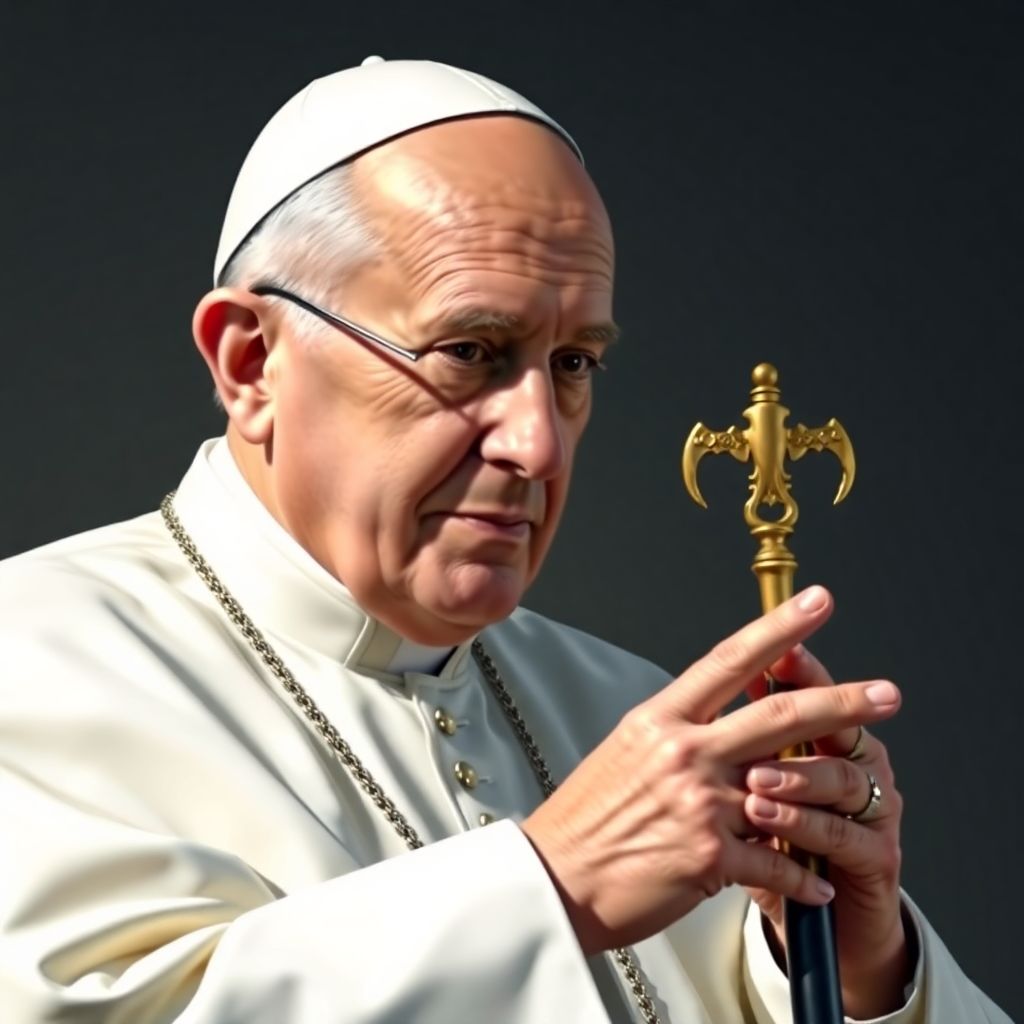
Pope Leo XIV has reignited the global conversation about artificial intelligence, delivering a powerful message to tech developers and innovators around the world. In a recent statement shared via social media, the pontiff emphasized that the development of AI is not just a technological challenge but a deeply moral and spiritual undertaking—one that will shape the future of human identity and global society.
Since assuming his role as head of the Catholic Church in May, Pope Leo has made several remarks on the ethical responsibilities associated with emerging technologies. His latest message stresses that AI is not merely a tool but a mirror reflecting the values and intentions of its creators. “Technological innovation,” he stated, “is a form of participation in the divine act of creation. Every design decision carries with it a vision of what it means to be human.”
The Pope urged developers to go beyond technical excellence and integrate moral judgment into the very core of AI systems. According to him, the choices made in coding, data selection, and algorithmic behavior are not neutral. They inherently promote certain worldviews and ethical frameworks. “The Church calls on all AI creators to cultivate moral discernment as a foundational principle in their work,” he wrote. “Only by doing so can we build systems that embody justice, compassion, and the dignity of every person.”
Pope Leo’s message arrives at a time when AI is advancing rapidly, with applications ranging from healthcare and education to surveillance, finance, and warfare. The Vatican’s concern lies not in halting progress but in ensuring that it aligns with ethical standards that safeguard human rights and dignity.
In particular, the Pope warned about the dangers of AI systems being driven solely by profit, efficiency, or control. When such values dominate, there is a risk that people become viewed as data points or commodities rather than beings with intrinsic worth. He emphasized the importance of inclusivity and equity in AI design, calling for systems that do not marginalize or discriminate.
Moreover, the pontiff stressed that AI must remain under human oversight. “We must never allow machines to dominate or replace what is essentially human—our conscience, emotions, relationships, and moral reasoning,” he said. He encouraged collaborative efforts among technologists, ethicists, theologians, and policy-makers to shape a future where AI serves the common good.
In an age where artificial intelligence influences decisions in hiring, healthcare access, criminal justice, and even social media content moderation, Pope Leo’s remarks resonate with growing concerns about algorithmic bias and lack of accountability. He contended that transparency, explainability, and fairness must be embedded into every stage of AI implementation.
The Vatican has previously hosted conferences and initiatives aimed at fostering ethical frameworks for AI, including partnerships with major tech companies and academic institutions. These initiatives promote “ethical AI” principles centered on transparency, inclusiveness, responsibility, and sustainability.
Pope Leo also pointed to the importance of education in addressing the ethical challenges posed by AI. He advocated for the inclusion of moral philosophy, digital ethics, and social responsibility in STEM curricula to ensure future developers are equipped not only with technical knowledge but also with ethical awareness.
Beyond the tech world, the Pope’s call speaks to consumers and citizens as well. He encouraged individuals to stay informed, ask critical questions about the technologies they use, and demand accountability from corporations whose algorithms affect public life. He emphasized that shaping a human-centered AI future is a collective responsibility.
In response to increasing concerns about deepfakes, mass surveillance, and the erosion of privacy, Pope Leo urged governments to enact clear and enforceable regulations that protect citizens from misuse of AI. He highlighted the need for international cooperation to set universal ethical standards that transcend national and corporate interests.
The Pope’s appeal also highlighted the risk of AI amplifying existing inequalities. If left unchecked, automated systems could deepen socioeconomic divides and reinforce systemic discrimination. He called for proactive measures to ensure that vulnerable populations are not left behind in the digital transformation.
Finally, Pope Leo concluded his message with a vision of hope. He called on humanity to view AI not as a threat, but as an opportunity—a chance to reimagine our values, redesign our systems, and reaffirm our commitment to human dignity. “Let us build machines that serve life, not replace it,” he wrote. “Let us choose innovation that uplifts, not divides.”
As the influence of AI continues to grow, the Pope’s words serve as a moral compass, reminding the world that the future of technology must be guided not only by what is possible, but by what is right.