
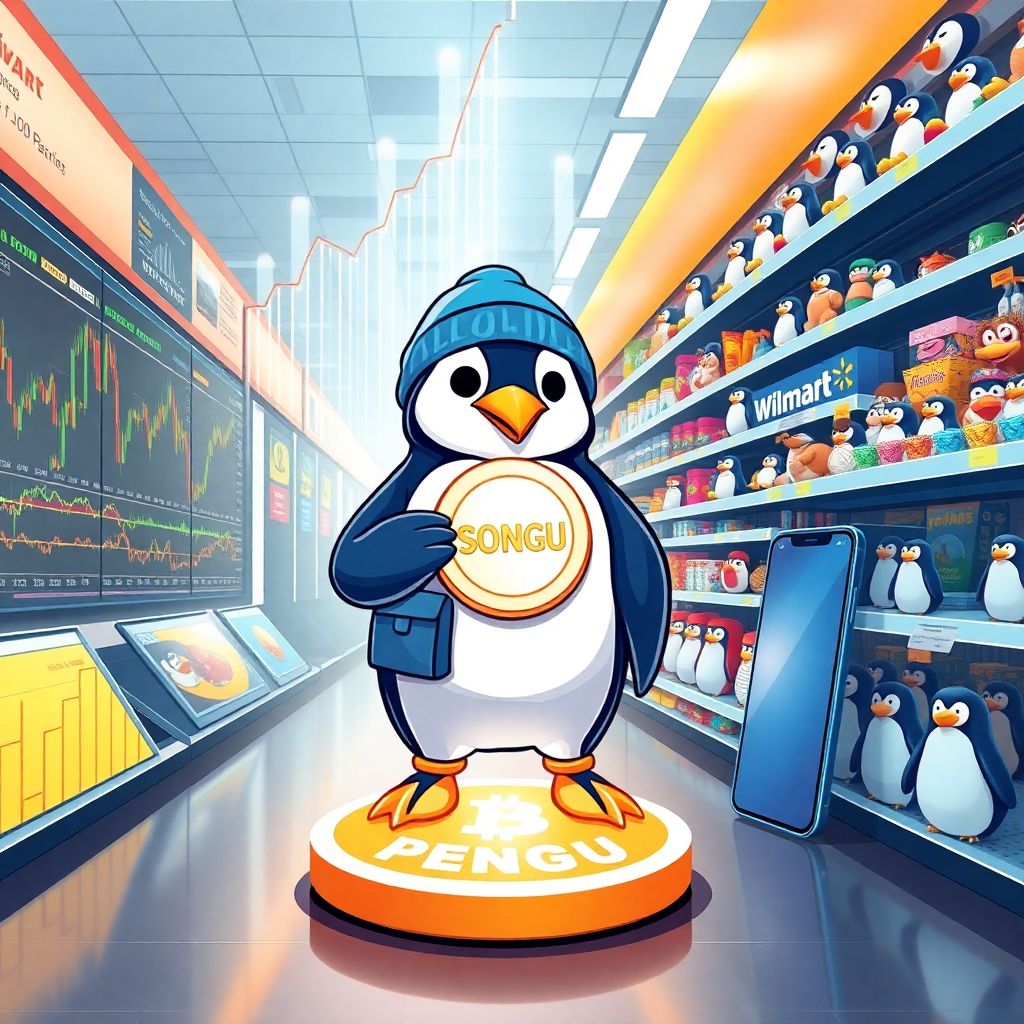
Pudgy Penguins’ PENGU token is increasingly being framed as more than just another meme coin, as traders highlight the project’s growing consumer footprint and expanding ecosystem beyond NFTs.
While speculation in meme tokens has cooled across the market, interest in PENGU — a Solana-based asset tied to the Pudgy Penguins brand — is building among analysts who see a mismatch between its fundamentals and its current valuation.
Traders turn cautiously bullish on PENGU
Prominent trader Altcoin Sherpa recently argued that current price levels do not offer an attractive opportunity to short PENGU. Instead, he views the token as a candidate for gradual accumulation, particularly if broader crypto conditions improve.
According to his analysis, PENGU is trading within a high-volume area on the volume profile, a zone where buyers and sellers have historically shown strong interest. He also pointed to what he considers comparatively “strong fundamentals” for a meme-driven asset.
Sherpa emphasized that, despite fading hype around meme coins in general, he expects PENGU to benefit once Bitcoin re-enters a sustained uptrend. In his view, the token’s connection to a recognized brand, along with a more thoughtfully structured ecosystem, could support future performance. He also disclosed that he personally holds a position in PENGU, aligning his outlook with his own portfolio.
Technical comparisons to early-stage Pepe
Crypto analyst Ali Martinez added to the constructive sentiment by highlighting similarities between PENGU’s current chart setup and the early technical structure of Pepe (PEPE) before it launched into a strong rally toward all-time highs. While such analogies do not guarantee a repeat scenario, they have fueled speculation that PENGU may be in the early stages of a larger move if market conditions align.
Another trader, Awan, framed PENGU as a longer-term bet rather than a purely speculative short-term trade. He argued that the real differentiator is the underlying intellectual property and the execution track record of the Pudgy Penguins team.
Beyond meme status: Brand-backed Web3 IP
Awan stressed that PENGU “isn’t just hype,” pointing to its backing by Pudgy Penguins, a prominent Web3 intellectual property that has established traction outside of the crypto niche. He cited three key elements that, in his view, separate PENGU from the average meme token:
– Its launch on Solana, a high-throughput blockchain that has become a hub for meme coins and retail trading activity.
– A community-focused airdrop model used to distribute the token, designed to reward early supporters rather than a small group of insiders.
– Long-term vesting for the team, which suggests a multi-year commitment and attempts to mitigate immediate sell pressure.
Based on these factors and the broader growth of the brand, Awan has gone as far as calling a $1 price target for PENGU “inevitable over time,” although that view remains speculative and contingent on market cycles, execution, and investor sentiment.
From NFT collection to evolving consumer brand
Pudgy Penguins originally launched in 2021 as a collection of 8,888 cartoon penguin NFTs on Ethereum, emerging during the height of the NFT boom. Created by four pseudonymous founders, the project quickly built buzz thanks to its distinct, adorable art and a tone that emphasized warmth, humor, and community engagement.
However, as with many early NFT collections, internal friction and stalled development began to erode momentum. The project’s direction grew uncertain until 2022, when entrepreneur Luca Schnetzler, better known as Luca Netz, stepped in and acquired the Pudgy Penguins intellectual property for around 750 ETH.
Netz fundamentally reshaped the strategy. Rather than treating Pudgy Penguins as a static NFT set, he repositioned it as the nucleus of a broader consumer and entertainment brand anchored in Web3 culture but accessible to mainstream audiences.
Physical products and mainstream reach
Under the new leadership, Pudgy Penguins aggressively expanded beyond digital collectibles. The brand entered the physical world through toys and merchandise, securing distribution through major retailers, including household names like Walmart and Amazon.
This push into retail has been central to the project’s evolution. Rather than marketing exclusively to crypto-native users, Pudgy Penguins aims to appeal to families, children, and casual consumers with plush toys and character-driven storytelling. The cute, non-threatening design and positive messaging have made it easier for non-crypto audiences to interact with the IP without needing to understand blockchains, wallets, or tokens.
Licensing deals and retail placements have also helped reinforce the perception of Pudgy Penguins as a real, durable brand rather than a short-lived NFT trend. For many PENGU supporters, this real-world visibility is a key argument for why the ecosystem might have more staying power than anonymous meme coins built purely on online hype.
Gaming as the next growth frontier
The brand’s expansion isn’t limited to toys and merchandise. Pudgy Penguins has also moved deeper into gaming with its Pudgy Party mobile title. The game has already crossed the milestone of 1 million players and has picked up multiple industry awards, signaling that it has resonance beyond the existing collector base.
The team is rolling out new seasons on a monthly cadence, indicating an ongoing investment in content, updates, and user retention. This steady release schedule is meant to keep players engaged, extend the life of the IP, and create new entry points for those who may first encounter Pudgy Penguins as a game rather than an NFT collection.
The gaming strategy dovetails with the broader brand vision: use fun, accessible experiences as an onboarding layer, with Web3 components and token integrations layered beneath or alongside the surface-level experience.
Why PENGU stands out in a crowded meme market
For advocates, what makes PENGU compelling is the intersection of several factors that are not always present in typical meme tokens:
– Recognizable IP: PENGU sits on top of one of the most visible NFT-born brands, with characters and visuals that are already recognizable to many in and outside of crypto.
– Real-world execution: The presence of physical products in major retail chains and an award-winning mobile game suggests operational competence rather than simple meme-fueled speculation.
– Ecosystem depth: PENGU is one component in a multi-layered ecosystem spanning NFTs, gaming, merchandise, and digital experiences – a broader context than many standalone meme coins enjoy.
– Structured token release: Community-first airdrops and team vesting schedules are intended to reduce the risk of immediate dumps and better align incentives over time.
This combination has led some traders to group PENGU in a separate category from purely narrative-driven meme coins with no underlying products or brand equity.
The role of Solana in PENGU’s trajectory
The decision to launch PENGU on Solana is also part of its narrative. Solana has become a focal point for high-velocity trading and meme token experimentation, thanks to low fees and fast transaction speeds. This environment can accelerate both upside and downside volatility, but it also makes it easier for retail traders to get involved without prohibitive transaction costs.
If Solana continues to attract liquidity and remain a favored chain for speculative trading, PENGU could benefit from organic exposure and ease of access. At the same time, this also ties PENGU’s near-term trading performance to the broader health of the Solana ecosystem.
Brand evolution as a long-term catalyst
Supporters often point to one central theme: Pudgy Penguins is no longer just an NFT project. It has repositioned itself as a consumer-facing Web3 brand that spans multiple mediums and touchpoints. Each expansion — whether into toys, gaming, or new digital experiences — potentially broadens the funnel of people who might later interact with NFTs, use tokens, or join the wider ecosystem.
In that sense, PENGU is seen as a bet not only on token price action, but on the continued success of Pudgy Penguins as an entertainment and lifestyle brand. If the IP continues to find new audiences and distribution channels, proponents believe the token could benefit indirectly from that growth.
Key risks and variables
Despite the bullish narratives, PENGU is still a crypto asset and carries the familiar set of risks. Its performance is heavily influenced by macro market sentiment, particularly Bitcoin’s trajectory, which often dictates liquidity flows into and out of altcoins and meme tokens.
Execution risk is another factor. The roadmap around gaming, merchandise, and IP expansion requires consistent delivery. Any breakdown in retail partnerships, waning interest in the game, or missteps in brand strategy could weaken the long-term case that current bulls are making.
Regulatory developments and shifting attitudes toward meme coins and retail speculation could also alter the landscape. While PENGU is differentiated by its brand backing, it still trades in the same volatile environment as other crypto assets.
Positioning for the next market cycle
For traders and investors who are constructive on PENGU, the thesis is relatively clear: a recognizable Web3-native brand, expanding into mainstream consumer markets and gaming, combined with a token on a fast, retail-friendly chain, may offer a stronger foundation than many meme coins that rely solely on social media momentum.
Whether that thesis plays out will depend on how successfully Pudgy Penguins continues to grow its brand, how resilient Solana and the broader market remain, and whether the current cool-down in meme hype sets the stage for a more selective, fundamentals-aware cycle in which tokens like PENGU can stand out.
In the meantime, voices like Altcoin Sherpa, Ali Martinez, and Awan are helping to shape the emerging narrative: PENGU is not just another speculative penguin-themed token, but a leveraged play on the broader evolution of Pudgy Penguins from a 2021 NFT craze into a cross-platform consumer and gaming brand built for the next phase of Web3.