
Crypto lawmakers in Washington may finally be closing in on a deal over one of the most contentious questions in digital asset policy: how to handle yields on stablecoins.
Senator Tim Scott (R-SC), who chairs the influential Senate Banking Committee, said on Tuesday that he expects a draft agreement on the issue of stablecoin yield “by the end of this week.” The matter has been a central obstacle holding up a broader crypto market structure bill in the Senate.
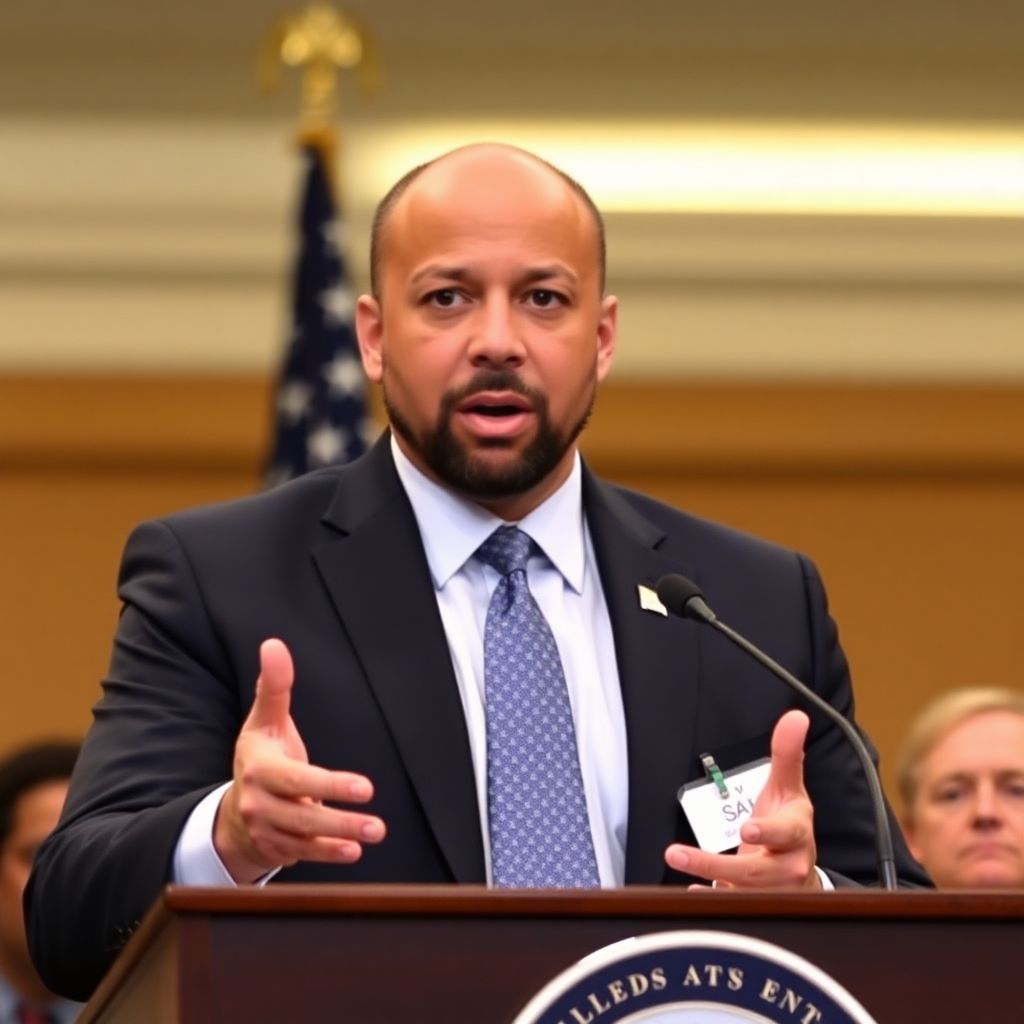
Speaking at the DC Blockchain Summit, Scott said he anticipates seeing “the first proposal in my hand to take a look at” within days. His comments suggest that months of behind-the-scenes negotiations between lawmakers, regulators, and the administration may finally be producing something concrete.
According to a person with direct knowledge of the talks, the White House is preparing to unveil an update on the stablecoin yield question as early as tomorrow. That timing underscores how central the issue has become to the administration’s broader digital asset agenda and to the prospects for a comprehensive market structure framework.
For much of this year, the crypto market structure bill – a long-sought piece of legislation that would more clearly define how digital assets are regulated in the United States – has stalled in the Senate. The House of Representatives passed its own version last summer, known as the Clarity Act, with notable support from both Republicans and Democrats. But the upper chamber has moved far more cautiously, particularly around issues that touch banking, investor protection, and systemic risk.
Stablecoins, and especially the yields offered on them, have been at the center of that caution. On one side, industry advocates argue that allowing interest on stablecoin balances, or yield-bearing structures tied to stablecoins, is critical for innovation, competitiveness, and the long-term adoption of dollar-pegged digital assets. On the other, regulators and some lawmakers worry that high-yield products could resemble unregistered securities or bank-like deposits without the safety net and oversight that traditional finance requires.
The “yield” question is difficult because it touches multiple regulatory domains at once. If stablecoins are treated purely as payment instruments, they might fall under banking or payments regulation. But when they start to offer returns, they may look more like securities, investment contracts, or savings products. That ambiguity has left agencies like the Securities and Exchange Commission, the Commodity Futures Trading Commission, and banking regulators jostling for jurisdiction – and has made senators wary of codifying a framework that could later prove unstable or unsafe.
Within the Senate, concerns have emerged from both parties, albeit for different reasons. Some Republicans fear that overly strict rules on yields and issuance could push stablecoin innovation offshore, undermining the role of the U.S. dollar in digital markets and ceding ground to foreign competitors. Some Democrats, by contrast, have focused on consumer protection, systemic risk, and the potential for stablecoins to create shadow banking products outside the traditional regulatory perimeter.
A compromise on stablecoin yield would therefore need to thread a narrow needle. Lawmakers are said to be exploring approaches that would allow limited, clearly defined yield-bearing features while imposing robust requirements on reserves, disclosure, and risk management. One model under discussion, according to policy observers, is to treat certain stablecoin issuers more like narrow banks or specialized payment institutions, with tight rules on how reserves are invested and how returns can be shared with users.
Another thread in the negotiations concerns who is allowed to issue stablecoins that pay yield. Some proposals have focused on restricting yield-bearing stablecoins to entities chartered or supervised by U.S. banking regulators. Others contemplate a tiered system in which nonbank entities can participate under a federal licensing regime, provided they meet capital, liquidity, and transparency standards comparable to those applied to more traditional financial institutions.
The White House’s anticipated announcement suggests the administration has settled on at least a preliminary position it is willing to back. Officials have repeatedly signaled that they want to preserve room for “responsible innovation” while shutting down products that could mislead retail investors or create hidden leverage in the financial system. Any statement from the administration is likely to emphasize risk controls, clear consumer disclosures, and coordination among financial regulators.
For the crypto industry, a workable compromise on stablecoin yields would be a significant milestone. It could clarify what types of interest-bearing products are legally permissible, reduce enforcement uncertainty, and provide a pathway for compliant offerings by exchanges, fintechs, and on-chain protocols. At the same time, a restrictive or overly complex regime could limit the economics of stablecoin businesses and push more experimental products into less regulated jurisdictions.
The broader crypto market structure bill goes far beyond stablecoins. It aims to define when a digital asset is a security versus a commodity, establish more predictable rules for token listings and delistings, and delineate the responsibilities of trading platforms, custodians, and other intermediaries. However, without agreement on how to treat one of the most widely used categories of digital assets – dollar-pegged tokens – the entire framework has struggled to advance.
Stablecoins have become a key part of global crypto markets, functioning as a bridge between traditional finance and on-chain activity. They are used for trading, payments, remittances, and as a store of value within decentralized finance. The ability to earn yield, whether through interest on reserves or through structured products, is one of the features that has attracted users – and regulators’ scrutiny.
The history of yield-bearing crypto products has also shaped lawmakers’ approach. Previous episodes, including collapsed lending platforms and high-yield schemes that failed during market downturns, have illustrated the risks of opaque or inadequately regulated offerings. That experience is influencing the Senate’s insistence on guardrails around any stablecoin yields that might be marketed to retail investors.
If Senator Scott’s timeline holds and a draft proposal is circulated this week, it will mark the start of an intense period of review and negotiation. Members of the Senate Banking Committee will need to weigh the technical details, reconcile them with the House’s Clarity Act, and assess how the new rules would interact with existing securities and banking law. The White House’s position will also shape what can ultimately pass both chambers.
Even with a compromise in sight, the path to enactment is not guaranteed. Election-year dynamics, a crowded legislative calendar, and the potential for last-minute disagreements over details could still delay final passage. But a public acknowledgment from the Banking Committee chair that a proposal is imminent signals that the Senate is more engaged on digital asset policy than at any time in recent years.
For market participants, the coming days and weeks will be critical. A clear framework on stablecoin yields would influence product design, risk models, and long-term business strategies across exchanges, issuers, and DeFi platforms. It could also reinforce or reshape the competitive landscape between dollar-pegged tokens and other forms of digital money, including potential central bank digital currencies.
In practical terms, a balanced compromise is likely to include three pillars: strong reserve requirements to back stablecoins; strict transparency and reporting rules so users understand how yields are generated; and licensing or charter regimes that define who is allowed to issue and market yield-bearing stablecoins. How far each of those pillars goes will determine whether the U.S. ends up with a permissive environment that encourages onshore innovation, or a narrow framework that primarily protects against downside risks.
As Senator Scott awaits the first written proposal and the White House prepares its public update, the stablecoin debate is moving from abstract principle to concrete policy. What emerges from these negotiations will not only decide the future of yield-bearing stablecoins in the United States, but also signal how the country intends to balance innovation and regulation in the next phase of the digital asset economy.