
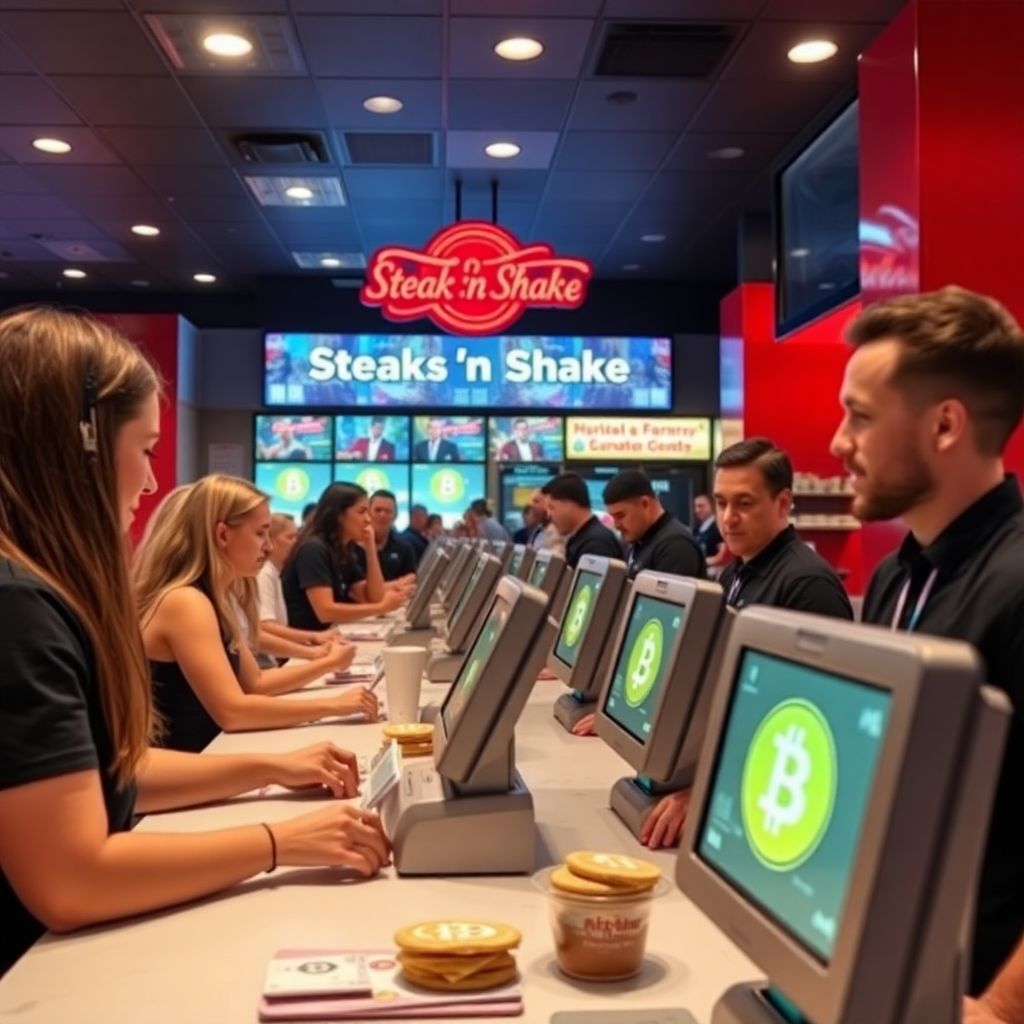
Steak ‘n Shake says its experiment with Bitcoin is already paying off in a big way. Nine months after the U.S. fast‑food chain switched on crypto payments, the company reports that same‑store sales have climbed sharply, describing the increase as “dramatic.”
According to a statement shared on its social channels, the brand isn’t just accepting Bitcoin at the checkout; it’s also turning those receipts into a long‑term strategic asset. Every Bitcoin payment now flows into what the company calls a Strategic Bitcoin Reserve, a corporate treasury pool that management says is used, among other things, to fund employee bonuses.
Executives framed the approach as a blend of a traditional, cash‑generating business with what they see as the upside of a new kind of monetary network. In their words, Steak ‘n Shake has “combined a decentralized, cash‑producing operating business with the transformative power of Bitcoin,” positioning the cryptocurrency as more than a novelty payment option and closer to a core financial pillar of the company.
The chain first signaled its crypto ambitions last May, outlining plans to pivot part of its financial and payment infrastructure toward Bitcoin. Not long after that announcement, locations began taking payments in the world’s largest cryptocurrency, allowing customers to settle their burger and shake orders digitally rather than with cash or cards.
While management has been eager to highlight the impact on sales momentum, it has not disclosed specific figures that would show exactly how much Bitcoin payments contribute to revenue, profit, or the size of the Strategic Bitcoin Reserve. The company also has not made public the total value of the Bitcoin it has accumulated, or how that reserve is managed on a day‑to‑day basis.
Decrypt contacted Steak ‘n Shake and its parent company, Biglari Holdings, seeking more detail on the financial mechanics behind the Bitcoin strategy and its impact on the bottom line. As of publication, neither had provided additional comment or a breakdown of the numbers behind the “dramatic” sales growth claim.
Industry observers, however, have taken notice of the model. One venture investor described Steak ‘n Shake’s approach as an example of what a modern digital‑asset treasury could look like in practice-using an operating business to generate cash flow, accepting Bitcoin directly from customers, and then retaining that Bitcoin on the balance sheet rather than immediately converting it back into fiat currency.
For Steak ‘n Shake, the benefits appear to fall into several categories. First, the brand gains marketing value by positioning itself as an early mainstream adopter of Bitcoin, which can attract tech‑savvy and crypto‑enthusiast customers. Second, by keeping at least part of its Bitcoin rather than selling it instantly, the company is effectively betting that the asset could appreciate over time, boosting the value of its corporate reserve. Third, directing that reserve toward employee bonuses ties staff incentives to the performance of both the business and its Bitcoin holdings, potentially encouraging a stronger sense of alignment and ownership.
There are obvious risks as well. Bitcoin is notoriously volatile, and any company that keeps a significant amount of its treasury in the asset is exposed to rapid price swings that can affect reported earnings and balance‑sheet stability. To make such a strategy work long term, firms typically need clear internal rules about how much Bitcoin they hold, when they might sell, and how they manage liquidity for everyday operational expenses like rent, payroll, and supplies.
Despite the volatility, Steak ‘n Shake’s early results may encourage other restaurant and retail chains to revisit their own stance on cryptocurrency payments. Many businesses have experimented with Bitcoin at the checkout over the past decade, but most have treated it as a niche option, quickly converting any crypto received back into traditional currency. Steak ‘n Shake is attempting something different: turning those payments into a strategic, long‑term asset that plays a visible role in corporate finance and employee compensation.
If the company continues to see sustained sales growth and can show that its Strategic Bitcoin Reserve enhances shareholder value rather than destabilizing it, that could serve as a case study for a new kind of corporate treasury management. On the other hand, a prolonged downturn in Bitcoin’s price would test how resilient such a model really is-and how much volatility customers, employees, and investors are willing to tolerate in exchange for the potential upside.
For now, Steak ‘n Shake’s message is clear: Bitcoin is no longer just a speculative investment or a curiosity at the cash register. For this fast‑food chain, it has become part of the brand’s identity and operating playbook-one that, at least in its first nine months, the company says has helped push sales to new heights.