
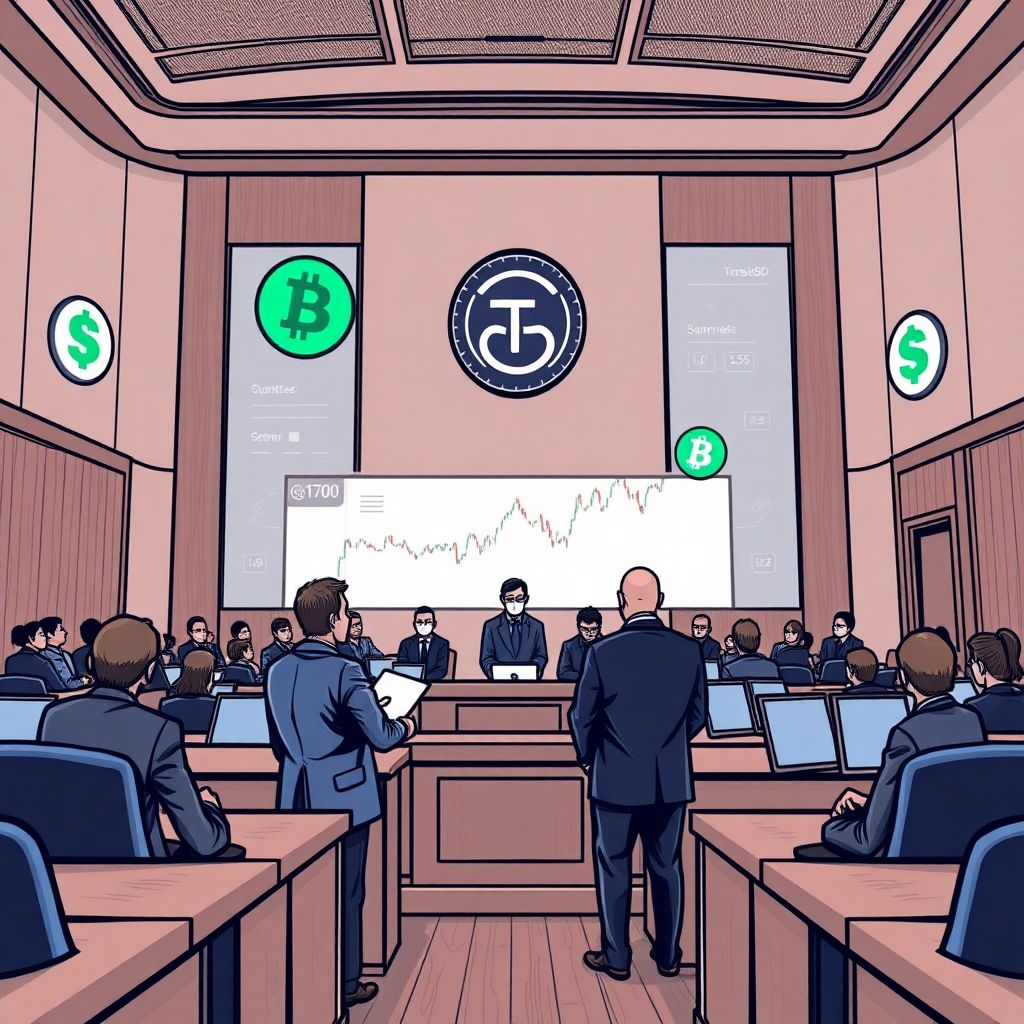
Terraform estate sues Jane Street over alleged trading edge during 2022 TerraUSD collapse
The bankruptcy estate of Terraform Labs has launched a new legal offensive, filing a lawsuit against quantitative trading giant Jane Street over its role in the spectacular implosion of TerraUSD (UST) and the wider crypto market meltdown in 2022.
According to the complaint, Jane Street is accused of exploiting advance knowledge of Terraform’s internal liquidity decisions to position its trades in a way that generated profits while the Terra ecosystem was collapsing. The claims are based on what the estate describes as non-public information about how Terraform intended to deploy capital to defend UST’s dollar peg.
As reported by The Wall Street Journal, the lawsuit alleges that Jane Street obtained insight into Terraform’s planned interventions in the market and then traded around those moves, effectively front‑running the very efforts designed to stabilize TerraUSD. That, the estate argues, allowed the firm to profit at a time when retail investors and other market participants were suffering steep losses.
Todd Snyder, the court‑appointed plan administrator overseeing Terraform’s bankruptcy, sharply criticized Jane Street’s alleged conduct in comments cited by the Journal. He claimed the firm “abused market relationships to rig the market in its favor during one of the most consequential events in crypto history,” casting the trades as a betrayal of trust in the midst of a liquidity crisis.
This new complaint follows a separate lawsuit filed in late December in a U.S. federal court against another major trading firm, Jump Trading. In that case, Terraform’s estate accused Jump of unlawfully profiting from and materially contributing to the collapse of the Terra ecosystem. Together, the suits signal a broader push by the Terraform estate to claw back funds from sophisticated trading shops that, in its view, capitalized on inside access during the 2022 crisis.
The TerraUSD collapse was a watershed moment for digital assets. UST was designed as an algorithmic stablecoin intended to hold a one‑to‑one value with the U.S. dollar, backed not by reserves in a bank account but by a complex mint‑and‑burn mechanism involving its sister token, LUNA. When market confidence eroded in May 2022, that mechanism failed to maintain the peg. UST slid below one dollar, triggering a death spiral in which LUNA supply hyper‑inflated as the system attempted – and failed – to restore stability.
The unraveling of Terra wiped out tens of billions of dollars in paper value, rippling through hedge funds, trading desks, lending platforms, and retail portfolios. The event is widely regarded as the starting point for a cascade of failures in 2022, contributing to the downfall of several major crypto lenders and pushing regulators around the world to scrutinize stablecoins and market structure more aggressively.
In that context, the Terraform estate’s case against Jane Street focuses not on the design of the stablecoin itself but on how certain market participants allegedly operated while the system was breaking down. The estate’s argument hinges on the idea that Jane Street was not merely a fast and sophisticated trader, but one that supposedly enjoyed privileged insight into Terraform’s liquidity strategy – insight that ordinary market participants did not have.
If the allegations are accurate, they raise difficult questions about the blurred lines between legitimate market‑making and improper use of confidential information in crypto markets. In traditional finance, strict rules govern how material non‑public information can be used, and relationships between issuers and trading firms are heavily scrutinized. Crypto, until recently, has operated with looser norms and fewer clear guardrails, particularly in offshore venues.
The complaint also underscores the central role played by large quantitative firms in crypto liquidity. Trading houses like Jane Street and Jump have become essential to price discovery and order‑book depth on many exchanges. In calm markets, they help reduce spreads and improve execution. But during periods of extreme stress, their activity – and any informational advantages they may hold – can have outsized impact on price moves and market psychology.
For creditors of Terraform, the lawsuits against Jane Street and Jump are part of a broader effort to recover funds after the implosion. Bankruptcy administrators often look for deep‑pocketed defendants who may have benefited from questionable conduct around the time of a failure. If courts ultimately side with the estate, any recovered amounts could help fill the enormous hole left in Terraform’s balance sheet and marginally improve recoveries for those still waiting in line.
From a regulatory and policy standpoint, the case is likely to be closely watched. Authorities around the world have been wrestling with how to treat trading firms that sit at the intersection of issuer relationships, market‑making, and proprietary trading in digital assets. A court finding that a major firm misused non‑public information in this context could accelerate efforts to bring crypto trading relationships under regimes more similar to securities and derivatives markets.
The lawsuit may also influence how future crypto projects structure their interactions with external liquidity providers. Many token issuers and protocol teams rely on arrangements with large trading firms to bootstrap liquidity, defend pegs, or smooth volatility. The Terraform estate’s allegations highlight the inherent conflict: the same firms hired to support a market can also be the most capable of profiting from panic, especially if they receive privileged information about an issuer’s defensive plans.
For institutional players, the case underscores the heightened legal risk that comes with operating in opaque or loosely regulated corners of crypto. Even if a trading strategy is technically allowed on a given venue, courts can still evaluate whether it crossed the line into unfair dealing if it involved confidential insights obtained through special relationships. That legal uncertainty is one reason many traditional financial institutions have taken a cautious approach to deep involvement in token projects.
Retail investors and smaller funds, meanwhile, are likely to view the allegations as further confirmation of longstanding concerns: that crypto markets are dominated by a handful of sophisticated actors with speed, capital, and potentially privileged access to information. Whether or not the Terraform estate ultimately proves its case, the narrative reinforces the perception that the playing field in digital assets has not been level.
More broadly, the Terraform‑Jane Street dispute adds another layer to the post‑mortem of 2022’s crypto crash. The first wave of scrutiny focused on flawed token designs, excessive leverage, and mismanagement at high‑profile firms. A second wave has centered on alleged fraud, misrepresentation, and regulatory violations by issuers and exchanges. This emerging third phase targets the conduct of market‑making and quantitative firms during the crisis, probing whether they simply traded aggressively – or crossed into exploiting information that should never have been used for profit.
The legal process is likely to be protracted. Jane Street, known for its tight‑lipped public posture, is expected to resist the claims vigorously, arguing that its trading activity was lawful and within market norms. The case will likely involve complex technical evidence about trading flows, information sharing, and the precise timing of Terraform’s liquidity moves versus Jane Street’s positions.
Ultimately, whatever the outcome, the lawsuit reflects a broader shift in how the crypto industry is being held to account. The era in which large players could operate in near‑regulatory vacuum is ending. Disputes that once would have remained behind closed doors in private contracts are now playing out in courts, with implications not just for those directly involved but for the future structure and trustworthiness of digital asset markets.