
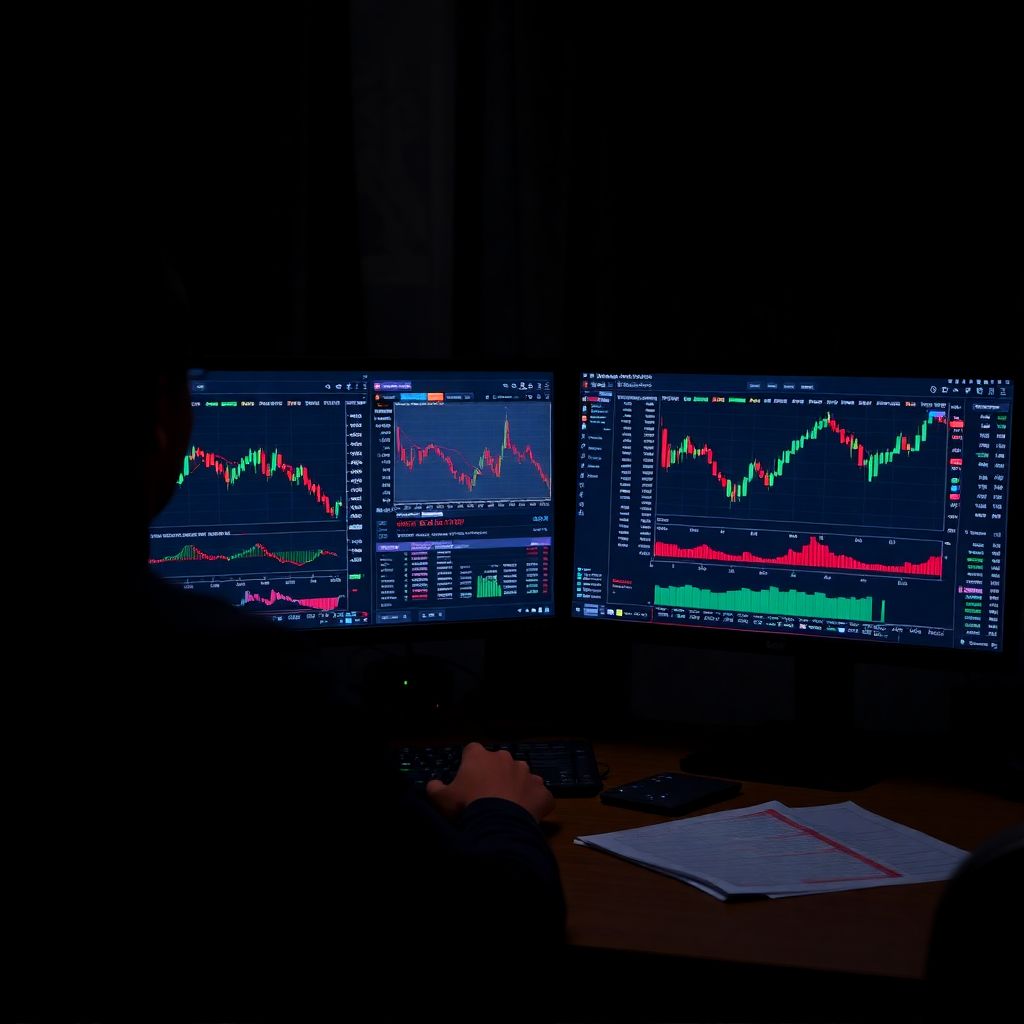
TradingView is widening its reach into onchain markets by integrating real-time data from Hyperliquid and Trade[XYZ], giving traders continuous access to perpetual and spot markets without leaving its familiar charting interface. With this move, users can now track 24/7 price action in crypto and other asset classes directly inside TradingView’s Supercharts, even when traditional exchanges are closed.
The new feeds deliver live quotes for Hyperliquid’s crypto perpetual and spot markets, alongside Trade[XYZ] markets that span equities, commodities, foreign exchange pairs, and pre-IPO shares. Instead of switching between different platforms or bespoke dashboards, traders can pull up these instruments with standard TradingView tools and layouts, streamlining both analysis and execution workflows.
Access has been organized through dedicated symbol prefixes. Assets listed on Hyperliquid appear under the “HYPERLIQUID” prefix inside TradingView’s symbol search, while Trade[XYZ] markets are grouped under the “HIP3XYZ” prefix. This structure keeps onchain instruments clearly labeled and easy to locate among the platform’s vast catalogue of tickers and chart layouts.
Hyperliquid itself is built on its own layer-1 blockchain and operates as an onchain perpetual futures exchange. It currently supports more than 300 perpetual and spot markets across a range of cryptocurrencies, commodity-linked instruments, and index products. By running the entire exchange logic onchain, Hyperliquid aims to provide transparency and verifiable settlement while preserving the speed and experience traders expect from centralized platforms.
A key growth driver for Hyperliquid has been HIP-3, a protocol upgrade that opened the door for external teams to launch their own perpetual markets on top of Hyperliquid’s infrastructure. Trade[XYZ] is the first major initiative to take advantage of this framework, rolling out perpetual products linked not only to digital assets, but also to traditional equities and other asset classes. In addition, Trade[XYZ] supports spot crypto trading, further broadening the ecosystem.
By integrating both Hyperliquid and Trade[XYZ] into a single charting environment, TradingView now lets users monitor perpetual contracts and spot instruments side by side, apply technical analysis across them, and react to cross-market developments in real time. Traders can overlay indicators, draw trendlines, set alerts, and use all the usual Supercharts tools while tracking onchain markets that trade continuously, regardless of regional market hours.
This integration is particularly relevant in an environment where macro events, protocol upgrades, governance decisions, and even social media narratives can move prices at any time of day. Because onchain markets never close, price discovery often continues long after stock exchanges ring their closing bells. Having these 24/7 markets visible in the same interface as more traditional assets can help traders build a more complete picture of risk and opportunity across the entire trading week.
The announcement also lands against a backdrop of increased regulatory attention. Recently, the Monetary Authority of Singapore (MAS) placed Hyperliquid and the Hyper Foundation website on its Investor Alert List. According to MAS, that list is designed as a consumer protection tool, flagging organizations that might be incorrectly assumed to be licensed or regulated by the authority. MAS emphasized that being named on the list does not equate to a ban or direct enforcement action.
Hyperliquid responded by stating it has never claimed to be licensed or authorized by MAS. For users, the listing serves as a reminder to perform due diligence and understand the regulatory landscape around any platform they use, particularly when it comes to decentralized exchanges and onchain derivatives venues that may operate outside traditional licensing frameworks.
Despite regulatory scrutiny, Hyperliquid remains one of the largest decentralized trading platforms by activity. Industry data places it as the sixth-biggest decentralized exchange by trading volume. Separate analytics suggest that the protocol secures in the neighborhood of $5.76 billion in total value locked, underscoring the scale of capital and liquidity currently flowing through its markets.
For market participants, the presence of Hyperliquid and Trade[XYZ] on TradingView offers several practical benefits. Traders who already rely on TradingView for charting can now integrate onchain perpetuals into their existing watchlists and layouts, using custom indicators or scripts they’ve already built. This reduces friction, speeds up analysis, and makes it easier to incorporate crypto derivatives and cross-asset perps into daily routines without learning a completely new interface.
The move also reflects a broader structural shift in global markets. Boundaries between “crypto” and “traditional” finance are increasingly blurred as derivatives emerge that track stocks, commodities, and currencies on decentralized rails. By listing Trade[XYZ] alongside Hyperliquid, TradingView is effectively acknowledging that a growing portion of market discovery is happening onchain, across instruments that mirror or interact with legacy financial assets.
From a strategy perspective, traders can use this unified view to explore correlations between onchain perpetuals and traditional benchmarks. For example, they might compare a crypto index perp against tech-heavy equity indices, analyze how commodity-linked perps move during geopolitical shocks, or monitor FX-inspired markets during key central bank decisions. Having all of this in one charting stack opens the door to more sophisticated cross-market hedging and relative value trades.
Risk management stands to benefit as well. Continuous charts for onchain perps can help traders detect weekend gaps, sudden liquidity shifts, or volatility spikes that might not be visible in spot-only or exchange-hour-limited data feeds. Combined with TradingView alerts and conditional strategies, this can support more proactive responses to fast-moving conditions, particularly for those who trade with leverage.
For algorithmic and systematic traders, the integration simplifies research. Historical and intraday data coming through a widely used interface makes it easier to backtest indicator-based approaches or discretionary setups on Hyperliquid and Trade[XYZ] markets. While execution still depends on each trader’s preferred venue or integration, the analytical side becomes more efficient when data is centralized under a common toolkit.
On the ecosystem side, the integration highlights the role of HIP-3 as a bridge between DeFi infrastructure and front-end user experiences. By allowing third parties like Trade[XYZ] to build markets atop Hyperliquid’s base, the protocol can expand into new asset classes and products without diluting its core tech stack. TradingView then acts as a neutral visual layer, surfacing this growing universe of instruments to a broad audience of chart-focused traders.
For users considering whether to incorporate these markets into their workflow, several questions are worth reflecting on: How does 24/7 onchain price action complement or conflict with an existing trading schedule? What risk parameters need to be adjusted for liquid, high-leverage perp markets that can move sharply while traditional venues are closed? And how might onchain-derived prices influence views on spot crypto or even related equities?
Ultimately, by embedding Hyperliquid and Trade[XYZ] data directly into Supercharts, TradingView gives traders another lens on a rapidly evolving landscape. The integration combines always-on crypto perpetuals, spot assets, and cross-asset onchain markets into one environment, making it easier to monitor, compare, and respond to developments across both decentralized and traditional finance in real time.