
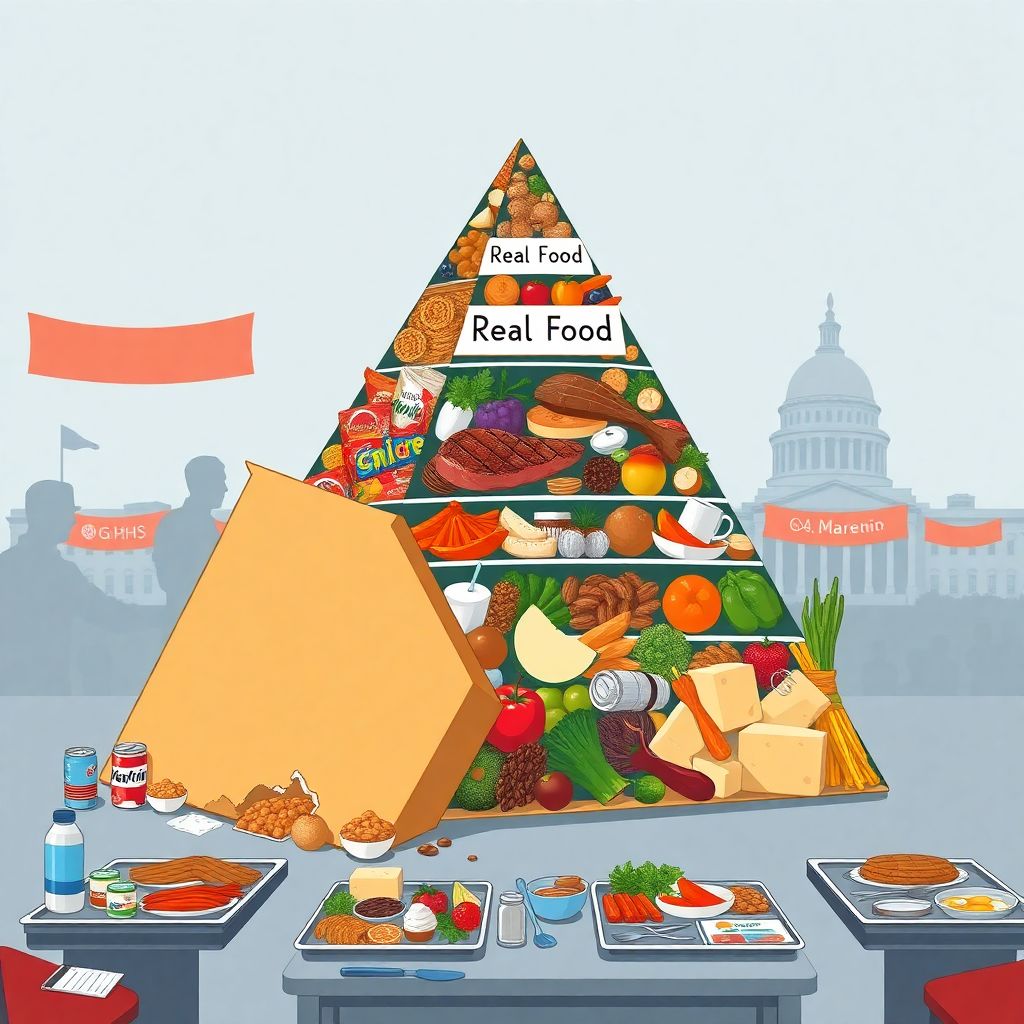
Trump Officials Upend Old Food Pyramid With “Real Food” Dietary Rules
The Trump administration has unveiled a sweeping overhaul of U.S. nutrition policy, turning decades of conventional advice on its head. The new Dietary Guidelines for Americans, 2025–2030, place far greater emphasis on protein, full‑fat dairy, and minimally processed whole foods, while pushing ultra‑processed products to the fringes of a healthy diet.
Jointly released by the Department of Health and Human Services and the Department of Agriculture, these guidelines are more than just suggestions for home cooks. They will guide what goes on cafeteria trays in public schools, shape menus on U.S. military bases, and affect the food offered through federal nutrition programs. Because the guidelines also influence agricultural subsidies and how foods are marketed, they tend to ripple through the entire food system—from farm practices to supermarket shelves.
Officials describe the new framework in simple terms: prioritize “real food.” In practice, that means building meals around ingredients that are recognizable and minimally altered—meats, eggs, fish, dairy, vegetables, fruits, nuts, whole grains—rather than relying on products that are engineered, fortified, and heavily reformulated. Ultra‑processed foods, which have become dominant in the American diet, are now more explicitly discouraged than in past editions.
This shift comes against a sobering backdrop. Public health data show that roughly three‑quarters of U.S. adults live with at least one chronic condition influenced by diet, such as obesity, type 2 diabetes, cardiovascular disease, or hypertension. For policymakers, that statistic has become impossible to ignore. The new guidelines are framed as a response to the mounting burden of diet‑related illness and healthcare costs, as well as to a growing body of research linking ultra‑processed foods to poor health outcomes.
A notable feature of the revision is the upgraded status of dietary protein. Where previous recommendations often treated protein as one component among many, the new guidelines highlight protein as a core pillar of daily eating patterns. Lean meats, poultry, fish, eggs, and dairy products are all emphasized, with officials arguing that sufficient, high‑quality protein is critical for preserving muscle mass, supporting metabolic health, and promoting satiety—especially in an aging population.
In a clear departure from earlier low‑fat orthodoxy, the guidelines also give a new, more favorable place to full‑fat dairy. Rather than steering everyone automatically toward skim milk and fat‑free yogurt, the updated advice allows room for whole milk, full‑fat cheese, and other richer dairy options within an overall balanced diet. The rationale: fat‑containing dairy, when consumed as part of a nutrient‑dense pattern of eating, can provide important vitamins and bioactive compounds, and may be less harmful than previously assumed when not combined with a high sugar and refined carbohydrate intake.
The other side of the coin is a sharper line drawn against ultra‑processed foods. These products—typically made from refined starches, seed oils, added sugars, artificial flavors, and a long list of additives—include many packaged snacks, sugary beverages, fast food staples, and ready‑to‑eat meals. Past guidelines tended to single out sugar, salt, or saturated fat; the new version more directly questions the health value of industrially formulated foods as a category. Americans are urged to reduce dependence on these items and to base their diet on ingredients that look and taste closer to their natural state.
This reframing is likely to have far‑reaching economic and political consequences. Companies built on processed cereals, low‑fat snacks, and diet products may find their traditional “healthy” branding less credible under a policy that celebrates eggs, steak, butter, and unprocessed cheese. At the same time, producers of meat, dairy, eggs, and fresh produce may see new opportunities, as government purchasing and educational campaigns tilt toward whole foods and higher‑protein choices.
For schools, the practical changes could be significant. Menus that once leaned heavily on refined grains, flavored low‑fat yogurts, and reconstituted meat products may be retooled to feature more whole cuts of meat, plain dairy, fresh or frozen vegetables, and fruit without added sugars. The focus is expected to shift from meeting abstract nutrient targets via fortified products to serving meals built from simple ingredients children recognize.
The military, another major buyer of food, may follow a similar path. Rations and base cafeterias could move away from ultra‑processed convenience foods toward higher‑protein, less processed options designed to support strength, endurance, and long‑term health among service members. For a force that depends on physical performance, the idea of “fueling with real food” aligns neatly with readiness and resilience goals.
Nutrition assistance programs will also be reshaped. Benefits that have historically been used on inexpensive packaged items may increasingly be steered—through approved lists or incentive structures—toward eggs, dairy, vegetables, fruits, and simple staple foods. This could make it harder for low‑income families to rely on cheap ultra‑processed calories, while encouraging retailers participating in federal programs to stock more fresh and minimally processed options.
Behind these policy moves is a broader rethinking of what “healthy eating” should look like. For years, nutrition debates centered on individual nutrients: how many grams of fat, how much sodium, how much cholesterol. The new guidelines pivot toward whole dietary patterns, asking Americans to judge foods by their overall level of processing, ingredient quality, and role in a balanced meal, instead of fixating solely on a nutrition label.
Critics are likely to emerge from multiple directions. Advocates of plant‑based diets may argue that elevating animal protein and full‑fat dairy could undermine environmental and ethical goals, and that the guidelines should have leaned more heavily on legumes, nuts, seeds, and plant oils. On the other hand, food manufacturers whose portfolios depend on low‑fat or highly fortified processed products may challenge the science behind the downgrade of ultra‑processed fare, defending the role of convenient, shelf‑stable items in feeding busy, lower‑income households.
For consumers, the practical implications can be distilled into a few simple ideas. A dinner of grilled chicken, roasted vegetables, and a side of full‑fat yogurt for dessert now sits squarely within the recommended pattern. A breakfast built around sugary cereal, fat‑free flavored yogurt, and diet soda, while technically low in fat and targeted for certain nutrients, falls out of favor because of its heavy reliance on industrial processing and added sweeteners. The new guidelines lean firmly toward the former.
The broader public health aim is to slow or reverse the spiraling rates of obesity, diabetes, and heart disease that have become hallmarks of the modern American diet. By encouraging people to eat more protein, embrace moderate amounts of natural fats, and drastically cut back on ultra‑processed choices, officials hope to stabilize blood sugar, reduce overeating, and improve metabolic markers across the population.
Whether these guidelines will meaningfully change how the country eats remains to be seen. Previous iterations have often collided with powerful commercial interests, confusing marketing messages, and ingrained habits. Still, the 2025–2030 update marks a pronounced philosophical break from the carbohydrate‑heavy, low‑fat playbook of earlier decades. Instead of viewing fat and animal foods as automatic villains, it reframes the main dietary threat as the relentless spread of ultra‑processed products displacing traditional meals.
In policy terms, this is an attempt to align federal nutrition advice with emerging research and with a more intuitive message: base your diet on recognizably real foods, eaten in reasonable portions, and be wary of products that owe more to factories than to farms. How quickly that message makes its way from official documents into American kitchens—shaping shopping lists, school menus, and restaurant offerings—will determine whether this dramatic flipping of the old food pyramid delivers on its promise.