
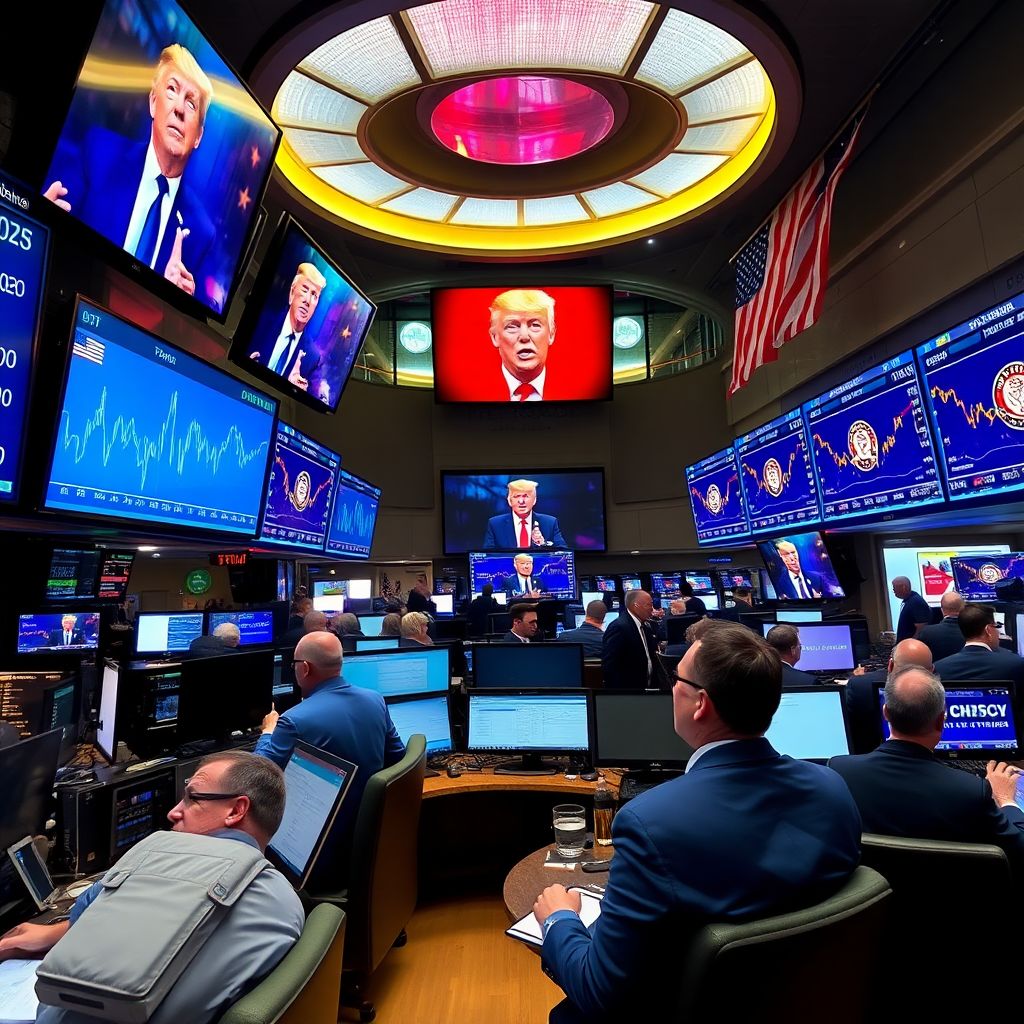
Trump’s Iran optimism ignites crypto rally as oil tumbles below $70
President Donald Trump’s upbeat tone on ongoing talks with Iran has jolted global markets, sending cryptocurrencies higher, pushing crude oil under the key $70 threshold, and boosting gold’s overall market value by more than $74 billion as investors reprice geopolitical risk.
Speaking on Wednesday about negotiations taking place in Qatar, Trump said that Iran’s “denuclearization is well on its way,” calling the latest meetings “excellent” before tempering the enthusiasm with a cautious “We’ll see.” His comments followed a recent post on his social platform in which he confirmed that U.S. officials would meet Iranian representatives in Doha at Tehran’s request.
The shift in rhetoric quickly filtered through trading desks. Market participants, who had been positioned for a prolonged period of heightened tension in the Middle East, began to unwind risk-off trades and rotate back into assets that typically benefit from a calmer geopolitical backdrop.
Crypto jumps as traders dial back worst‑case scenarios
Bitcoin led the move in digital assets, climbing more than 3% to an intraday peak of $60,401 before easing back to around $60,120 by the time of writing. Ethereum advanced 2.8% to $1,620, while XRP added 1.5%. Solana was the standout among major altcoins, surging roughly 5% on the session.
The broader crypto market followed suit. Total cryptocurrency market capitalization expanded by about 2% to reach $2.14 trillion, extending gains that had been building as headline risk around the U.S.-Iran standoff began to soften.
For crypto traders, Trump’s remarks were interpreted as a sign that the probability of a sudden military escalation – and the associated market shock – had decreased, at least in the near term. That perception encouraged some investors to re-enter leveraged positions or close out defensive hedges established during the peak of the recent standoff.
Safe havens reprice as oil breaks below $70
The reaction was not confined to digital assets. The session saw a striking reshuffle across traditional commodities. Gold, typically a barometer of geopolitical anxiety, actually added more than $74 billion in market value even as the immediate risk narrative improved. The move suggests that while investors are willing to take on more risk in certain pockets, they still view gold as an essential long-term hedge against broader macro and monetary uncertainty.
In energy markets, U.S. benchmark West Texas Intermediate (WTI) crude fell more than 2%, sliding decisively below the $70 per barrel mark. It was the first notable decline of that magnitude since tensions between Washington and Tehran began to escalate, signaling that traders now see a lower chance of a supply shock or major disruption in the region’s oil flows.
The combination of firmer crypto prices, resilient gold, and weaker oil highlights how nuanced current positioning has become. Investors appear to be trimming bets on an extended conflict-driven spike in energy prices while still maintaining insurance against systemic financial or monetary stress.
Cautious tone from analysts despite relief rally
Despite the broad-based rebound in risk assets, market strategists warned that the move remains highly dependent on continued diplomatic progress. Negotiations are still in flux, and there is no signed agreement or binding framework yet in place.
Analysts emphasized several key risks:
– Talks could stall or collapse, reviving fears of confrontation.
– Any new sanctions or military incidents in the Gulf could abruptly reverse sentiment.
– Political pressure on both sides might complicate the path to a durable deal.
As a result, professional money managers have been hesitant to fully unwind defensive positions. Many have opted instead for a more tactical approach – gradually adding to crypto and equities on signs of progress while retaining exposure to safe-haven assets in case the talks deteriorate.
Kiyosaki’s bold crypto and metals forecasts resurface
The more constructive backdrop for digital assets has also revived interest in long-term, high-conviction predictions from well-known market commentators. Earlier this week, renewed attention turned to comments made by “Rich Dad Poor Dad” author Robert Kiyosaki, whose March projection for Ethereum resurfaced across crypto channels.
Kiyosaki has argued that a major global financial reset or crisis could dramatically reprice alternative assets. In his scenario, Ethereum could surge to $95,000 by mid-2027, while Bitcoin might climb to $750,000. He also envisions gold soaring to around $35,000 per ounce and silver reaching $200.
While most institutional analysts regard such figures as extremely aggressive and contingent on severe systemic turmoil, the forecasts continue to resonate with a subset of investors who see digital assets and precious metals as the ultimate hedge against fiat currency debasement and banking system instability. The current uptick in crypto prices, even if modest in comparison to those targets, has brought those long-dated predictions back into the spotlight.
Diplomacy spreads across multiple regional channels
Behind the market moves lies a complex web of diplomatic activity extending far beyond Trump’s remarks. U.S. representatives Jared Kushner and Steve Witkoff are currently in Qatar for another round of discussions, indicating that Washington is investing additional political capital in securing some form of understanding with Tehran.
Qatar and Pakistan are playing intermediary roles, helping facilitate communication and reduce the chances of miscalculation. That multi-party structure is designed to keep channels open even if direct U.S.-Iran contacts encounter obstacles.
Separately, Iran has been engaged in talks with Oman, a longstanding regional mediator. The two countries have set up a joint committee to address sensitive issues such as the security of the Strait of Hormuz, a vital chokepoint for global oil shipments, as well as broader ceasefire-related questions. These parallel negotiations suggest that the dialogue is expanding beyond strictly nuclear matters into regional security architecture and de-escalation frameworks.
Prediction markets price in continued talks, not a done deal
Prediction markets provide another window into how traders are gauging the odds of success. On the event-trading platform Polymarket, participants currently assign about a 62% probability that the United States and Iran will extend their 60-day negotiation period.
That figure indicates a base case in which diplomacy continues rather than breaks down abruptly. Yet a 62% probability is far from a certainty. It leaves ample room for surprises – positive or negative – and underscores why volatility remains elevated across interest-rate futures, oil contracts, and crypto derivatives.
If the deadline is extended, markets may view it as evidence that both sides are serious about finding common ground, which could further support risk assets. Conversely, if talks expire without renewal, traders are likely to quickly reprice the likelihood of disruptions to shipping routes, energy supplies, and regional stability.
Why crypto reacts so sharply to geopolitical shifts
The recent moves highlight a broader structural trend: cryptocurrencies have become tightly integrated into the global risk-on/risk-off cycle. Several dynamics help explain this behavior:
– Liquidity sensitivity: Crypto often attracts speculative capital when volatility expectations fall and investors search for higher returns.
– Hedge narrative: Bitcoin and other assets are sometimes pitched as protection against currency debasement and political instability, yet in practice they frequently trade like high-beta tech stocks, rising when sentiment improves.
– Derivatives leverage: High use of futures and options can amplify moves around key headlines, causing short squeezes or forced liquidations that magnify underlying shifts in positioning.
– 24/7 trading: Crypto markets react continuously, often becoming the first arena where changing geopolitical narratives are priced in before traditional markets open.
In this case, a perceived reduction in the risk of an abrupt Middle East shock, combined with strong liquidity and speculative positioning, helped fuel the latest upswing.
Oil, gold, and crypto: three lenses on the same story
The simultaneous behavior of oil, gold, and cryptocurrencies illustrates how the same geopolitical development can produce different reactions depending on the market’s time horizon and dominant narrative.
– Oil is pricing a lower probability of near-term supply disruption, hence the downward pressure as traders roll back conflict premiums.
– Gold is capturing broader anxiety about inflation, monetary policy, and long-term geopolitical fragmentation, which persists even as one specific flashpoint appears to cool.
– Crypto reflects shifting risk appetite and liquidity conditions, responding quickly to any sign that macro and geopolitical headwinds might ease.
For investors, understanding how these three asset classes interplay can help in building diversified strategies that are not overly dependent on a single outcome in the Doha talks.
What a finalized deal – or breakdown – could mean for markets
Looking ahead, markets are essentially trading around three broad scenarios:
1. A concrete agreement is reached
A signed framework covering nuclear issues and regional security would likely:
– Further depress oil’s risk premium.
– Support a continued grind higher in risk assets such as equities and crypto.
– Potentially cap gold’s upside in the short term, though structural demand could remain intact.
2. Talks are extended without a clear breakthrough
This middle path, currently viewed as the most likely in prediction markets, would:
– Keep volatility elevated but contained.
– Encourage range-bound trading in oil with modest downside.
– Allow crypto to trade on idiosyncratic drivers like regulation, adoption, and technological upgrades, rather than purely on headlines from Qatar.
3. Negotiations collapse or the deadline expires without renewal
A breakdown would:
– Reignite fears of confrontation or sanctions, driving oil higher.
– Trigger a flight back to traditional safe havens like the dollar and Treasuries, with gold benefiting.
– Likely pressure crypto in the short term as risk-off behavior dominates, even if some investors frame Bitcoin as a hedge.
Traders are therefore watching every statement, leak, and photo-op from Doha for clues about which path is becoming more probable.
How investors are positioning in the current environment
Portfolio managers and sophisticated retail traders are employing several tactics to navigate this fluid backdrop:
– Hedged crypto exposure: Using options to protect long positions in Bitcoin and Ethereum while still participating in potential upside if negotiations progress smoothly.
– Barbell strategies: Pairing higher-risk assets such as altcoins and growth stocks with defensive holdings like gold, short-duration bonds, or cash-equivalents.
– Event-driven trades: Short-dated bets around key diplomatic milestones, such as formal press conferences or announced extensions of the 60-day window.
– Relative value plays: Positioning for outperformance of certain tokens (like Solana in the latest move) based on technical setups and liquidity conditions, rather than broad market direction alone.
These approaches reflect a recognition that headline risk remains significant, even as immediate fears have eased.
Trump’s market influence remains intact
The latest reaction underscores that Trump’s words still carry considerable weight in financial markets. His public statements on foreign policy, trade, and regulation can quickly reshape expectations, particularly in politically sensitive sectors such as energy and defense – and increasingly, in digital assets.
For crypto specifically, Trump’s evolving stance has been closely watched. From skepticism in earlier years to more recent disclosures showing substantial personal exposure to digital assets, his trajectory has added another political dimension to the crypto narrative. The fact that a single set of remarks on Iran could help lift Bitcoin and Ethereum in tandem with broader risk assets highlights the degree to which political messaging and market behavior are now intertwined.
The bottom line: markets trade optimism, but uncertainty lingers
Trump’s positive assessment of U.S.-Iran negotiations has sparked a relief rally across cryptocurrencies, knocked oil prices below $70, and buoyed gold’s already substantial market value. Investors are tentatively pricing in a reduced likelihood of an immediate regional escalation, while still hedging against the broader macro and financial risks that underpin interest in assets like Bitcoin, Ethereum, and precious metals.
For now, the direction of travel in crypto, energy, and safe havens will largely depend on what emerges from meeting rooms in Doha and other regional capitals. A durable agreement could extend the current upswing in risk assets. A breakdown or abrupt end to talks could just as quickly unwind it. Until clarity emerges, volatility – and opportunity – are likely to remain elevated across global markets.