
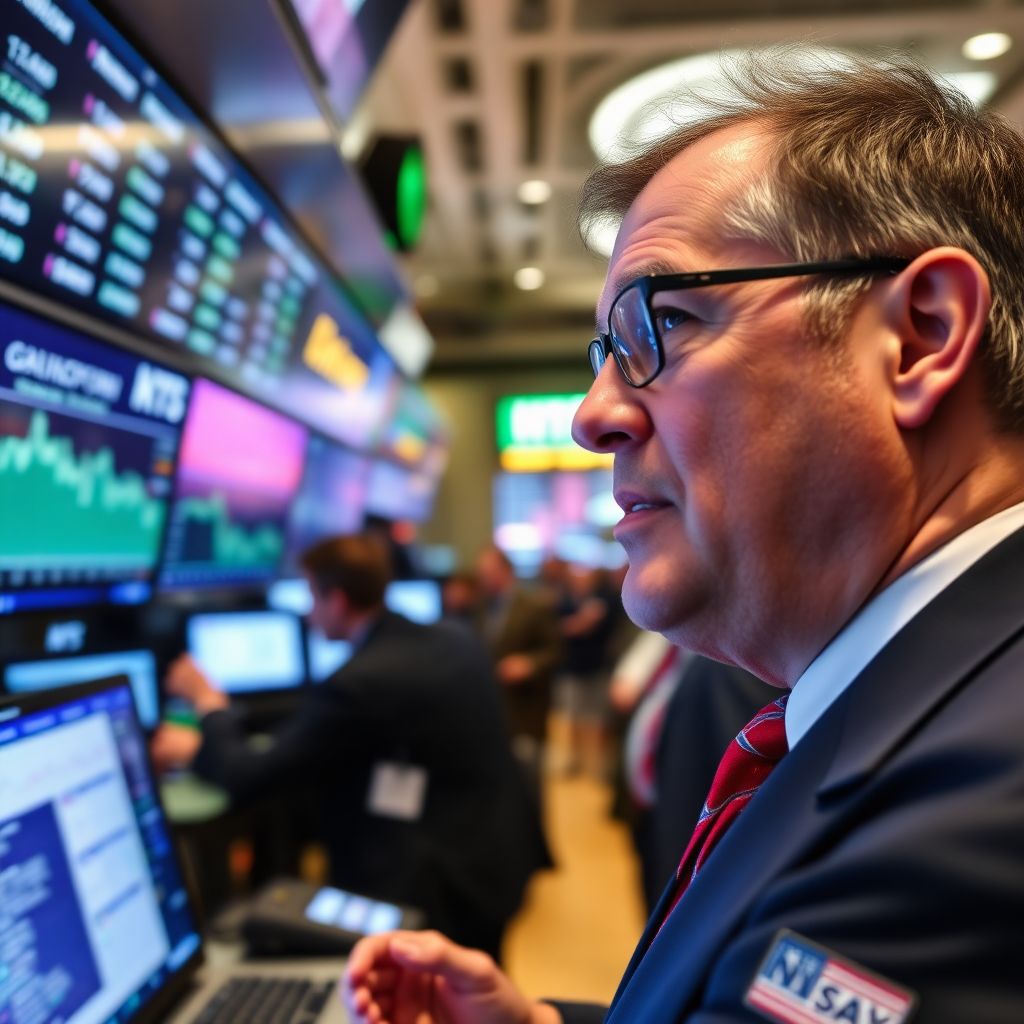
U.S. stocks set fresh records on Wednesday as a powerful rebound in major technology names propelled the S&P 500 and Nasdaq Composite to new all‑time closing highs, even as the Dow Jones Industrial Average slipped into the red.
The session underscored how dominant the technology sector remains in driving overall market direction. While the 30‑stock Dow edged down 0.15%, the broader S&P 500 advanced 0.8% and the tech‑heavy Nasdaq jumped 1.59%, enough to push both indices to record‑setting closes in New York.
Mega-cap tech leads: Tesla and Apple in focus
The sharpest moves came from some of the market’s most closely watched large‑cap tech names. Tesla surged 7.6% to around 390 dollars a share, staging a forceful comeback after recent weakness. Intraday, the stock had traded near 362, meaning the rebound from the session low was particularly steep and helped reinforce the day’s risk‑on tone.
Apple also contributed meaningfully to the rally. Its shares climbed nearly 3% as investors rotated back into the largest U.S. technology and artificial intelligence‑linked companies. That renewed demand for mega‑cap tech was instrumental in lifting the Nasdaq to yet another record, highlighting how concentrated market gains have become around a handful of dominant players.
Not all tech is winning: SanDisk slump highlights dispersion
Despite the upbeat headline indices, the technology sector’s performance was far from uniform. SanDisk dropped 5.5%, a reminder that even within a leading sector, there is significant dispersion between winners and laggards. While the broader narrative is one of tech strength, stock‑picking remains critical, as not all chipmakers, storage manufacturers, or software names are benefiting equally from the AI and digital transformation booms.
This divergence suggests that investors are becoming more selective, rewarding companies with clear growth trajectories, robust balance sheets, and credible AI strategies, while punishing those facing competitive pressures, margin compression, or weaker guidance.
S&P 500’s extended climb and earnings backdrop
The latest move higher leaves the S&P 500 trading just below the 7,000‑point mark, extending a powerful run that has seen the benchmark gain more than 16% over the past year. That performance has been underpinned by expectations for roughly 15% annual earnings growth, according to recent U.S. market research, with much of that optimism centered on technology, communication services, and select consumer and industrial names.
At these levels, questions around valuation naturally intensify. A double‑digit price gain on top of double‑digit earnings growth suggests corporate profitability has kept pace with investor enthusiasm so far. However, any disappointment in upcoming earnings seasons-especially from the largest tech and AI‑exposed stocks-could challenge the current pricing and trigger volatility.
Chinese tech in New York joins the advance
The rally was not confined to U.S. domestic names. Chinese companies listed in New York also participated in the risk‑on move. The Nasdaq Golden Dragon China Index, which tracks U.S.‑listed Chinese firms, added 0.7%, while online gaming and internet giant NetEase rose about 2%.
These gains point to a tentative revival in risk appetite toward growth and internet stocks tied to China, a segment that has been heavily pressured in recent years by regulatory crackdowns, geopolitical tensions, and concerns over the country’s economic momentum. The modest rebound suggests some investors are willing to re‑engage with this space, particularly where valuations appear discounted relative to U.S. peers.
Macro backdrop: AI enthusiasm vs. macro and geopolitical risks
The day’s advance unfolded against a broader backdrop in which investors are betting that several supportive forces can continue to underpin equities:
– Resilient U.S. economic data, including steady consumer spending and a labor market that has softened only gradually, not abruptly.
– Strong balance sheets at the largest technology companies, many of which sit on substantial cash reserves, enjoy high margins, and generate reliable free cash flow.
– Persistent enthusiasm around artificial intelligence, cloud computing, and automation, which investors view as multi‑year growth drivers rather than short‑lived trends.
At the same time, significant risks remain firmly on the radar. Geopolitical tensions, including conflicts and great‑power competition, continue to pose tail risks for supply chains, energy markets, and investor sentiment. Meanwhile, the prospect of interest rates staying higher for longer than previously anticipated keeps pressure on valuations, particularly in long‑duration assets like growth stocks, where much of the value is tied to profits expected years in the future.
The market’s ability to push to new highs despite these concerns suggests that investors currently place greater weight on the AI‑driven growth narrative and corporate strength than on macro and geopolitical threats, at least in the short term.
Seasonal tailwinds: April’s historical pattern
Adding to the bullish tone is the market’s seasonal backdrop. Historically, April has tended to be a favorable month for U.S. equities, with the S&P 500 posting average gains of around 1.4% over recent decades. This pattern, while not a guarantee of future performance, reinforces the idea that seasonal tailwinds may be aligning with fundamental and thematic drivers like AI and tech leadership.
Traders and portfolio managers often factor such seasonality into their positioning, using it as an additional data point when deciding whether to buy dips or trim exposure after strong runs. The latest breakout to record highs therefore fits within a broader, historically supportive context.
What this means for investors watching the tech rally
For investors, the renewed surge in technology shares and fresh records in the S&P 500 and Nasdaq raise several key considerations:
1. Concentration risk is growing. A large share of index gains is coming from a relatively small group of mega‑cap tech and AI‑linked companies. While these firms are currently delivering strong fundamentals, heavy concentration means the broader market is more vulnerable to negative surprises from just a few names.
2. Valuations demand execution. With the S&P 500 up more than 16% over the last year and expectations for about 15% earnings growth, the margin for error is narrowing. Companies, especially in tech, will need to keep meeting or beating earnings and guidance to justify current price levels.
3. Selectivity within tech is essential. The divergence between high‑flyers like Tesla and Apple and laggards like SanDisk illustrates that “buying tech” indiscriminately is unlikely to be a winning strategy. Investors may benefit from focusing on firms with clear competitive advantages, strong balance sheets, and credible long‑term AI or digital roadmaps.
4. Global exposure adds both opportunity and risk. The rebound in U.S.‑listed Chinese stocks shows there is still scope for recovery in beaten‑down markets. However, exposure to such names comes with added regulatory and geopolitical risks that need to be weighed carefully.
How sustainable is the current advance?
Whether the current tech‑driven rally can continue will depend on several interlocking factors:
– Earnings season: Upcoming results from mega‑cap tech, chipmakers, and AI‑exposed companies will be crucial. Strong numbers and upbeat guidance could validate current valuations; any sign of slowing demand or rising costs could prompt a pullback.
– Interest rate expectations: If incoming data forces central banks to keep policy tighter for longer, growth stock valuations could face renewed pressure. Conversely, signs that inflation is moderating in a durable way would support the case for eventual rate cuts, a scenario typically favorable for tech.
– AI monetization: Markets are no longer satisfied with vague AI narratives. Investors are increasingly asking how AI investments are boosting revenues, efficiency, or margins. Companies that can demonstrate tangible benefits are likely to keep attracting capital.
In practice, that means the rally’s durability will hinge not just on macro conditions, but on evidence that AI and digital investments are translating into real, measurable business outcomes.
Short-term traders vs. long-term investors
The current environment also highlights the difference between short‑term trading opportunities and long‑term investment strategies:
– Short‑term traders may gravitate toward high‑beta tech names, momentum plays, and earnings‑driven moves, attempting to ride the volatility in stocks like Tesla while managing risk through tight stops or options strategies.
– Long‑term investors are more likely to focus on diversified exposure to technology and AI via major indices or broad sector allocations, aiming to capture the multi‑year structural growth trend without trying to time every swing.
In both cases, awareness of concentration in a handful of stocks is crucial. Long‑term investors, in particular, may want to ensure that their portfolios do not become unintentionally over‑dependent on a small number of mega‑caps, even if those companies currently appear exceptionally strong.
The role of broader sectors and non-tech themes
Although technology remains the market’s main engine, other sectors are quietly shaping the backdrop:
– Industrials and materials stand to benefit from infrastructure spending, reshoring, and industrial automation, themes that intersect with AI but are not purely tech‑driven.
– Financials are adjusting to the higher‑for‑longer rate regime, which can help net interest margins but also raises funding and credit‑risk questions.
– Energy and resources remain influenced by geopolitical developments and the energy transition, which can introduce both volatility and long‑term opportunity.
For a more balanced approach, some investors are deliberately pairing tech exposure with cyclical and defensive sectors, aiming to participate in upside while cushioning against sector‑specific shocks.
Looking ahead: what to watch next
As the S&P 500 hovers near the 7,000‑point threshold and the Nasdaq continues to carve out new highs, markets are at a crossroads where exuberance and caution coexist. Key signposts to watch in the weeks ahead include:
– Corporate earnings and guidance from leading technology, AI, and semiconductor firms
– Economic data on inflation, employment, and consumer spending that could reshape rate expectations
– Developments in global politics and trade that might affect supply chains and risk appetite
– Evidence of whether inflows into tech‑focused funds and strategies are accelerating or beginning to plateau
For now, the message from Wall Street is clear: technology remains the dominant force setting the pace for U.S. equities. As long as investors believe that AI, cloud, and digital transformation can keep driving robust earnings growth, the S&P 500 and Nasdaq are likely to stay closely tethered to the fortunes of a relatively small group of powerful tech leaders-even as under‑the‑surface dispersion reminds everyone that not all players in the sector are sharing equally in the spoils.