
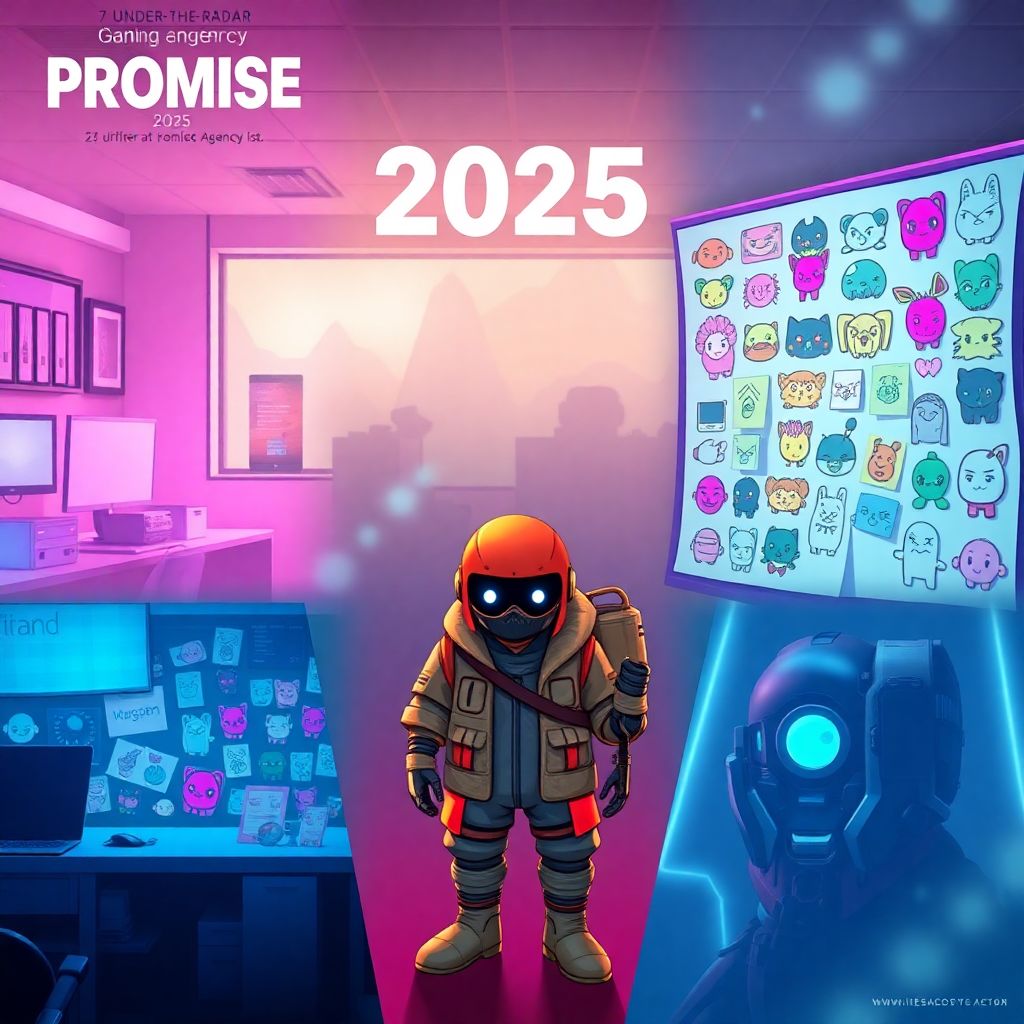
7 Under‑the‑Radar Gaming Gems You Probably Skipped in 2025
The modern release calendar is relentless. Every week brings a new blockbuster, a new live‑service update, and at least a handful of viral indies. Even the most dedicated players can’t keep up. Somewhere under that avalanche, though, are games that quietly do something special—and risk disappearing without ever reaching the audience they deserve.
2025 in particular has been packed with attention‑grabbing hits, which means a lot of remarkable smaller or stranger titles were overshadowed. Some launched with limited marketing, some were misjudged at first glance, and others arrived on busy release days and simply sank without a trace.
If you’ve been staring at your library and feeling like everything looks the same, these seven games might be exactly what you’re missing.
—
1. Promise Mascot Agency
Genre: Narrative sim, management, surreal drama
On paper, Promise Mascot Agency sounds like a quirky management sim where you run a company designing cute mascots for other brands. In practice, it’s closer to a surreal character drama about identity, commercialization, and the strange power of symbols.
You juggle contracts, customize mascots, hire oddball staff, and try to keep your agency solvent. But the more successful you become, the more unsettling questions the game raises: Who owns a character once it goes viral? What happens when corporate demands clash with the emotional meaning fans attach to your creations?
Instead of bombarding you with spreadsheets, the game leans into narrative choices and stylish visual storytelling. Dialogues, client meetings, and internal office drama shape not only your bottom line, but also how your mascots are remembered in this fictional world.
Players who enjoy offbeat narrative experiences—think the intersection of management sims and visual novels—will find a surprisingly poignant story hiding behind the bright colors and big smiles.
Why it flew under the radar:
– No big brand name to latch onto
– Trailer made it look lighter and sillier than it actually is
– Released in the same window as multiple high‑profile AAA launches
—
2. Citizen Sleeper 2: Starward Vector
Genre: Narrative RPG, dice‑based storytelling, sci‑fi
The first Citizen Sleeper became a cult favorite—but still remained niche. Its sequel, Citizen Sleeper 2: Starward Vector, doubles down on everything that made the original special while taking bolder narrative swings, and yet it’s still far from mainstream conversation.
You play another synthetic worker on the margins of a collapsing system, making uneasy alliances and scraping by day to day. The core loop is built around dice rolls that determine your available actions each cycle: fixing your ship, helping allies, investigating mysteries, or just finding food and shelter.
What makes Starward Vector stand out is how it weaves systemic gameplay into a deeply human story. Every choice feels heavy, every missed opportunity lingers. The writing is dense but sharp—more like a great sci‑fi novel than a typical RPG script. The game isn’t afraid to slow down and sit with quiet, uncomfortable truths about labor, personhood, and survival under capitalism.
If you like story‑driven games that respect your intelligence and tolerate a bit of reading, this sequel is a must‑play. It rewards replaying, too: seeing different outcomes, exploring new relationships, and discovering corners of its world you completely missed the first time.
Why it flew under the radar:
– Narrative sci‑fi remains a niche within a niche
– Looks “small” next to flashier, cinematic RPGs
– Many players still haven’t tried the first game
—
3. Ender Magnolia: Bloom in the Mist
Genre: Metroidvania, action‑platformer, dark fantasy
Ender Magnolia: Bloom in the Mist had the misfortune of landing in an already saturated Metroidvania landscape. That’s a shame, because it’s one of the more carefully crafted entries in the genre this year.
The game places you in a decaying, mist‑shrouded world, wandering through overgrown ruins and fractured mechanical structures. The art direction walks a fine line between melancholy and beauty, with soft color palettes contrasted against unsettling enemies and decayed architecture.
Where Ender Magnolia shines is in its combat and progression. Every new area adds a twist—enemy patterns that demand new timing, traversal tools that change how you think about old spaces, or abilities that overlap in clever ways. The soundtrack quietly does a lot of heavy lifting, turning even backtracking segments into evocative journeys rather than chores.
It never tries to reinvent the genre completely, but it does almost everything with unusual polish: tight controls, fair but demanding encounters, and a world that invites thorough exploration.
Why it flew under the radar:
– Metroidvania fatigue among players and press
– Modest marketing campaign
– Overshadowed by a couple of bigger 2D action releases around the same time
—
4. Absolum
Genre: Tactical action, sci‑fi horror, immersive sim elements
Absolum is the sort of game that’s hard to pitch in a sentence—part of why it hasn’t broken out. Imagine a tense blend of tactical combat, light immersive‑sim systems, and slow‑burn sci‑fi horror set within a failing research facility.
You’re dropped into a labyrinthine complex with limited resources and a series of objectives that never go quite according to plan. Enemies aren’t just bullet sponges; they react to sound, light, and changes in the environment. Instead of sprinting and shooting nonstop, you’re more often listening, scouting, and improvising when something inevitably goes wrong.
The game rewards experimentation. Luring creatures into traps, rerouting power to open unexpected pathways, abusing the physics system to your advantage—it all feels satisfyingly systemic. When a plan works, it’s because you understood the rules, not because the game pushed you along a scripted corridor.
Absolum also leans into unease over jump scares. Strange logs, distorted audio, and subtle environmental storytelling slowly build a narrative about the station’s downfall and your own uncertain role in it.
Why it flew under the radar:
– Marketing struggled to convey how it actually plays
– Genre‑blending made it hard to categorize in storefronts
– Launch version had a few rough edges that scared off early adopters
—
5. South of Midnight
Genre: Third‑person adventure, folkloric fantasy
South of Midnight brings Southern Gothic influences into a magical realist action‑adventure that deserved much more attention than it got. Instead of another post‑apocalyptic wasteland or generic fantasy kingdom, you explore a myth‑soaked version of the American South—swamps, small towns, abandoned industrial zones—infused with spirits and local legends.
The game’s strength lies in its atmosphere and character work. Conversations feel grounded and specific: you’re not talking to generic NPCs, but people with history, grudges, and complicated relationships with the supernatural. The story navigates topics like heritage, community, and generational trauma without turning them into shallow plot devices.
Gameplay mixes light combat, traversal, and puzzle‑solving, with a focus on using spiritual abilities to reveal hidden paths or negotiate with entities instead of just fighting them. It’s not trying to be the next ultra‑hard action game; it’s more interested in giving you a sense of place and letting the story breathe.
Why it flew under the radar:
– Slower pacing turned off players looking for constant action
– Unique setting didn’t fit neatly into standard marketing templates
– Released alongside louder open‑world games that dominated coverage
—
6. RoadCraft
Genre: Driving sim, building, sandbox creativity
At first glance, RoadCraft looks like a minimalist driving game. Spend an hour with it, though, and it reveals itself as a wonderfully flexible sandbox about building and mastering your own road networks.
You design roads, ramps, loops, and complex intersections, then test them by driving through your creations. Physics is a central character here: weight distribution, speed, slope, and surface types all affect how your vehicles behave. A slight miscalculation can send you spinning off a half‑finished bridge or tumbling down a canyon.
The loop is oddly meditative. You sketch a route, tweak it, drive it, fail spectacularly, adjust the gradient by a few degrees, and eventually glide through a perfectly tuned course. Sharing and iterating on track designs gives the game endless life, especially if you enjoy tinkering and optimization more than traditional “win states.”
There’s also a subtle educational aspect: you end up thinking like a civil engineer, evaluating sight lines, safety margins, and curve radiuses without ever opening a textbook.
Why it flew under the radar:
– Visuals are functional rather than flashy
– Easily mistaken for yet another casual mobile‑style racer
– Requires some patience before its creative depth really clicks
—
7. Atomfall
Genre: Survival adventure, post‑disaster exploration
Atomfall isn’t another bombastic post‑apocalypse; it’s a tense, grounded survival adventure set in the shadow of a nuclear catastrophe. Instead of mutated monsters and endless gunfights, you’re dealing with invisible threats: radiation, contaminated resources, collapsing infrastructure, and desperate people making desperate choices.
The game emphasizes planning and risk management. Do you cut through a high‑risk zone to save time, or detour and consume precious supplies? Do you share medicine with strangers, knowing you might need it later? Every decision has implications that ripple through your run.
Atmosphere is everything here. Abandoned suburbs, silent farmlands, and crumbling industrial sites feel eerily plausible. Audio design plays a huge role—Geiger counter clicks, distant rumbles, and the hollow wind become as nerve‑wracking as any monster encounter.
Atomfall won’t appeal to everyone. It’s slow, deliberate, and occasionally unforgiving. But if you like survival systems that respect your intelligence and a tone that takes disaster seriously instead of using it as a backdrop for power fantasies, it’s one of 2025’s most affecting experiences.
Why it flew under the radar:
– Competes with flashier, action‑heavy post‑apocalyptic games
– Difficulty and pacing can feel harsh in the opening hours
– Harder to market than games with clear, explosive set‑piece moments
—
Why So Many Great Games Slip Through the Cracks
The industry’s scale is both a blessing and a curse. Digital storefronts and easier development tools mean more creators than ever can release games—but that also means it’s nearly impossible for any single title to break through the noise without a massive marketing budget or viral moment.
Several trends make hidden gems more common than ever:
– Overcrowded release windows. Dozens of games vie for attention every major launch month. Smaller releases vanish under big‑budget headlines.
– Algorithm‑driven discovery. Storefronts push what’s already popular, creating a feedback loop that sidelines riskier or more experimental projects.
– Genre fatigue. Players see “another” metroidvania, narrative RPG, or survival game and assume they’ve seen it all, even when a new title brings fresh ideas.
– Time pressure. Most people can only invest in a few long games per year, making them cautious about trying more unusual or unproven experiences.
That’s precisely why actively looking for under‑the‑radar releases can be so rewarding. Hidden gems often take risks mainstream games avoid: unconventional settings, experimental mechanics, or stories that don’t fit familiar templates.
—
How to Find More Hidden Gems Like These
If these seven titles appeal to you, it’s worth developing your own strategies for discovering similar games:
– Explore niche genres you already love. If you enjoy one narrative‑heavy RPG or creative sandbox, chances are there are more in that micro‑space.
– Pay attention to smaller showcases. Curated lineups focused on indies or experimental titles often highlight future cult classics before they spread by word of mouth.
– Look beyond top‑seller charts. Many platforms let you filter by tags, release date, or user reviews—use those to dig deeper than the front page.
– Read impressions, not just scores. A game might be divisive numerically but perfect for your specific tastes based on how players describe it.
– Give games a second chance. Some titles launch rough but become excellent after a few substantial updates.
Over time, you’ll build an instinct for what might turn into your next favorite surprise.
—
Why These Seven Are Worth Your Time
Each of the games above stands out for a different reason:
– Promise Mascot Agency reframes corporate branding as something strangely emotional and human.
– Citizen Sleeper 2: Starward Vector shows how far tabletop‑style storytelling can go in digital form.
– Ender Magnolia: Bloom in the Mist proves that refinement, not reinvention, can still make a metroidvania feel special.
– Absolum leans into systems‑driven tension instead of scripted horror.
– South of Midnight foregrounds a setting and culture that games rarely explore with this much care.
– RoadCraft turns road design into a creative, almost meditative obsession.
– Atomfall offers a sobering, grounded look at catastrophe and survival.
None of them rely on sheer spectacle to keep you playing. Instead, they focus on mood, mechanics, and ideas—things that tend to linger long after you’ve finished the final mission or watched the credits roll.
—
Making Space for Smaller Experiences
In a year where giant open worlds and live‑service behemoths continue to dominate, it’s easy to feel like your gaming time must be spent “keeping up” with what everyone else is playing. But some of the most memorable experiences come from stepping sideways, not forward—trying the strange narrative sim, the quiet survival game, or the genre hybrid that doesn’t fit any obvious label.
If you’ve been burned out by bloated content grinds or games designed to be endless, these under‑the‑radar releases can act as a reset. Most of them are tightly scoped, focused on a handful of core ideas, and comfortable ending once they’ve said what they want to say.
So the next time you feel like nothing new is exciting you, remember: 2025 is overflowing with games that almost nobody is talking about—and hidden somewhere among them might be the one that ends up on your personal all‑time favorites list. These seven are an excellent place to start looking.