
US F‑15 downed over Iran as Bitcoin struggles to hold $67,000 amid surging geopolitical risk
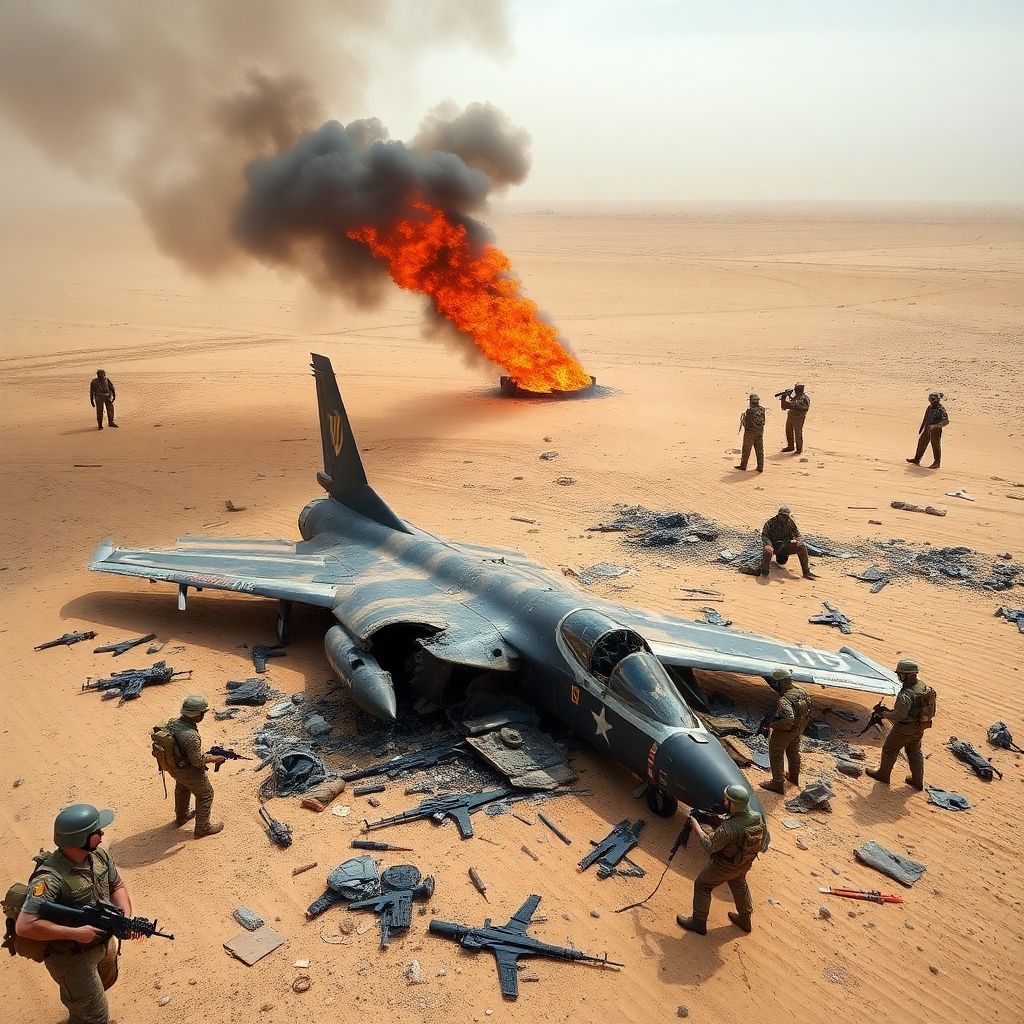
A U.S. Air Force F‑15 fighter jet was shot down in Iranian airspace on April 3, in a dramatic escalation of a conflict that has already rattled global markets and driven Bitcoin more than 40% below its October 2025 all‑time high. One crew member was reported rescued, and the White House confirmed that President Donald Trump had been briefed on the incident.
Iranian state media published photos and video of wreckage they said belonged to the downed aircraft. Independent visual analysis by U.S. media outlets matched key features of the debris to an F‑15 airframe, reinforcing early intelligence reports. The White House press secretary stated that “President Trump has been briefed,” with updates provided in real time as the story developed early Friday afternoon U.S. time.
At the time of writing, Bitcoin (BTC) was hovering around $67,000, slipping slightly on the day but holding within a narrow trading band that has repeatedly acted as support during earlier phases of the U.S.-Iran standoff. This latest incident introduces yet another layer of uncertainty into an environment already shaped by war risk, elevated energy prices, and shifting expectations around U.S. monetary policy.
Bitcoin pinned in a fragile support zone
Throughout the recent flare‑up in the region, Bitcoin has repeatedly revisited the $65,000-$67,000 area, with buyers stepping in each time geopolitical headlines intensified. Market data shows that the sharpest drawdowns have tended to follow moments of clear escalation rather than mere rhetoric. When the first wave of U.S. strikes began, BTC briefly plunged to about $63,000 before quickly stabilizing as traders reassessed the risk.
The downing of a U.S. fighter jet is considered a qualitatively different development from previous skirmishes or threats. It raises the specter of broader military confrontation and increases the likelihood of miscalculation on both sides. For Bitcoin, viewed by some as a hedge and by others as a high‑beta risk asset, this kind of uncertainty can produce choppy, directionless price action as investors struggle to decide whether to de‑risk or rotate into alternative stores of value.
Good Friday timing magnifies the shock
The incident occurred on Good Friday, when major U.S. stock exchanges were closed for the Easter holiday. With traditional equity markets offline, immediate price discovery shifted toward futures markets, energy contracts, and 24/7 assets like cryptocurrencies. That dynamic left Bitcoin and other digital assets as one of the few continuously trading barometers of risk sentiment in the hours following the news.
Oil prices were already above $100 per barrel even before the jet was downed, driven in large part by the ongoing closure of the Strait of Hormuz, a critical chokepoint for global energy shipments. The expectation among traders is that when Asian markets open, crude could see another sharp leg higher, especially if investors conclude that the incident signals a prolonged confrontation or expanded military operations.
A sustained surge in oil carries direct macroeconomic consequences. Higher energy costs tend to feed into broader inflation, squeezing consumers and complicating central bank decision‑making. For the Federal Reserve, which had been under pressure to loosen policy after an extended period of elevated rates, persistently high oil could limit its room to cut. That combination-sticky inflation and less‑dovish monetary policy-has been one of the main headwinds for risk assets and crypto since the conflict began.
Trump hints at eventual reopening of Hormuz
Against this backdrop, President Trump has attempted to send a mixed but deliberate message: firm military action paired with the suggestion that a negotiated endgame remains possible. In a post on X, he said the Strait of Hormuz could be reopened “with a little more time,” a phrase that many investors interpreted as an opening for diplomacy despite ongoing strikes.
Just a day earlier, on April 2, Trump addressed the nation from the White House, describing U.S. forces as being in the “final stages” of their campaign while cautioning that additional operations would continue over the coming weeks. This dual track-escalatory military posture coupled with references to eventual de‑escalation-has prevented markets from fully pricing in either a clean resolution or an uncontrolled spiral.
For traders, that ambiguity translates into an uneasy holding pattern. Many large participants prefer not to take aggressive directional bets on Bitcoin or other risk assets when the range of possible outcomes-from a rapid diplomatic breakthrough to a broader regional conflict-remains so wide.
Why the Hormuz chokepoint matters so much for Bitcoin
Although Bitcoin is a digital asset, its price has become deeply entwined with the physical realities of the global economy. The Strait of Hormuz is one of the most strategically important waterways in the world, with a significant share of global oil and gas passing through it. Any disruption there directly affects energy prices, shipping costs, and inflation expectations.
When investors see a prolonged closure of Hormuz as likely, they start to reassess the entire macro environment: how expensive energy could become, how much consumer demand might slow, and how central banks might respond. Bitcoin, which once traded more independently of these variables, now moves increasingly in line with broader macro trends. In recent cycles, periods of rising real yields, strong dollar moves, and fears of persistent inflation have coincided with pressure on BTC.
A credible, durable reopening of Hormuz and a subsequent slide in oil back below $100 per barrel could remove a major overhang. Such a shift would ease inflation anxiety, revive expectations of eventual rate cuts, and potentially restore some appetite for risk-conditions that, historically, have been favorable for Bitcoin’s performance.
Diverging narratives: hedge, risk asset, or both?
The current crisis has also reignited an old debate: Is Bitcoin a safe‑haven asset or simply another high‑volatility vehicle that sinks when risk sentiment deteriorates?
On the one hand, proponents argue that in a world of sanctions, capital controls, and weaponized finance, a censorship‑resistant, globally transferrable asset has unique strategic value. Episodes of geopolitical turmoil often drive increased interest in cross‑border, non‑sovereign money, especially in regions where local currencies or banking systems are perceived as vulnerable.
On the other hand, trading data over the last several years shows that Bitcoin tends to behave more like a high‑beta tech stock during acute risk‑off episodes: when equities fall sharply, BTC often drops even faster. Leveraged positions, derivatives liquidations, and institutional risk models can all contribute to that correlation, at least in the short term.
The downing of the F‑15 places this tension in sharp relief. Some investors may choose to allocate more to Bitcoin as a long‑term hedge against geopolitical and monetary instability. Others will treat it as a source of liquidity to be sold first when volatility spikes. The resulting push‑and‑pull is part of why BTC can trade sideways in a relatively tight range even as the newsflow grows darker.
Market structure keeps volatility contained-for now
Despite dramatic headlines, intraday volatility in Bitcoin has been more contained than in past geopolitical shocks. Positioning is one reason: after the earlier 40% drawdown from the October 2025 high, speculative excess had already been partially flushed out. Leverage in derivatives markets is lower than it was at prior peaks, reducing the likelihood of cascading liquidations on each negative headline.
In addition, a larger share of Bitcoin now sits in long‑term wallets that historically move coins only during significant macro inflection points. These holders are less sensitive to day‑to‑day developments and more focused on multi‑year narratives such as digital scarcity, monetary debasement, and the gradual institutionalization of crypto infrastructure. Their reluctance to sell into fear can help create a price floor.
That said, the market remains on edge. A further escalation-such as confirmed casualties among U.S. forces beyond the rescued crew member, or a direct strike on critical energy infrastructure-could still trigger a sharper repricing across risk assets, including BTC.
How professional investors are likely viewing the situation
Institutional investors are increasingly approaching Bitcoin through the same lens they use for other global macro trades. In the current environment, many are likely juggling several simultaneous questions:
– Will the U.S.-Iran confrontation broaden into a regional conflict, or remain contained?
– How high can oil go before demand destruction, policy intervention, or diplomacy push it lower?
– At what point does inflation become entrenched enough that central banks must abandon the idea of rate cuts altogether?
– Under which scenario does Bitcoin perform best: controlled de‑escalation with moderate growth, or deeper systemic stress that undermines confidence in fiat currencies?
These questions feed directly into portfolio construction decisions: whether to increase crypto exposure as a hedge, keep it stable, or pare it back in favor of cash, Treasuries, or commodities. The marginal flows from such decisions can easily tip Bitcoin out of its current range once a clearer narrative emerges.
Scenarios for Bitcoin from here
From a scenario‑planning perspective, several broad paths stand out:
1. Gradual de‑escalation and Hormuz reopening
Military activity tapers off, the strait reopens, and oil slides back below $100. Inflation expectations ease and the Fed regains some room to discuss rate cuts later in the year. In this case, risk appetite could return, supporting a sustained BTC recovery from the $65,000-$67,000 zone and possibly setting up another attempt at previous highs.
2. Prolonged standoff with elevated oil
The conflict remains simmering rather than explosive. Hormuz stays partially constrained, oil holds above $100, and markets learn to live with chronic tension. Under this path, Bitcoin may remain range‑bound, with rallies capped by rate concerns and dips supported by the long‑term hedge narrative.
3. Sharp escalation and broader regional conflict
New incidents-such as further aircraft losses, strikes on major energy facilities, or direct clashes with regional allies-push oil significantly higher and trigger a full‑blown risk‑off episode. Initially, BTC could sell off alongside equities as investors seek liquidity, with the potential for a later rebound if fiat and sovereign debt come under deeper stress.
4. Unexpected diplomatic breakthrough
A surprise agreement quickly stabilizes the situation, reopens critical shipping lanes, and reassures markets. This would likely trigger a relief rally across risk assets. Bitcoin, having already absorbed a multi‑month drawdown, could benefit disproportionately if sidelined capital returns.
What retail participants should watch
For individual traders and long‑term holders alike, the key variables to monitor in the days ahead include:
– Developments around the investigation of the F‑15 incident and any confirmed changes in U.S. military posture
– Concrete steps toward reopening or further restricting the Strait of Hormuz
– Movements in Brent and WTI crude benchmarks, particularly any decisive break above recent highs
– Shifts in market expectations for Federal Reserve policy, as reflected in futures pricing and commentary from officials
– Bitcoin’s behavior around the $65,000-$67,000 support band, and whether large volumes appear on either side of that range
Staying focused on these fundamental drivers can provide more clarity than reacting to every headline or intraday price swing.
De‑escalation remains Bitcoin’s best near‑term catalyst
For now, the crypto market appears to be absorbing the news of the downed jet without panic, but the episode underscores just how tightly Bitcoin’s fate is linked to geopolitics and global macro forces. With BTC already more than 40% below its October 2025 record, many of the most optimistic expectations have been reset, leaving room for upside if conditions improve.
Among all the moving parts, one potential catalyst stands above the rest: a credible, sustained de‑escalation that restores normal shipping through the Strait of Hormuz and drags oil prices back below the triple‑digit threshold. Such an outcome would relieve pressure on central banks, restore some confidence in the economic outlook, and create a more favorable backdrop for Bitcoin to mount a durable recovery rather than merely oscillate inside its current range.
Until then, the digital asset market is likely to remain tightly intertwined with every new headline out of the Gulf-where a single downed aircraft can reverberate from oil terminals and trading desks all the way to the Bitcoin price chart.