
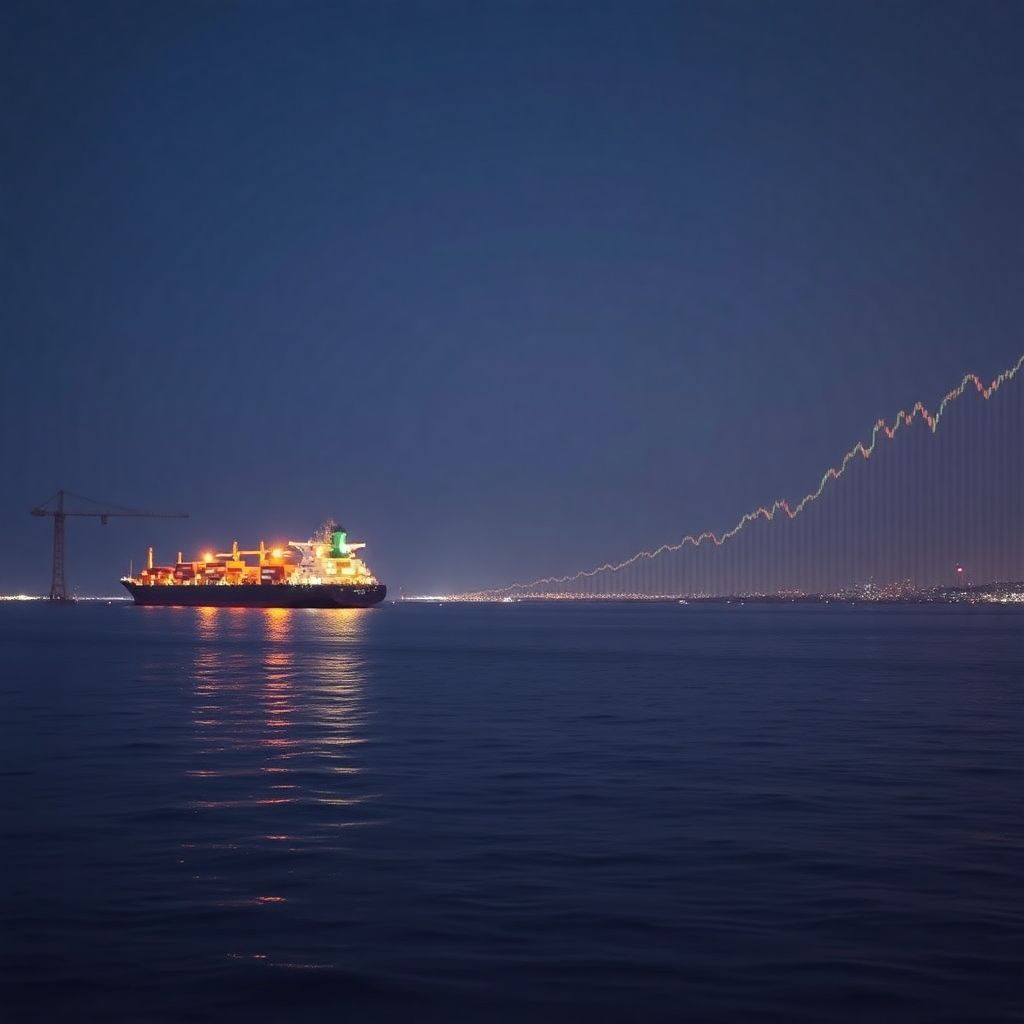
What the Strait of Hormuz reopening *really* means for crypto markets
The order from Washington on June 14, 2026, sounded like classic geopolitics: reopen the Strait of Hormuz, de‑escalate with Iran, bring oil tankers back online. But for markets, the most important line was just four words directed at the energy trade: “Let the oil flow.”
Within hours, the chain reaction began:
– WTI crude slid toward 81 dollars a barrel.
– Brent crude retreated from triple digits to multi‑month lows.
– Bitcoin moved in the opposite direction, climbing roughly 2%.
On the surface, it looked like two unrelated stories: energy prices easing and a routine green day in crypto. In reality, they were chapters of the same narrative, linked by a sequence of cause‑and‑effect that runs from tankers in a narrow waterway all the way to liquidity flowing into digital assets.
Understanding that chain is the difference between trading a headline and actually knowing what it implies for crypto.
—
The chokepoint that taxes the world
The Strait of Hormuz is not just another spot on the map. It is the world’s most critical oil chokepoint:
– Around 20-25% of global seaborne oil trade passes through it.
– At its narrowest point, the navigable channel is only about two miles wide.
– There is no full‑scale alternative for most of that volume; bypass pipelines can only handle a fraction.
For four months, that artery was effectively a war zone. Iran used mines, drones, fast boats, and electronic jamming. Dozens of ships were damaged or left adrift, maritime insurance exploded, and tanker traffic shrank.
Even before a single barrel is physically blocked, markets start charging what’s known as a war premium: a built‑in risk surcharge on every barrel of oil priced globally. Brent above 100 dollars was not just a reflection of actual supply lost; it was a reflection of the risk that a lot more supply *could* suddenly go offline.
That premium behaves like a stealth tax on the world:
– It appears at the pump in higher gasoline and diesel prices.
– It increases freight and shipping costs.
– It feeds through to anything transported by truck, container, or plane.
– It raises costs for petrochemical‑derived goods and industrial processes.
When the June 14 reopening was announced as credible and immediate, the market didn’t wait for more tankers to physically cross the strait. It repriced the *risk*. The war premium began to evaporate within hours.
Oil’s 3-5% drop that day was not about new barrels suddenly overflowing onto the market. It was the market *refunding* the uncertainty tax it had been charging. That refund is the first link in a much longer chain.
—
Link 1: From oil prices to inflation data
Oil is not just another line item in the inflation basket. It sits upstream of almost everything:
– Directly: gasoline, diesel, jet fuel, heating oil.
– Indirectly: freight, food distribution, manufacturing, construction, plastics, fertilizers, and more.
When crude moves from around 100 dollars down toward the mid‑80s and stays there, the impact doesn’t show up in a single data release; it ripples through the economy over weeks and months:
1. Fuel becomes cheaper at the wholesale level.
2. Gas stations adjust pump prices.
3. Trucking and logistics firms see lower operating costs.
4. Retailers, producers, and service providers face lower transport and input expenses.
5. Headline inflation decelerates, and some pressure is taken off core inflation.
The key is not a one‑day dip in oil, but a sustained downshift. If markets believe the Strait of Hormuz will remain open and stable, the disappearing war premium turns into a persistent disinflationary force.
That is exactly the kind of shift central banks watch closely.
—
Link 2: From inflation to the Federal Reserve’s stance
The Federal Reserve does not target Bitcoin. It targets inflation, employment, and financial stability. But because energy is woven into the cost of almost everything, a durable move lower in oil changes the narrative it confronts:
– Lower headline inflation gives the Fed political and analytical breathing room.
– Downward pressure on fuel and shipping costs can help cool core inflation over time.
– Market expectations start to shift from “higher for longer” to “cuts are back on the table.”
This doesn’t mean one speech about Hormuz translates into an immediate rate cut. It means the probability distribution of future Fed decisions moves:
– The odds of additional hikes shrink.
– The timing of eventual cuts gets pulled forward in models and pricing.
– Yields on the medium and long end of the curve can start to ease as markets anticipate a softer stance.
Rates and rate expectations are not just a macro curiosity. They are the oxygen supply for risk assets, including crypto.
—
Link 3: From the Fed to global liquidity
Monetary policy is the bridge between the real economy and the world of speculative assets:
– Higher rates and tighter policy drain liquidity. Safe yields become attractive, leveraged bets become costlier, and speculative capital retreats.
– Lower rates or even the *expectation* of lower rates push investors out the risk curve. Zero‑ or low‑yield cash looks less compelling, and capital goes searching for upside in equities, credit, and crypto.
Crypto does not live in a sealed ecosystem. Bitcoin, Ethereum, and the long tail of altcoins sit in the same broad risk bucket as high‑beta tech stocks and speculative growth plays. When liquidity is cheap and plentiful, risk appetite rises:
– More capital flows into centralized and decentralized exchanges.
– Market makers are more comfortable extending inventory and leverage.
– Volumes increase, spreads tighten, and order books deepen.
The reopening of Hormuz, by easing one of the largest sources of 2026’s inflation uncertainty, nudges this entire liquidity regime in a more accommodating direction.
So when oil drops on peace headlines and Bitcoin rises on the same day, they are not randomly diverging assets. They are opposite ends of the same policy chain.
—
Why oil fell while Bitcoin climbed on the same Iran news
The apparent contradiction is simple to resolve when you map the sequence:
1. Announcement: De‑escalation with Iran, reopening of the Strait.
2. Market response: War premium vanishes, oil prices fall sharply.
3. Macro implication: Lower expected inflation, less urgency for aggressive Fed tightening.
4. Financial response: Bond yields ease at the margin, risk assets become relatively more attractive.
5. Crypto impact: With slightly looser financial conditions and improved risk sentiment, Bitcoin and other tokens catch a bid.
It’s not that “Iran is good for Bitcoin” or that “oil down automatically means BTC up.” It’s that reduced geopolitical and inflation risk relaxes the macro environment that had been suffocating speculative assets.
—
The reverse chain: what happens if the ceasefire breaks
The same logic works in reverse, and traders ignore it at their peril.
If hostilities in and around Hormuz resume or escalate, and tankers again face mines, drones, or blockades:
1. Oil spikes as the war premium returns, or even grows larger than before.
2. Inflation pressure ratchets back up, especially in headline numbers.
3. Central banks harden their stance or at least delay any shift toward easing.
4. Yields rise, risk‑free returns become more attractive, credit conditions tighten.
5. Risk assets sell off, from equities to high‑yield bonds, and crypto feels the squeeze.
In that scenario, Bitcoin’s role is ambiguous in the short term. While some argue it might act as a geopolitical hedge, empirical behavior during acute stress episodes often looks more like a high‑beta asset: it sells off when the dollar strengthens and liquidity is scarce.
Over longer horizons, persistent conflict and aggressive money printing can support the “digital hard asset” narrative. But on the trading time frame of days to weeks, a renewed crisis in Hormuz would almost certainly be bearish for liquidity‑driven crypto rallies.
—
What this means for crypto traders and long‑term holders
For short‑term traders, the Strait of Hormuz is a reminder that big crypto moves often start far outside of crypto:
– Watch energy prices and shipping risk indicators, not just Bitcoin charts.
– Pay attention to how oil moves relative to inflation expectations and bond yields.
– Treat major geopolitical supply shocks as potential catalysts for policy repricing.
For long‑term holders, the link is less about timing entries and exits and more about understanding volatility:
– Bitcoin’s path is heavily influenced by global liquidity cycles.
– Energy‑driven inflation spikes and crashes are part of those cycles.
– Position sizing and time horizon should account for the possibility that a single headline-about a strait thousands of miles away-can change the macro backdrop quickly.
The critical insight: macro drives liquidity, and liquidity drives crypto multiples. You don’t need to become an energy trader, but you cannot afford to ignore the energy market entirely.
—
How this ties into broader market dynamics
The Hormuz episode illustrates a pattern that repeats across crises:
– A chokepoint, resource, or policy becomes a focal risk.
– Markets build a premium for that risk into prices.
– A resolution or escalation then triggers fast repricing that ripples through inflation, policy expectations, and liquidity.
Crypto sits at the far end of that chain, so it tends to move later but more violently:
– Initial moves happen in oil, shipping, and currencies.
– Then sovereign bonds and rates reprice.
– Stocks adjust next, particularly cyclicals and high‑beta tech.
– Crypto often reacts after these, amplifying the existing direction.
Understanding where we are along that chain allows crypto traders to anticipate pressure rather than simply react to it.
—
Why oil matters more than the Bitcoin price in this phase
When macro is in flux, watching Bitcoin’s own chart can be misleading. It reflects the *result* of the chain, not the forces driving it.
Right now, for assessing medium‑term crypto conditions, the oil chart is often more informative than the BTC chart:
– A sustained decline in crude suggests easing inflation risk and friendlier conditions for future liquidity.
– A sudden spike back toward triple digits signals renewed stress, potential policy tightening, and risk‑off flows.
That doesn’t mean oil “controls” Bitcoin. But it is frequently the first domino in the sequence that ends at your exchange account.
—
The chain is only as strong as the peace
All of this ultimately rests on a fragile assumption: that the reopening of the Strait of Hormuz holds, and that the region remains relatively calm.
If diplomacy delivers a lasting agreement and insurers regain confidence, the war premium can stay suppressed:
– Energy becomes a tailwind for disinflation.
– Central banks gradually shift from combating inflation to managing growth risks.
– Liquidity conditions stabilize or even improve, providing a constructive backdrop for crypto.
If talks break down and tankers are once again in danger, the chain snaps in the other direction. Oil surges, inflation fears return, central banks stiffen their posture, and the environment for speculative assets deteriorates.
In other words, crypto’s recent relief rally is as durable as the ceasefire that enabled it.
—
Additional angles traders should consider
Beyond the straightforward oil-inflation-Fed-liquidity chain, there are several second‑order effects worth watching:
1. Currency impacts
– Cheaper oil often supports energy‑importing economies and their currencies.
– If the dollar weakens as a result, that can further boost dollar‑denominated crypto prices, since a softer dollar historically correlates with stronger risk assets.
2. Equity market sentiment
– Lower energy costs support corporate margins, especially in transport‑heavy sectors.
– A broad equity rally often lifts crypto sentiment and draws in crossover investors.
3. Mining economics
– Energy is a core cost for Bitcoin miners.
– Lower fuel and power costs can improve mining profitability, reduce forced selling, and indirectly support price stability.
4. Derivatives and funding markets
– As macro uncertainty eases, futures funding rates and perpetual swap premiums can normalize.
– Tighter spreads and deeper liquidity reduce the cost of leverage, which can amplify moves in both directions.
5. Risk‑parity and quant flows
– Many systematic strategies allocate capital based on volatility, correlation, and macro inputs like rates and inflation.
– Shifts in oil and bond markets can trigger mechanical reallocations that spill into crypto via multi‑asset funds.
When oil volatility declines and the macro picture stabilizes, these channels tend to align in favor of risk assets. When shocks return, they reverse.
—
FAQ: Geopolitics, oil, and crypto
How does the Strait of Hormuz affect crypto prices?
Indirectly but powerfully. The strait controls a huge share of seaborne oil. Disruptions there push oil up, inflation expectations higher, and central banks toward tighter policy-reducing liquidity for risk assets, including crypto. A safe and open strait lowers inflation pressure, nudging policy and liquidity in a more crypto‑friendly direction.
Why did oil drop while Bitcoin rose on the same Iran‑related headlines?
Because the news reduced perceived war risk. Markets removed the war premium from oil, sending prices lower. Lower expected inflation and a softer prospective stance from the Fed improved risk sentiment, making assets like Bitcoin more attractive. Same story, different points along the chain.
What exactly is the “oil war premium”?
It’s the extra price the market charges for the *risk* that supply might be disrupted, beyond actual current shortages. When tankers and shipping lanes are threatened, traders bid up oil not just for what has happened, but for what might happen suddenly. Peace or credible de‑escalation unwinds that premium.
Will the Iran deal automatically make the Fed cut rates?
No. Central banks don’t respond to single events. But if the reopening of Hormuz and easing of tensions lead to a sustained drop in energy costs and inflation, it tilts the odds toward earlier or more significant easing than markets previously expected. That shift in expectations alone can support risk assets before any actual cut.
What happens to crypto if the ceasefire collapses?
If tanker attacks resume or the strait faces new threats, oil likely spikes as the war premium returns. That raises inflation risk, strengthens the case for tighter or at least not‑easier policy, and pressures liquidity. In that environment, crypto typically trades risk‑off: lower prices, higher volatility, and reduced appetite for leverage.
Why is the oil price more important to watch than the Bitcoin price right now?
Because in a macro‑driven regime, Bitcoin’s moves are often a consequence, not a cause. Oil is upstream in the chain: it influences inflation, which shapes central bank policy, which affects liquidity. Monitoring crude gives an early read on the environment in which crypto will trade over the coming months.
—
In practical terms, the reopening of the Strait of Hormuz is less about a single day’s bounce in Bitcoin and more about the macro tide changing direction.
If oil’s war premium continues to unwind and stays low, the tide gradually shifts toward easier financial conditions and a friendlier backdrop for crypto. If conflict returns and the strait is threatened again, that tide can reverse just as quickly.
For anyone trading or investing in digital assets, the message is clear: the path of your portfolio may begin in a two‑mile‑wide channel of water half a world away.