
Why Pudgy Penguins Bet on a Toy Industry Veteran to Go Mainstream
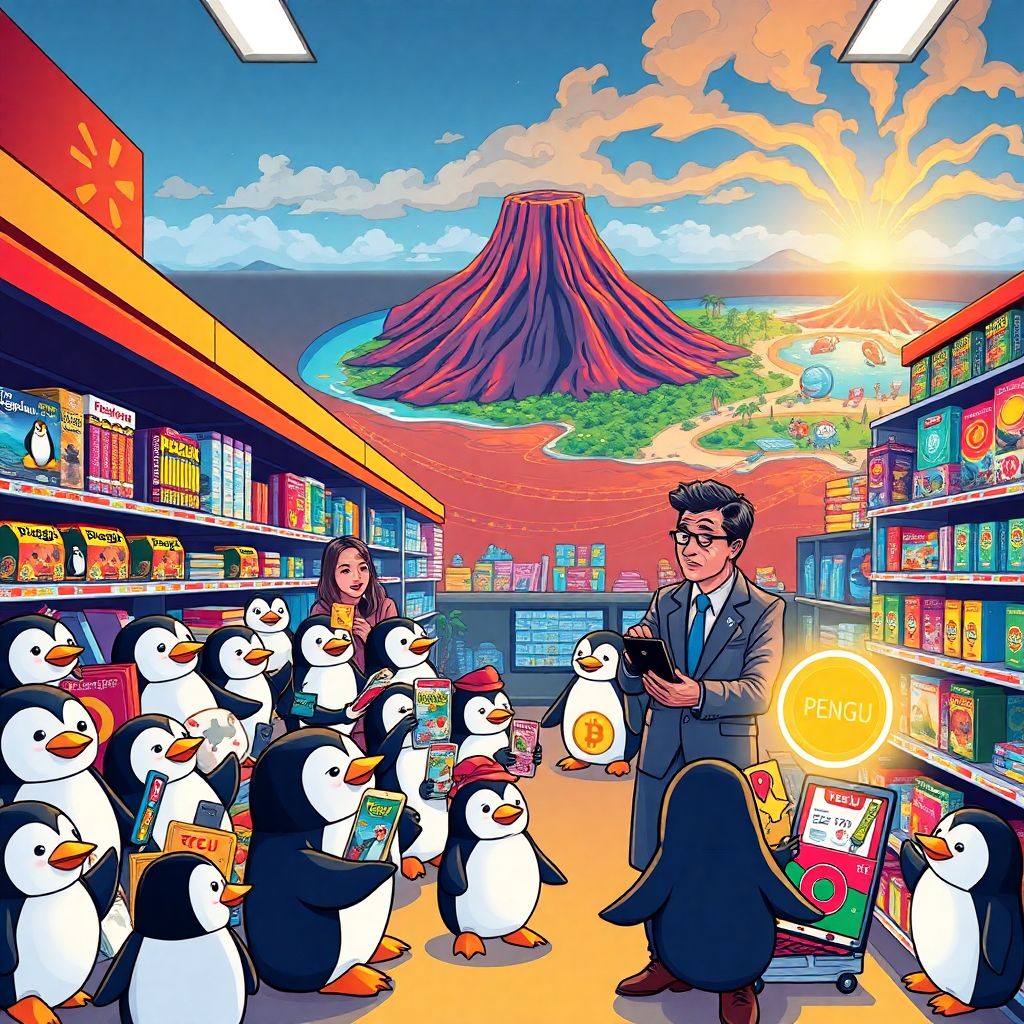
If the Pudgy Penguins universe were a volcanic island chain, toy veteran Steve Starobinsky says it would still be in the early stages of formation—lava only just hardening into new, livable land. The beaches, resorts, and bustling tourism? Those come much later.
That long-game metaphor is how Starobinsky thinks about Pudgy Penguins’ expansion into the world of consumer products. Brought on in March to sharpen the brand’s approach to physical goods, he’s been charged with turning an NFT-native phenomenon into something that can live on toy shelves, in kids’ bedrooms, and in holiday shopping carts. And like Hawaii’s shorelines, he reminds everyone: this doesn’t happen overnight.
From Crypto Sprints to Retail Timelines
As Pudgy’s director of business development and partnerships, Starobinsky’s job is to slow down the “move fast, react faster” reflex common in crypto and align the brand with the rigid, unforgiving calendar of big-box retail. In the toy industry, there’s very little improvisation.
Purchase orders for products that will hit shelves during next year’s holiday season are often locked in a year in advance. Starobinsky points to a major Los Angeles trade event held every September, where manufacturers and retailers meet, negotiate, and effectively decide what children across the country will unwrap the following Christmas.
Retail buyers saw Pudgy Penguins’ boxes, packaging, licenses, and SKU counts there. But the lesson was clear: miss that September window, and you’ve effectively missed Christmas the following year. For a crypto-born brand used to launching a collection overnight, that discipline is a stark contrast.
An NFT Brand Chasing a Bigger Pie
Since entrepreneur Luca Netz acquired Pudgy Penguins in 2022, the brand has become one of the most prominent survivors of the NFT boom. As of December, the original Pudgy Penguins NFT collection ranked as the third most valuable globally, with a market cap around 47,000 ETH—about 159 million dollars at the time. Two additional collections have generated more than 50 million dollars combined.
But the company is no longer content with revenue solely from the blockchain crowd. It has broadened into a multi-pronged ecosystem:
– A Solana-based token called Pengu, recently valued at roughly 818 million dollars.
– A blockchain-powered mobile game developed in collaboration with Mythical Games.
– A growing catalogue of physical products: toys, collectibles, and consumer packaged goods.
For Starobinsky, that last category is where he comes in—and where he believes Pudgy is only scratching the surface of its potential.
The “White Space” Strategy
Starobinsky’s roadmap is built around what he calls “white space”—the gaps in the market where a playful, emotionally resonant brand like Pudgy Penguins can live without simply copying what’s already on shelves.
White space in toys might mean blending digital fandom with physical collectibles, creating multi-generational appeal in a category usually split between young kids and hardcore collectors, or designing products that carry a story and identity beyond a simple character license.
Pudgy’s existing deals with well-known names like Bearbrick, PEZ, and book publisher Penguin Random House are only the start. According to Starobinsky, the real scale of their bet on physical goods won’t be fully visible until 2026, once the long retail cycles catch up to the work being done today.
“We have a lot of merchandise out this Christmas,” he notes, “but relative to the attention we command online, it’s just the first layer. The bigger expression of what this brand can be is still ahead.”
A Toy Maker with a Kid’s Imagination
Starobinsky describes himself as “a kid at heart,” but his résumé is firmly grown-up. He’s spent years building products for franchises like Paw Patrol and Minecraft, brands that successfully jumped from screens into bedrooms, classrooms, and playgrounds. He also played a key role in launching PopSockets, the collapsible phone accessory that became a near-ubiquitous impulse buy across the globe.
That track record matters, because Pudgy Penguins’ art style—round, expressive, and hand-drawn—lends itself naturally to plush toys, figurines, apparel, and kids’ media. It’s cute enough for young children, yet quirky and meme-ready enough for adults raised on internet culture.
This dual appeal underpins projects like Pudgy’s children’s book, aimed at readers aged four to eight. It’s not just about teaching kids to love the characters; it’s about giving parents, who may already know Pudgy through NFTs or social media, something they can share with their children in an offline, tangible format.
As Starobinsky puts it, playful brands now dominate pop culture. His specialty has been joining franchises exactly at the moment they break out of niche status and move into the mass market. Pudgy, in his view, is standing right at that threshold.
Luca Netz and the Gel Blaster Playbook
Starobinsky’s partnership with Pudgy’s CEO, Luca Netz (born Luca Schnetzler), didn’t begin in Web3. The two previously worked together at Gel Blaster, a company that built an entirely new category of toy—a hybrid somewhere between foam dart blasters and paintball.
At Gel Blaster, Netz handled the marketing while Starobinsky led sales. Together, they helped transform an obscure product into a viral hit, driven by smart storytelling, social media momentum, and careful retail execution. Starobinsky calls it “the hottest thing on the internet” at the time, with Netz central to shaping the narrative that turned a gimmick into a category.
That experience is now being re-applied at Pudgy Penguins: identify a cultural moment, frame the brand as the answer, and then build the physical infrastructure—product, packaging, placement—to meet demand when it hits mainstream awareness.
From Walmart Aisles to a Global Toy Strategy
Pudgy Penguins officially entered the toy business in 2023, hitting shelves in major U.S. chains including Walmart, Target, and Walgreens. By last October, the company reported more than 13 million dollars in total sales and over one million units moved.
For a brand that started as a set of images on a blockchain, those numbers are significant. They also reveal a key advantage Pudgy has over many traditional toy startups: a massive, pre-existing digital audience and a community-driven brand identity. Awareness isn’t the bottleneck; execution is.
And execution, in 2024, meant accepting that “a proper refresh of new goods at retail” just wasn’t realistic. The company simply didn’t yet have enough experience with the complex web of manufacturing lead times, tooling, packaging, logistics, and retailer expectations needed to orchestrate an entirely updated line on schedule.
Eyes on 2026: Scaling Beyond the First Wave
Looking ahead, Pudgy has set an ambitious target. The company aims to surpass 20 million dollars in retail sales in 2026, combining both licensed products and items it sources and produces itself. Starobinsky currently leads a six-person team focused on making that happen.
That roadmap includes several layers:
– Expanding the range of SKUs beyond basic plush and figurines into lifestyle products, accessories, and experiences.
– Deepening partnerships with established players like PEZ while experimenting with new categories that blend digital identity and physical collectibles.
– Tightening the feedback loop between online fandom and retail demand, so viral moments can translate more quickly into products on shelves.
In other words, the first million toys were proof of concept. The next few years will test whether Pudgy can become a lasting presence in the toy aisle rather than a passing novelty tied to a fickle NFT cycle.
Why Physical Toys Still Matter in a Digital-First Brand
On paper, Pudgy is a digital success story: NFTs, tokens, a blockchain game, and a powerhouse online following. So why invest so heavily in old-fashioned plastic, plush, and cardboard?
For Starobinsky, physical goods are more than just an extra revenue stream. They are:
– A cultural anchor: Toys, books, and collectibles turn a digital brand into something visible in homes, classrooms, and playgrounds.
– A trust signal: Parents may not understand NFTs or tokens, but they understand a well-made toy on a trusted retailer’s shelf.
– An onboarding tool: Kids may first meet Pudgy as a character on a box or page, then later discover its digital world as they grow older.
– A hedge against volatility: While digital assets can swing wildly in value, evergreen toys with strong characters can keep selling year after year.
This hybrid approach—digital-native, physically present—is central to what Pudgy is trying to build: a brand that can live simultaneously on-chain, online, and in the real world.
Turning Eyeballs Into Shelf Space
Pudgy commands enormous attention across social platforms and within Web3. The challenge, as Starobinsky frames it, is to convert that attention into sustainable, predictable consumer behavior. That requires a different set of muscles than dropping a new NFT collection.
He has to think like a retailer: Which SKUs will sell at which price points? What packaging will stand out on crowded shelves? How can a toy line be refreshed regularly without confusing buyers or overloading production? What stories do packaging and POS displays need to tell in three seconds or less?
At the same time, he has to respect what made Pudgy resonate online in the first place: its humor, optimism, emotional warmth, and meme-ready aesthetic. The trick is not to sterilize the brand in pursuit of mainstream acceptance, but to translate its quirks into product form in a way that feels authentic rather than forced.
Competing in a Crowded, Risk-Averse Toy Market
The modern toy industry is brutally competitive and surprisingly conservative. Retailers constantly trim shelf space, established licenses dominate entire aisles, and new brands are often treated as risky experiments.
Here’s where Pudgy’s unusual origin becomes a strength:
– It already has a global audience before a single toy hits the shelf.
– Its characters come with lore, in-jokes, and emotional hooks that many new IPs lack.
– It can activate an existing digital fanbase to support launches, reviews, and word-of-mouth.
Still, that doesn’t guarantee success. Starobinsky’s decades of experience help navigate the unglamorous but critical parts of the journey—compliance testing, margin negotiations, category management, and seasonal resets. For a company born on-chain, those realities can be jarring, but they’re non-negotiable if Pudgy wants to play in the same leagues as long-standing toy titans.
A Long-Term Bet on Playful IP
Everything about Pudgy Penguins’ current trajectory suggests it wants to be more than “that NFT project from the bull market.” Under Netz and Starobinsky, the brand is positioning itself as a piece of durable intellectual property, capable of living through cycles of hype and downturn alike.
The lava is still cooling, the island is still forming—but the groundwork is there: high-value NFT collections, a major token, a mobile game, tens of millions in projected retail sales, and a strategy guided by a toy industry insider who’s already watched other playful brands jump from niche curiosity to household name.
If the plan works, Pudgy Penguins won’t just be something you trade on a screen. It will be something you gift at birthdays, read at bedtime, collect on your desk, and recognize in store aisles—proof that a Web3 native brand can, with patience and the right guide, cross over into the mainstream world of play.