
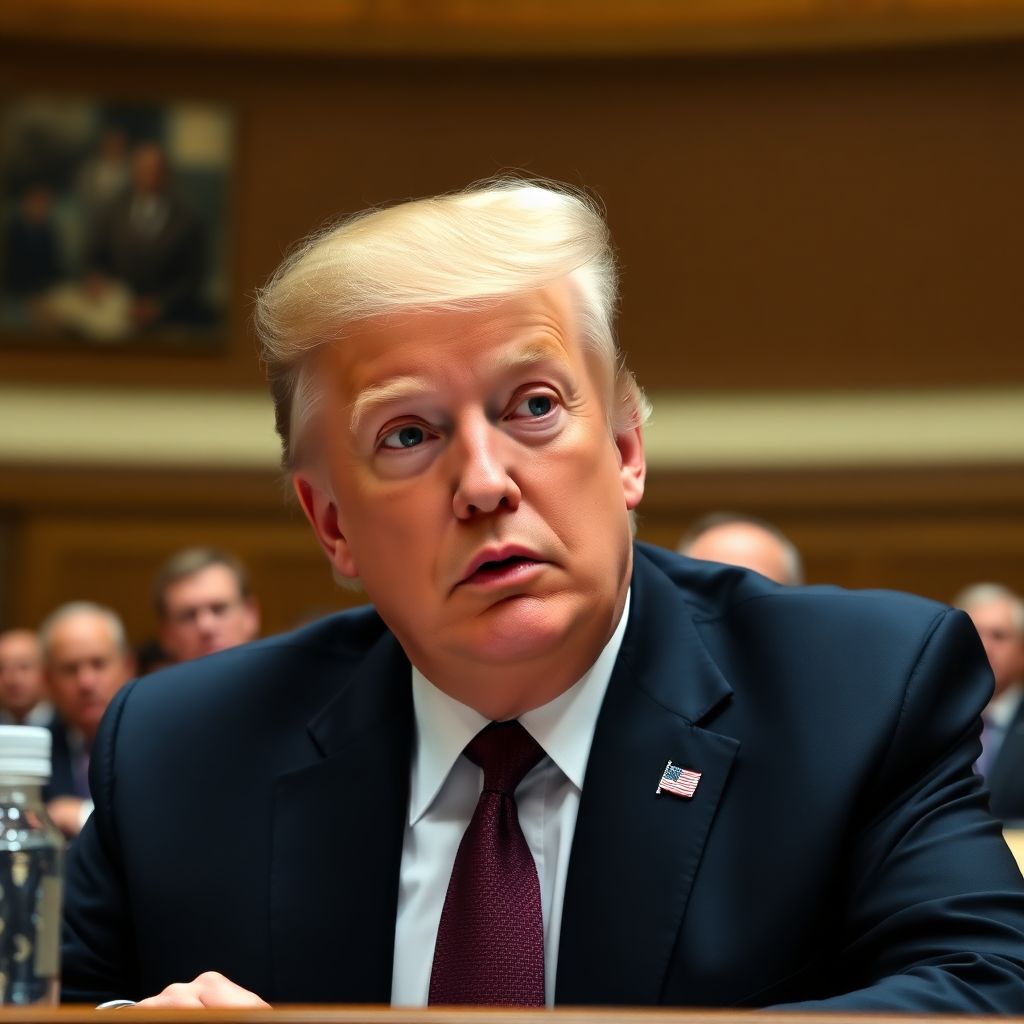
Democratic senators are demanding formal Senate hearings into President Donald Trump’s cryptocurrency fortune after new financial disclosures showed he earned more than $1.2 billion from digital assets last year.
The revelations, laid out in recently filed financial reports, indicate that Trump’s personal income from crypto investments surged into the ten-figure range in a single year. That windfall, top Democrats argue, raises immediate questions about conflicts of interest, possible foreign leverage, and whether the president’s policymaking on digital assets is being shaped by his own financial stake in the sector.
Five influential Democrats-Elizabeth Warren of Massachusetts, Richard Blumenthal of Connecticut, Gary Peters of Michigan, Dick Durbin of Illinois, and Ron Wyden of Oregon-have jointly pressed Senate leadership to open an investigation. They say the disclosures cast doubt on the impartiality of the administration’s approach to cryptocurrencies and crypto-adjacent financial services.
According to their letter, the scale and timing of Trump’s crypto earnings “heighten concerns” that the White House may be pushing Congress toward legislation that disproportionately benefits an industry from which the president personally profits. The senators highlight a pattern of policy choices that appear unusually favorable to crypto firms and intermediaries, including efforts to loosen or sidestep existing financial regulations for digital asset companies.
Democrats are particularly focused on three intertwined issues: whether Trump used his office to influence crypto markets; whether foreign actors could exploit his crypto holdings to gain leverage; and whether the administration’s deregulatory tilt reflects a broader strategy to enrich insiders in the burgeoning digital asset economy.
Warren and her colleagues point to what they describe as an aggressive push by the administration to carve out exemptions for cryptocurrencies and related service providers from rules that apply to banks, broker-dealers, and traditional financial institutions. They argue that while regulators have spent years tightening controls to combat money laundering, sanctions evasion, and consumer fraud, the White House has consistently backed measures that would leave large swaths of the crypto ecosystem under-policed.
The senators want committees with jurisdiction over banking, finance, national security, and ethics to examine exactly how Trump accumulated more than $1.2 billion in crypto income, which assets generated the gains, and what role, if any, official actions played in those profits. They also want to know whether administration officials coordinated with crypto companies, lobbyists, or foreign entities in ways that could have benefited the president’s portfolio.
A central concern is opacity. Although federal ethics laws require presidents to file broad financial disclosures, those forms often allow for wide ranges of value and do not necessarily capture the full complexity of crypto-related arrangements. The lawmakers say Congress needs a detailed breakdown of Trump’s digital asset positions, including any use of offshore entities, trusts, or intermediaries, and whether those structures might have obscured the true extent or origin of his holdings.
National security is another pillar of the Democrats’ argument. Cryptocurrencies, by their very design, can move quickly across borders with fewer traditional controls. If Trump’s earnings were in any way tied to foreign-based exchanges, token issuers, or investment vehicles, the senators warn, that could create vulnerabilities. A president whose wealth is partially dependent on the health of specific crypto markets might be more inclined to accommodate the interests of foreign governments or overseas companies that dominate those markets.
The lawmakers further question whether Trump’s public statements and policy positions may have had a market-moving effect on tokens in which he had a stake. Even the suggestion that a president could talk up, talk down, or subtly signal support for sectors that directly affect his bottom line, they say, is corrosive to public trust and warrants comprehensive scrutiny.
Ethics specialists have long argued that presidents should place their holdings in truly blind structures or widely diversified vehicles to minimize conflicts. Crypto, however, is a relatively new asset class that existing ethics frameworks were not designed to handle. Digital wallets, token allocations from early-stage projects, and complex yield-generating strategies can be harder to monitor than conventional stocks or bonds, making traditional safeguards less effective.
The Democrats’ push for hearings is also about precedent. If a sitting president can reap more than a billion dollars from an asset class that his administration is simultaneously deregulating, critics worry that future presidents-of either party-will feel emboldened to treat public office as a lever for private gain. Formal hearings, they argue, could help set new standards for disclosure and recusal in the age of digital assets.
Any investigation would likely explore which agencies or officials advocated for specific crypto-related policy changes and whether those changes coincided with moments when Trump’s personal holdings stood to benefit. Lawmakers may seek testimony from current and former regulators, ethics officers, and industry figures to determine whether there was any direct or indirect pressure from the White House.
The political stakes are significant. Republicans are expected to frame the inquiry as a partisan attack and a broader attempt to clamp down on innovation in the digital economy. Democrats, by contrast, are positioning the issue as a test of basic integrity: whether the rules that govern conflicts of interest, anti-corruption, and financial transparency can keep pace with a rapidly evolving financial landscape.
Beyond Trump himself, the controversy touches a larger unresolved question: how should democratic institutions handle leaders with substantial exposure to emerging, volatile asset classes like crypto? Traditional rules around stocks, real estate, and private businesses may not adequately cover the unique features of blockchain-based assets, from anonymous wallets to token allocations that can skyrocket in value overnight.
One outcome the senators are openly contemplating is legislative reform. Depending on what hearings uncover, Congress could move to tighten reporting standards for digital asset holdings by high-ranking officials, including more granular disclosures of wallet addresses, token types, and income derived from staking, lending, or other on-chain activities. Lawmakers could also consider explicit recusal requirements when presidents or senior officials hold meaningful stakes in sectors affected by pending regulations.
The debate is unfolding against a backdrop of broader regulatory uncertainty in the crypto arena. Agencies have been divided over whether to treat certain tokens as securities, commodities, or something else entirely; courts have issued mixed rulings; and Congress has struggled to pass comprehensive digital asset legislation. The discovery of a sitting president earning over a billion dollars from that same loosely regulated ecosystem adds a new layer of urgency to calls for coherent oversight.
For everyday investors and crypto companies alike, the prospect of Senate hearings introduces both risk and opportunity. On one hand, aggressive scrutiny could accelerate efforts to clamp down on abuses and tighten compliance; on the other, a transparent and credible process could ultimately legitimize well-regulated portions of the industry and clear up longstanding ambiguities about how political power and digital wealth should intersect.
For now, the Democratic senators are unified on one central point: the American public is entitled to know whether the nation’s chief executive has personally profited from the very policy environment his administration helped create. They argue that only a full, public examination-complete with testimony under oath, detailed financial documentation, and a clear record of decision-making-can answer that question.
Whether Senate leadership chooses to move forward with the requested hearings will determine not only the immediate political fallout for Trump, but also how seriously Washington intends to address the new frontier where presidential power, private wealth, and digital assets collide.