
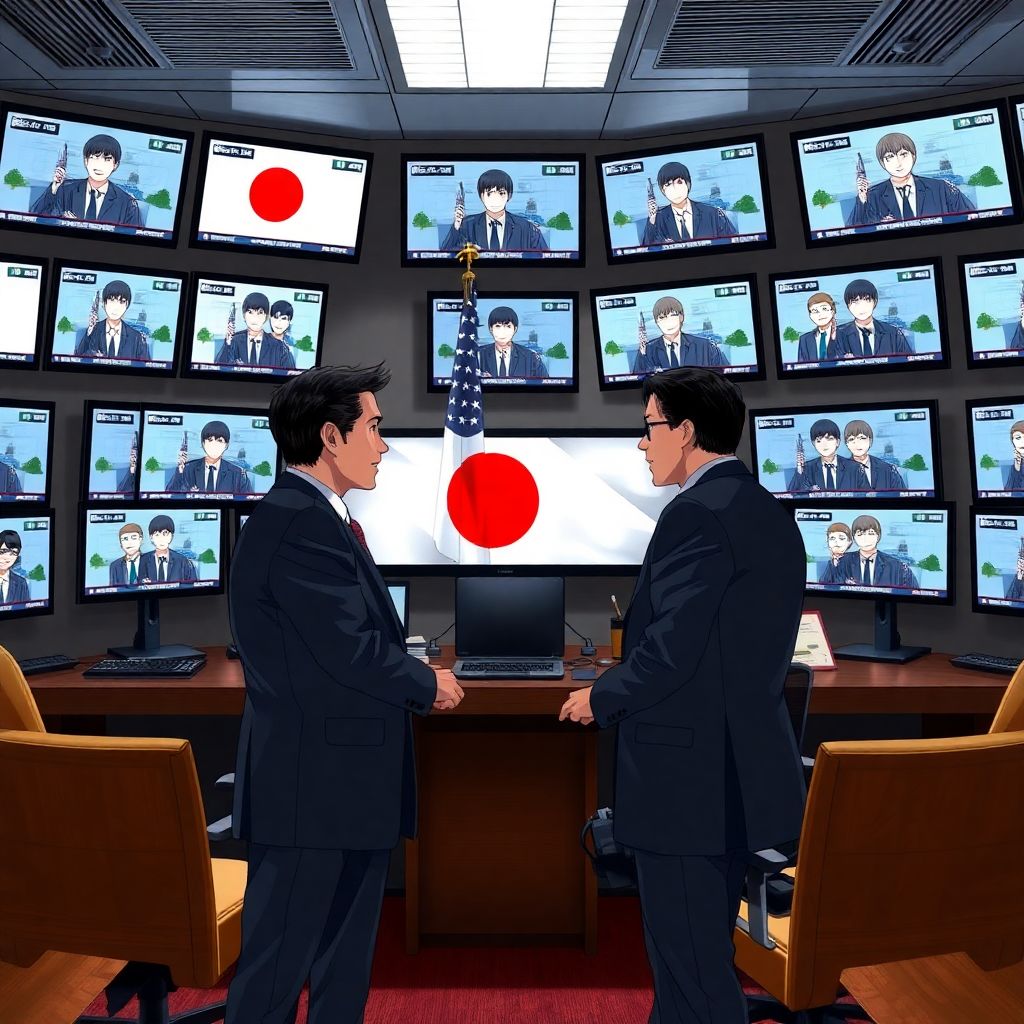
Tokyo to Washington: Keep Mario, Pokémon and Naruto Out of U.S. Political Memes
Japanese officials have repeatedly urged the United States government to stop using characters like Mario, Pokémon, and Naruto in political memes and promotional content without permission, setting up a clash between Washington’s meme-heavy digital strategy and Japan’s strict approach to intellectual property.
Since March, Japan’s Ministry of Foreign Affairs has raised formal concerns about social media posts associated with the administration of Donald Trump that featured Japanese anime and video game characters in political messaging. Local media report that Tokyo considers these uses to be clear cases of unlicensed reproduction of copyrighted works.
In an April parliamentary session, then-Foreign Minister Toshimitsu Motegi addressed the issue directly. Referring to a pro-war promotional video that incorporated imagery from Nintendo’s Wii Sports, he stressed that it is “inappropriate even for public institutions to reproduce copyrighted materials without the rightsholders’ consent.” The comment made clear that Japan does not believe governments are exempt from copyright rules, even when the material is used for political communication.
By June, the matter had escalated from domestic questioning to repeated diplomatic protests. Cabinet member Kimi Onoda stated that the same stance had been conveyed to the U.S. government “multiple times” through official channels. Japanese officials, she indicated, had not limited themselves to a single warning, but had persistently pressed Washington to reassess how it uses pop-culture IP in official and semi-official online content.
Reports indicate that Tokyo asked the administration to consider the potential damage such posts could inflict on Japanese companies and their brands. For rights holders like Nintendo, The Pokémon Company, and the publishers behind Naruto, being inserted-without approval-into divisive political narratives or war-related propaganda risks eroding carefully cultivated global images and alienating fans.
At the center of the dispute is a fundamental difference in how each country views memes and digital culture. In the U.S., the Trump era cemented a political communication style that leans heavily on internet memes, remix culture, and viral imagery. Campaigns and affiliated groups have frequently stitched together clips, artworks, and pop-culture references to create fast-moving content designed for maximum engagement, often treating memes as part of a freewheeling public commons.
Japan, by contrast, tends to enforce intellectual property with far greater rigidity, especially when globally recognized brands are involved. Companies like Nintendo have long been protective of their characters, aggressively limiting unauthorized use in games, videos, and merchandise. That same caution now extends into the realm of statecraft, where Tokyo clearly expects foreign governments to respect the legal boundaries around anime and game franchises.
The friction also highlights an unresolved question of international law and digital politics: how far can a government go in appropriating copyrighted content for political purposes? In the United States, some might argue that political speech and parody fall under fair-use protections. But fair use is narrowly defined, contentious in practice, and does not automatically align with the expectations-or legal systems-of other countries whose IP is being used.
For Japanese officials, even if a video or meme might arguably qualify as parody under American standards, that does not erase the reputational risk for the original creators. Characters like Mario and Pikachu are designed to be family-friendly, apolitical icons. When those same characters are dropped into videos promoting war, nationalism, or partisan agendas, rights holders lose the ability to control how their creations are perceived by global audiences.
The diplomatic pushback from Tokyo is also a signal to domestic stakeholders. By publicly objecting to the U.S. government’s meme tactics, Japanese leaders reassure homegrown entertainment giants that their interests are being defended at the highest level. This is particularly important in an era when anime and games are not just cultural exports, but also critical economic assets woven into Japan’s soft-power strategy.
At the same time, the episode raises practical questions for political strategists worldwide. As memes and short-form videos increasingly dominate online discourse, campaigns are incentivized to borrow from whatever is most recognizable: video game heroes, anime icons, and viral cartoon figures. Yet as Tokyo’s protests show, ignoring IP law in the pursuit of attention can provoke diplomatic disputes and legal threats, especially when foreign-owned franchises are involved.
Another layer of complexity is the blurred line between “official” and “unofficial” content. Some videos at issue may have been created by campaign teams, political action committees, or surrogates rather than a government department directly. However, from Japan’s perspective, when such content is promoted or amplified by senior officials or state-linked accounts, it still reflects on the U.S. administration-and by extension, on the Japanese brands being depicted.
This incident also underscores how global pop culture has become deeply entwined with geopolitics. Anime, games, and manga were once perceived primarily as niche entertainment. Today they function as shared cultural touchstones, instantly recognizable symbols that cross language and national borders. That makes them powerful tools for messaging-but also high-stakes assets when they are co-opted for political aims.
Going forward, both governments and political campaigns may be forced to rethink how they engage with copyrighted characters online. Options could include negotiating explicit licenses, commissioning original artwork that only alludes to popular styles without copying specific IP, or leaning more heavily into user-generated content that does not rely on protected brands. For rights holders, the episode is a reminder to clarify their policies toward political uses of their creations, which historically have been treated as off-limits.
Ultimately, Japan’s message to Washington is less about humorless opposition to memes and more about drawing a line around who gets to control powerful cultural symbols. Mario, Pokémon, and Naruto are not just fun characters to be dropped into any viral video; they are the intellectual property of companies that have invested decades in building and protecting their reputations. When those characters are suddenly placed at the center of contentious political campaigns, Tokyo is making clear that it expects to be asked first-and reserves the right to say no.