
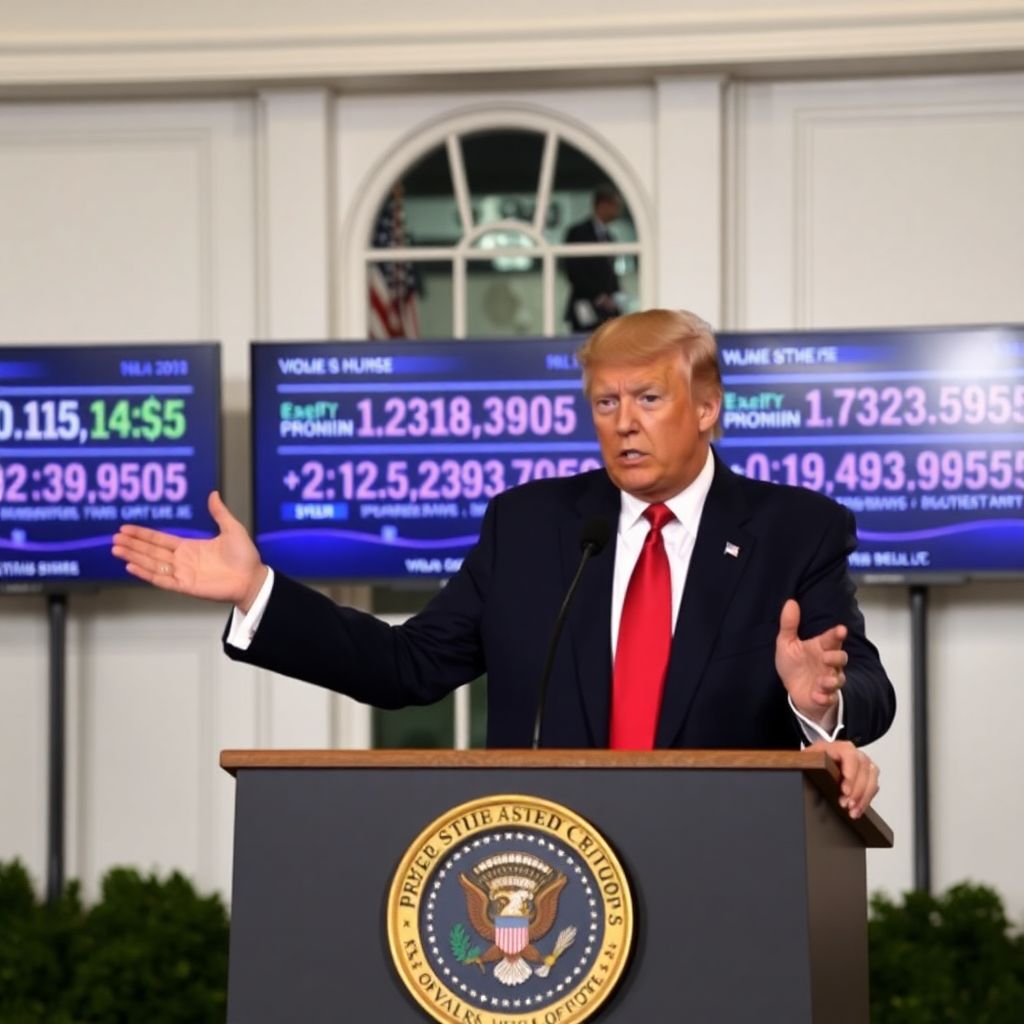
Trump blasts Exxon and Chevron over $26.5B in profit, demands relief for drivers
President Donald Trump sharply criticized ExxonMobil and Chevron after the two US oil majors reported a combined profit of roughly $26.5 billion in the second quarter, even as American consumers grappled with surging fuel costs driven by the war with Iran.
Speaking at the White House on Monday, Trump argued that the conflict in the Gulf and resulting supply disruptions had handed the companies an unfair windfall, and he pressed them to share more of those gains with the public through lower fuel prices.
“They’re making too much money based on a shortage,” Trump told reporters. “I don’t like it… They ought to give some of that back to the public.” He singled out both firms by name: “Chevron, too much money. ExxonMobil, too much money. They’re going to give some of that back to the public.”
The unusually sharp rebuke stood out because Exxon and Chevron have long been among the key beneficiaries of Trump’s push to expand US oil and gas production and ease regulations on the energy sector. His administration has consistently framed domestic drilling as central to national security and economic growth, yet this time he cast the companies’ soaring profits as politically and morally problematic.
Record earnings for ExxonMobil and Chevron
ExxonMobil reported second‑quarter net income of $14.5 billion, or $3.48 per share, more than doubling the $7.1 billion it earned during the same period a year earlier. On an adjusted basis, earnings reached $14.7 billion, while operating cash flow surged to $23.6 billion.
The company used the windfall to reward investors aggressively, returning $9.4 billion to shareholders. Of that, $4.3 billion went out in dividends, with another $5.1 billion spent on share buybacks, according to its quarterly figures.
Chevron’s performance was similarly striking. The company generated $12.1 billion in profit during the quarter, compared with roughly $2.5 billion in the second quarter of 2025. Chevron also reported record output in the United States and a 20% jump in global production, underscoring how higher prices and operational gains were feeding directly into corporate earnings.
Both companies benefited from elevated crude prices and fatter refining margins, which helped offset rising costs linked to the conflict and broader inflation. The war with Iran pushed the benchmark US crude grade, West Texas Intermediate, to as high as $109.64 a barrel during the quarter. Before tensions escalated, WTI had traded around $65.17, highlighting how the conflict reshaped the oil landscape in just a few months.
War with Iran squeezes American households
The geopolitical shock has translated quickly into pain at the pump. US gasoline prices have climbed more than 30% since the United States and Israel began launching strikes inside Iran, straining household budgets and amplifying voter anger ahead of the midterm elections.
The Strait of Hormuz, the narrow maritime chokepoint that links the Persian Gulf with global markets, remains the central pressure point. It serves as a key conduit for both crude oil and liquefied natural gas shipments. Attacks on tankers, tightened restrictions, and a US‑backed blockade have all disrupted normal traffic, amplifying fears about potential supply shortages and feeding into higher prices for consumers.
Trump has consistently framed the war as a necessary show of strength against Iran, but rising fuel costs threaten to overshadow that message domestically. For millions of drivers, the main visible consequence of the conflict is not in foreign policy terms but in the total on their gas receipts.
Clash with industry and Chevron’s CEO
In his comments, Trump went beyond criticizing profit levels and took aim at Chevron’s leadership directly. He accused CEO Mike Wirth of failing to properly acknowledge how much the administration’s policies had benefited the company, particularly in relation to its operations in Venezuela and broader Latin American projects.
The public dressing‑down of a major oil chief was a notable shift. For most of Trump’s presidency, large energy companies have been considered close allies, thanks to relaxed environmental rules, support for offshore drilling, and backing for pipeline construction. By calling on Exxon and Chevron to lower prices, Trump put himself in the awkward position of demanding consumer relief from companies whose shareholder‑friendly strategies he previously supported.
This tension highlights a deeper political calculation: while the White House has advocated for a pro‑industry agenda, voters tend to judge economic performance through very concrete metrics like gasoline prices. When those prices spike, even traditionally sympathetic sectors can become easy targets.
Industry defends profits as market‑driven
The American Petroleum Institute, representing the broader oil and gas sector, defended the surge in earnings. The group argued that retail fuel prices are shaped by global market forces, not simply by decisions in the boardrooms of Exxon or Chevron.
Industry advocates point out that crude costs remain the largest component of gasoline prices. On top of that, refining margins, transportation and distribution expenses, and taxes at the federal, state, and local level all feed into what drivers pay at the pump. From this perspective, high profits are described as a by‑product of tight global supply and robust demand rather than manipulation or corporate greed.
Oil executives also stress that elevated cash flows fund future investment in exploration, drilling, and infrastructure, which they claim will eventually ease supply bottlenecks and bring prices down. Critics, however, counter that record buybacks and dividends suggest that rewarding shareholders has taken priority over boosting output or cushioning consumers.
Limited tools for the White House
While Trump has demanded lower prices, his administration has little direct authority to compel companies to cut them. The federal government does not set retail gasoline prices, which are determined by competitive dynamics between refiners, wholesalers, and independently owned fuel stations.
The White House could, in theory, draw more heavily on strategic oil reserves or attempt to pressure OPEC and allied producers to increase output, but such measures carry their own political and security risks. Direct price controls, once used during periods like the 1970s energy crises, are widely viewed as distortive and unlikely under current policy thinking.
This constraint leaves the president relying on public shaming, jawboning, and the hope that diplomatic progress in the Gulf will calm markets. Trump himself acknowledged that the surest path to significantly lower fuel prices would be an end to the conflict.
Oil drops as Trump pauses new Iran strikes
Energy markets responded quickly when Trump called off a planned additional strike against Iran and floated the possibility of renewed negotiations over the Strait of Hormuz. On Monday, West Texas Intermediate crude fell more than 5%, sliding to around $80 per barrel. US gasoline futures recorded a similar retreat, dropping nearly 5%.
The move suggested traders were recalibrating their risk calculations, anticipating that a diplomatic opening could restore shipping flows and reduce fears of severe supply disruptions. Even a temporary easing of tensions in such a critical transit route can have an outsized impact, given how sensitive prices are to any perceived change in the balance of supply and demand.
Trump portrayed the prospective talks as a high‑stakes gambit, calling them Iran’s “last chance” to secure an agreement. He said the first priority on the table would be the status and security of the Strait of Hormuz, with discussions on Iran’s nuclear program to follow.
Disputed diplomacy and uncertain outcomes
Tehran quickly pushed back on Trump’s framing. Iranian officials insisted they were not holding direct negotiations with Washington. Instead, they said they were working with Oman on a temporary “safe route” through or around parts of the strait to mitigate the immediate economic damage, while leaving the broader questions about sanctions, security, and nuclear issues unresolved.
This conflicting messaging underscores how fragile and ambiguous the diplomatic track remains. Without a clear, enforceable agreement, markets are likely to remain sensitive to any new incident in the Gulf-whether it is a tanker attack, a military strike, or a fresh round of sanctions.
For consumers, that uncertainty translates into continued volatility at the pump. Even if prices drop after news of paused strikes or potential talks, any setback or escalation can quickly reverse the trend.
Political stakes of high fuel prices
Beyond the raw economics, Trump’s confrontation with Exxon and Chevron is deeply tied to domestic politics. Rising gasoline prices disproportionately hit middle‑ and lower‑income households, which spend a larger share of their income on transportation. As midterm elections approach, anger over everyday costs can easily spill over into broader dissatisfaction with the administration.
By publicly blaming oil majors for “making too much money,” Trump is attempting to deflect some of the frustration away from his own foreign policy choices and toward corporate America. This strategy aims to frame the White House as an advocate for ordinary drivers, even while the underlying cause of the price surge-the war and heightened tensions in the Gulf-remains tied to US actions.
At the same time, this stance risks alienating powerful allies in the energy industry, which have been among the biggest beneficiaries of the administration’s deregulatory agenda. How long that alliance holds under the strain of public criticism and populist rhetoric is an open question.
Corporate profits versus consumer protection
The clash raises a broader issue that extends beyond the current administration: how should advanced economies balance the profit motives of large energy firms with the need for affordable, stable fuel prices? When geopolitics sends crude prices soaring, companies that own reserves and refining capacity are almost guaranteed to benefit, even as consumers suffer.
Some policy experts argue for stronger windfall profit taxes or targeted rebates that redirect a portion of exceptional corporate earnings back to households. Others believe the focus should be on long‑term energy diversification-investing in alternatives and efficiency so that a crisis in the Strait of Hormuz cannot so easily ripple through grocery store bills and commuting costs.
Trump’s demand that Exxon and Chevron “give some of that back” reflects an instinctive version of this debate, even if it is not accompanied by a concrete policy proposal. It underscores a tension that is likely to persist as long as oil remains the backbone of the global economy and geopolitics can still send prices spiraling.
What to watch next
In the coming weeks, several factors will determine whether Trump’s pressure campaign and the tentative diplomatic overtures have any lasting effect:
– The outcome of back‑channel and regional talks on safe passage through the Strait of Hormuz.
– Any shift in US or allied military posture that could either escalate or de‑escalate the conflict with Iran.
– Decisions by Exxon, Chevron, and other oil majors regarding capital spending, production levels, and shareholder payouts.
– The trajectory of retail gasoline prices as the election season intensifies.
For now, Exxon and Chevron remain under an unusual spotlight: praised by investors for delivering blockbuster profits, scolded by the president for not doing enough to ease the burden on consumers, and watched closely by a public that feels the war’s impact every time they fill up their tank.