
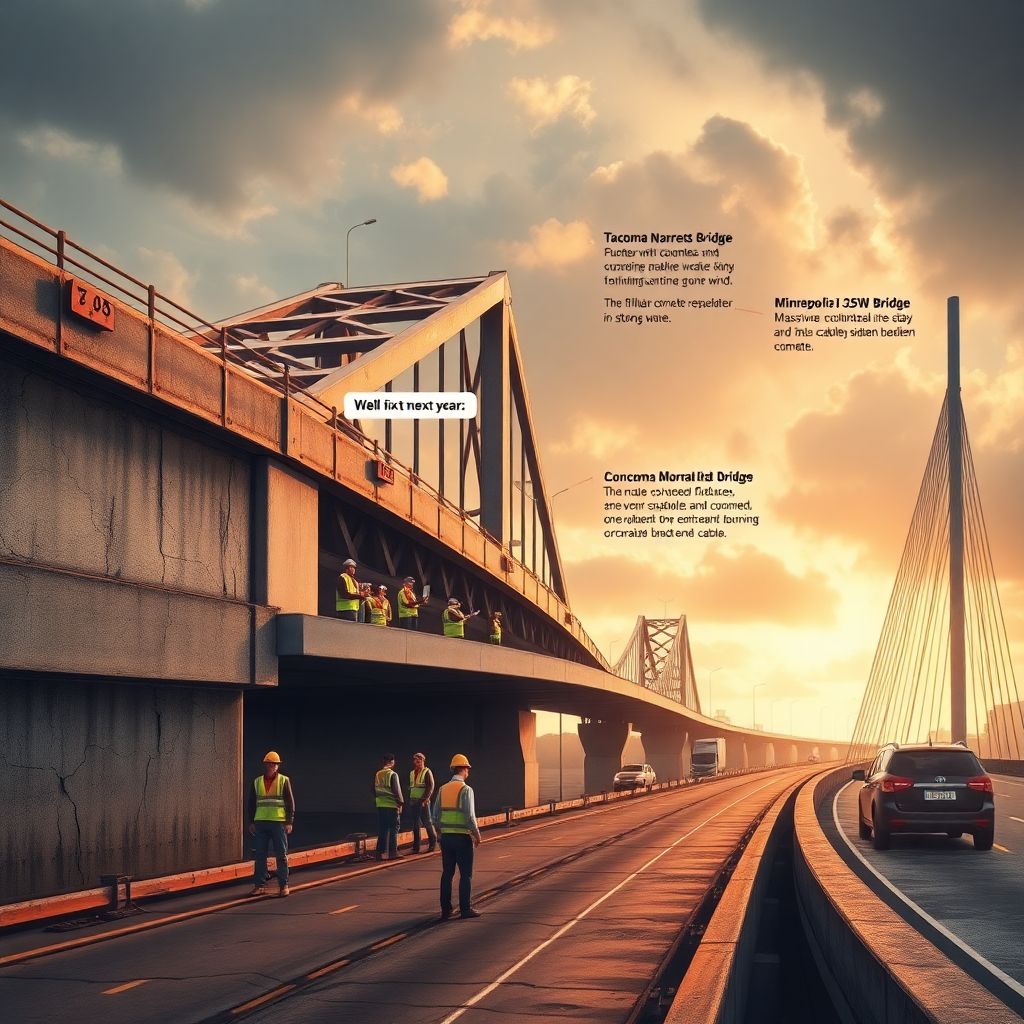
When a bridge fails, the story almost never starts with the collapse itself. It usually begins years earlier with tiny cracks, blocked drains, corroded cables, budget cuts, “we’ll fix it next year” meetings and, sometimes, a bit of overconfidence. Then one day, traffic is stopped, cameras roll, and we see a structure doing what it was never supposed to do: twist, buckle, or fall. In this article we’ll walk through famous failures, clever engineering “hacks” that followed, and what’s actually changing in how we design, monitor and repair bridges today. No скучная теория — только реальные кейсы, понятные сравнения и практические выводы для 2025 года.
Why bridges really fail
Bridges rarely collapse from one single mistake. Think of them more like a crime scene with several suspects: bad design assumptions, poor construction, heavier trucks than expected, missed warning signs in inspections and, yes, plain old rust. When you hear about modern bridge inspection services coming in “late”, it often means early symptoms were either not seen, not understood, or not treated seriously. The physics is unforgiving: steel loses section, concrete cracks, cables stretch, and sooner or later the safety margin that once seemed huge quietly disappears.
Famous failures and the “hacks” that changed the rules
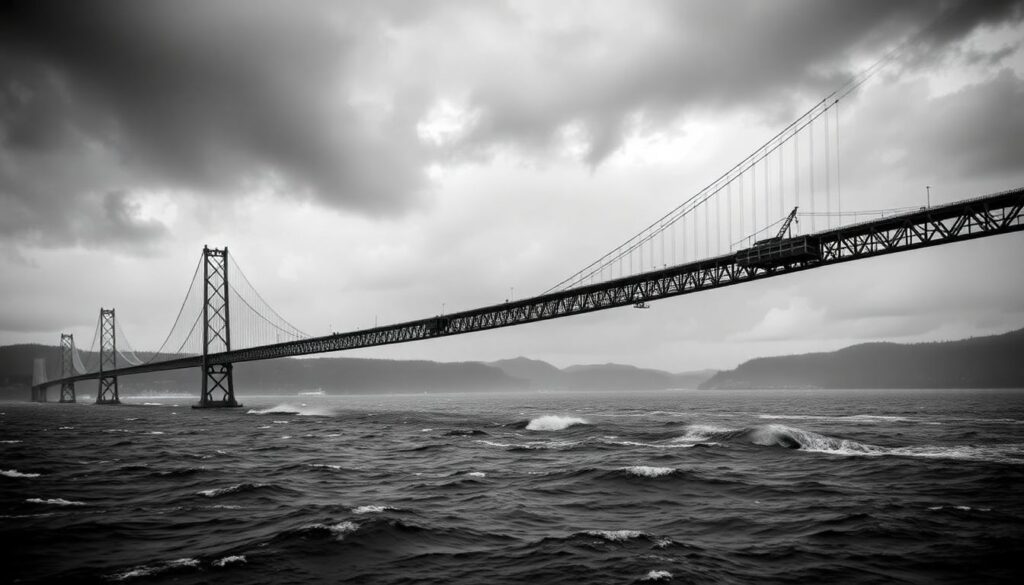
Take Tacoma Narrows Bridge in 1940. The deck didn’t fail because it was weak, but because nobody fully appreciated aeroelastic flutter. The bridge literally danced itself apart in the wind. The “hack” afterward wasn’t a patch; it was a mindset shift: wind-tunnel testing, stiffer decks, open trusses, and a whole new branch of bridge aerodynamics. Fast‑forward to Minneapolis, 2007: the I‑35W bridge collapsed during rush hour, killing 13 people. A gusset plate, thinner than it should have been, was overloaded by added weight from resurfacing works and heavy traffic. The fix here was more procedural: stricter load reviews, better record-keeping, and design checklists that force engineers to re‑question “small” details. And then Genoa, 2018: the Morandi Bridge, a concrete cable‑stayed structure with stay cables encased in concrete, suffered decades of corrosion and patchy maintenance. The “after” solution was radical: demolish the remains and build a new, more conventional steel bridge, while overhauling how concessionaires report and share inspection data with regulators.
Short-term patches vs long-term solutions
A pattern shows up in every big incident report: quick fixes are tempting, but they age badly. Adding steel plates, closing one lane, or lowering the speed limit feels like action, yet without a long-term plan those measures simply delay the inevitable and can even hide how serious the structural problems really are.
Comparing different safety approaches
Broadly, we can compare three philosophies. First, the “calendar” model: inspect every X years, write a PDF, maybe act on the worst issues. It’s cheap and familiar, but blind to what happens between visits. Second, condition-based management: you invest in better bridge inspection services, more frequent checks, and risk-based prioritization. This is already a big step up, because money flows to the riskiest assets, not just the loudest politicians. Third, continuous monitoring: here, bridge structural health monitoring systems are installed—strain gauges, accelerometers, corrosion probes, sometimes even acoustic sensors listening for rebar cracking. Instead of snapshots, you get a live stream of the bridge’s “pulse”. You trade higher upfront costs for fewer surprises and a better chance to intervene before things hit the news.
Why some old-school methods still matter
Even with all the high-tech gear, a seasoned engineer with a hammer, binoculars and common sense can catch things sensors miss, like dodgy drainage details or a misaligned bearing. Hands-on visual inspection will stay relevant, it just needs to be supported by smarter data and not treated as the only truth about a bridge’s condition.
Tech pros and cons: from sensors to AI “guardians”
Sensors sound like magic, but they come with trade-offs. On the plus side, bridge structural health monitoring systems can detect subtle stiffness losses, unusual vibrations under trucks, or changes in cable tension long before they’re visible. Paired with AI tools, they can flag anomalies automatically, 24/7, something a human team could never afford to do on every span. However, the drawbacks are real: hardware can fail, data streams can be noisy, and false alarms can push agencies to ignore alerts altogether, the classic “cry wolf” effect. Also, running these systems well requires a bridge engineering consulting firm or in‑house experts who understand both structural behavior and data science. Add cybersecurity to the mix—nobody wants a critical bridge reliant on a networked system that’s easy to tamper with—and it’s obvious that smart infrastructure must be paired with smart governance, not just gadgets bolted to girders.
Paper reports, spreadsheets, and why they’re not enough
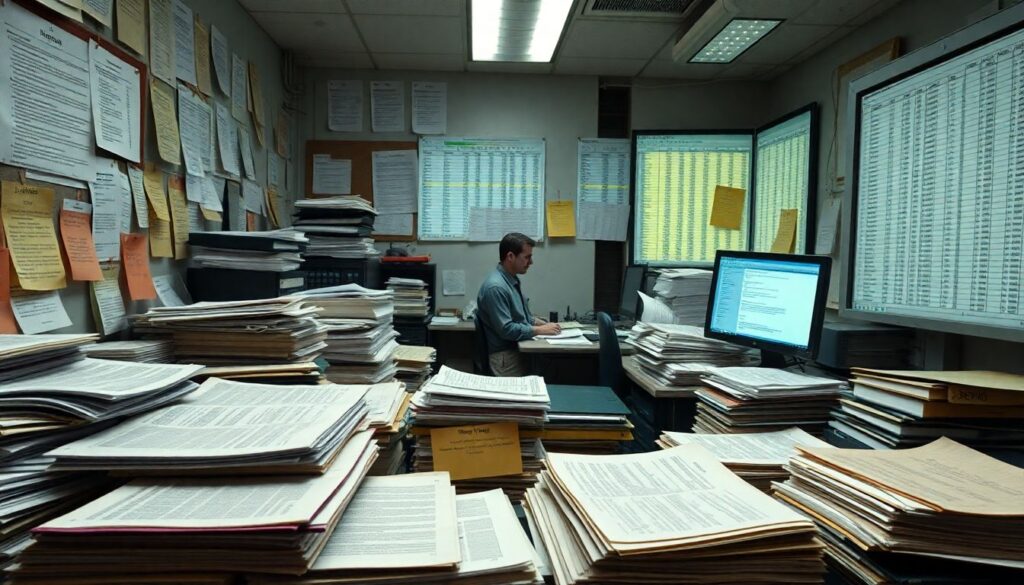
Many agencies still juggle inspection PDFs and Excel files with thousands of line items. When something goes wrong, investigators often discover that warning notes did exist — buried on page 127 or in a forgotten folder. The problem isn’t just data quality; it’s findability and accountability.
How to choose the right strategy (and partners)
If you’re a city or regional authority, the puzzle is not “Which gadget is coolest?” but “What failure do I absolutely refuse to risk?” Bridges on evacuation routes, major freight corridors or critical river crossings deserve more than the bare minimum. A good starting point is to bring in a bridge engineering consulting firm not only to crunch numbers but to map your whole network by criticality, likely failure modes and maintenance backlog. From there, you can match tools to risks: simple structures with low impact might get periodic inspections and basic non-destructive testing; complex cable-stayed or long-span bridges justify permanent monitoring and custom analysis. When deterioration is already advanced, bridge repair and rehabilitation contractors should be in the room early, helping to judge constructability and staging so that elegant calculations don’t turn into impossible field work or endless lane closures.
Who owns the risk: clients, designers, or builders?
Responsibility is shared, but in practice gaps appear between contracts. Bridge design and construction companies often move on once the ribbon is cut, while operators inherit all long-term headaches. Clearer handover documentation and “lessons learned” loops back to designers can keep the same mistakes from resurfacing on the next project.
Trends 2025: smart, connected, and more transparent
Looking at 2025, several trends are hard to ignore. First, data integration: agencies are finally stitching together design models, inspection history, load data and monitoring outputs into unified digital twins. Instead of wondering “Is this crack new?”, engineers can compare today’s measurements with a living 3D record of the bridge’s past behavior. Second, more outcome-based contracts: clients are asking bridge design and construction companies and maintenance providers not just to build or fix, but to guarantee certain performance indicators over time, like maximum allowed deflection or corrosion rate, putting money on the line if targets are missed. Third, public transparency: serious defects are harder to hide when citizens can track closures, ratings and repair timelines online. In a way, that’s the most powerful “hack”: social and political pressure that rewards long-term safety over short-term savings, so we don’t keep learning the same fatal lessons from falling bridges.